
Methane blast kills 20 in Sikkim hydropower tunnel
Toxic gases slow rescue of five trapped workers, India’s renewable buildout leans on migrant labour in unstable Himalayan geology
Images
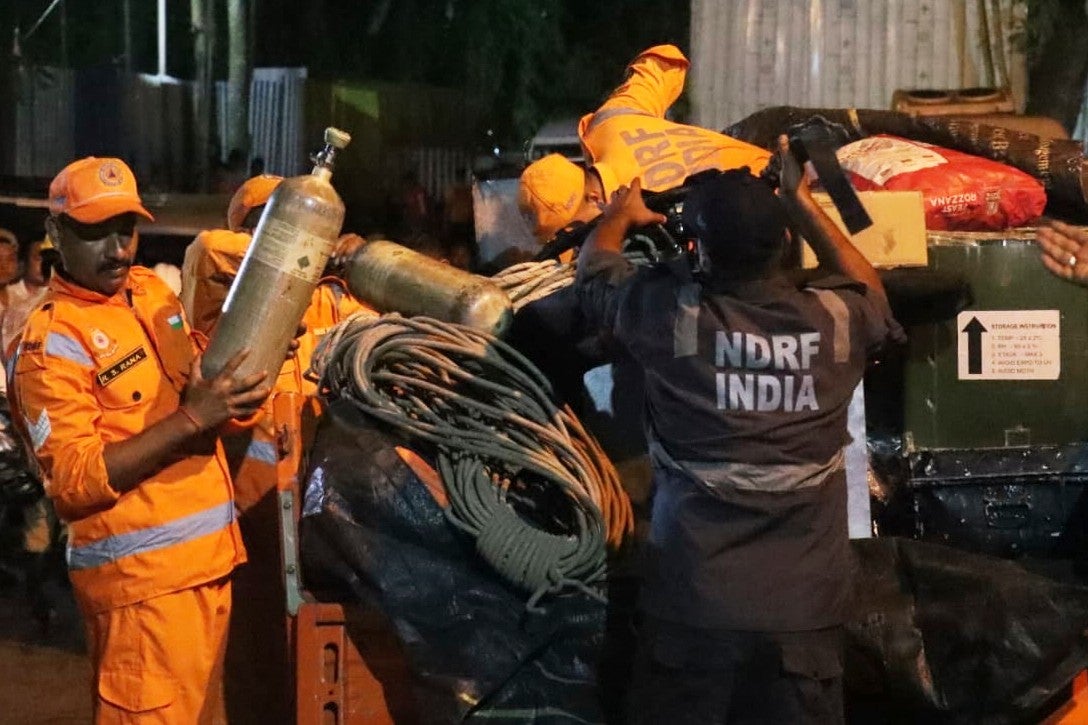 National Disaster Response Force personnel prepare for a rescue operation at the site of a collapsed tunnel at Samardung village of Sikkim, India (AP)
independent.co.uk
National Disaster Response Force personnel prepare for a rescue operation at the site of a collapsed tunnel at Samardung village of Sikkim, India (AP)
independent.co.uk
20 people are now confirmed dead after a methane explosion inside an under-construction hydropower tunnel in India’s Himalayan state of Sikkim, with five workers still trapped two days later. The blast hit the Teesta Stage VI project in Namchi district on Monday afternoon, where 27 men were working underground, according to The Independent. Rescuers say toxic fumes and high methane concentrations have slowed the search, forcing teams to operate with breathing apparatus.
India’s hydropower buildout is sold as clean energy and strategic infrastructure for a mountainous border region, but the work is being done in unstable geology where landslides and earthquakes are routine. The Independent reports the tunnel is part of a project run by the state-owned National Hydroelectric Power Corporation, and the company suspects methane trapped in rock strata ignited. The same physical risks that make hydropower attractive in the Himalayas—steep gradients and fast rivers—also make construction sites unforgiving when gas monitoring, ventilation, and evacuation planning fail.
The human cost is being carried by labourers who often travel from far outside the state for dangerous, temporary work. Most of the dead were migrant workers; among those identified, many were from districts in West Bengal, with others from Punjab and Sikkim, the report says. After the blast, Sikkim’s chief minister announced a special investigation team, while Prime Minister Narendra Modi posted condolences and the state and federal governments announced compensation for bereaved families and the injured.
Those payments are also an admission of how these projects are financed politically: losses are socialised after the fact, while the decision to keep digging is made upstream in government offices and state firms that do not personally bear the downside. Sikkim’s leader compared the incident to the 2023 Silkyara road-tunnel collapse in Uttarakhand, where 41 men were trapped for 17 days and eventually rescued alive—an episode that briefly put tunnel safety in the national spotlight before the next project deadline arrived.
The Teesta valley has already shown how quickly infrastructure can turn into debris. In 2023, a glacial lake burst sent floodwaters down the river, destroying a dam at Chungthang and killing at least 40 people, and scientists have warned that warming temperatures and retreating glaciers increase the volatility of Himalayan catchments.
In Namchi, five men remain behind a blocked tunnel face while rescuers wait for gas levels to drop enough to move forward. Above ground, compensation figures have been announced faster than an explanation of how methane accumulated where 27 workers were sent to drill.