
Amazon pressured suppliers over rivals’ low prices
Newly unsealed records in California case detail threats to cut sales, competitor listings disappear as Amazon prices rise
Images
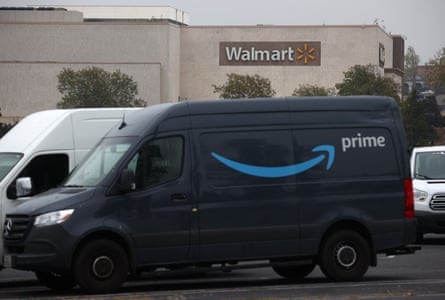 An Amazon Prime delivery van sits parked near a Walmart store on 3 September 2020 in Richmond, California. Photograph: Justin Sullivan/Getty Images
theguardian.com
An Amazon Prime delivery van sits parked near a Walmart store on 3 September 2020 in Richmond, California. Photograph: Justin Sullivan/Getty Images
theguardian.com
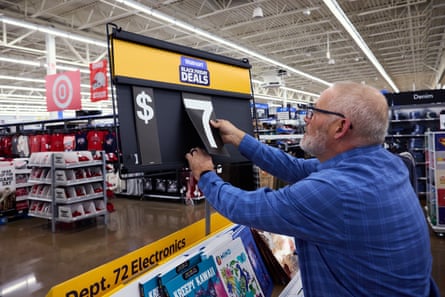 An associate updates the price on a sale item at a Walmart store on Black Friday in Columbus, Ohio, on 28 November 2025. Photograph: Brian Kaiser/Bloomberg/Getty Images
theguardian.com
An associate updates the price on a sale item at a Walmart store on Black Friday in Columbus, Ohio, on 28 November 2025. Photograph: Brian Kaiser/Bloomberg/Getty Images
theguardian.com
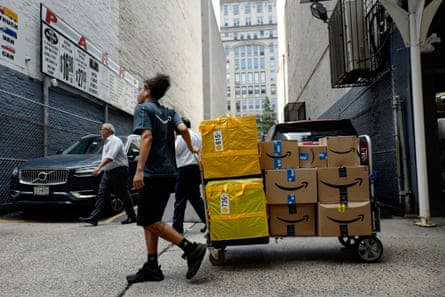 A worker delivers packages on Amazon Prime Day in New York, in July 2025. Photograph: Bloomberg/Getty Images
theguardian.com
A worker delivers packages on Amazon Prime Day in New York, in July 2025. Photograph: Bloomberg/Getty Images
theguardian.com
A set of internal Amazon emails and deposition excerpts, recently unsealed in a California lawsuit, describes a routine that suppliers say left them choosing between Amazon and everyone else. In one example cited by The Guardian, a “modern leather” table lamp listed at Walmart rose from $24.99 to $39. In another, an air fryer on Newegg went from $84.99 to $149.99 after Amazon employees flagged rival pricing as a problem.
The material comes from a case brought by California attorney general Rob Bonta, who alleges Amazon used its dominance to coerce suppliers into keeping prices on competing retailers at or above Amazon’s level. According to The Guardian’s review of internal records obtained by investigators, Amazon staff treated lower prices elsewhere not as ordinary competition but as a direct threat to Amazon’s profitability, triggering outreach to brands and manufacturers. Suppliers were told that their sales on Amazon.com had been, or could be, cut if the same product appeared cheaper on a rival site.
The documents depict several levers. Amazon sometimes matched a competitor’s lower price, then pressed suppliers to compensate Amazon for the lost revenue, according to emails described in the report. When suppliers resisted, Amazon could suppress sales of the supplier’s products on its own platform, or threaten to stop ordering multiple items unless the supplier reimbursed Amazon. The second-order effect is visible in the examples: rather than Amazon’s prices falling across the market, products became more expensive elsewhere—or disappeared.
One case in the filings involves an electric ice-cream maker that was listed at $17.99 on both Amazon and Best Buy. The Guardian reports that Amazon temporarily removed the supplier’s inventory from its platform; the manufacturer, Maxi-Matic, then pulled inventory from Best Buy. After that, the product returned on Amazon.com at more than triple the earlier price.
The Guardian says it reviewed internal emails, presentations and notes, plus hundreds of pages of deposition testimony from Amazon and supplier employees. Much of the material, it reports, had not been publicly reported before it was partially unsealed. The picture that emerges is of a marketplace where price competition is policed not by consumers switching stores, but by the platform that controls a supplier’s access to demand.
California’s case alleges these practices amounted to widespread price fixing. Amazon disputes such characterisations, but the newly available records lay out, in the company’s own internal language, how often rival pricing was monitored and escalated.
The examples are mundane household goods: a lamp, an air fryer, an ice-cream maker. The paper trail describes how quickly they can become bargaining chips once a single retailer can credibly threaten to turn off the sales tap.