
Trump orders 50% tariffs on most Canadian goods
White House invokes retaliation and alleged discrimination, USMCA protections become negotiable while energy is spared
Images
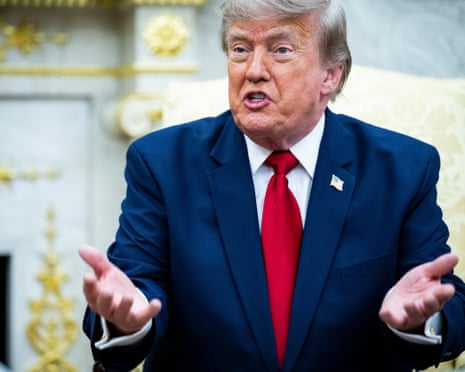 Donald Trump at the White House in Washington DC on 14 July 2026. Photograph: Graeme Sloan/Pool/Graeme Sloan - Pool/CNP/Shutterstock
theguardian.com
Donald Trump at the White House in Washington DC on 14 July 2026. Photograph: Graeme Sloan/Pool/Graeme Sloan - Pool/CNP/Shutterstock
theguardian.com
Donald Trump orders 50% tariffs on most Canadian goods, White House cites retaliation and alleged discrimination under USMCA, energy and critical inputs spared as 30-day clock starts
The White House said on Monday that President Donald Trump will impose 50% tariffs on most Canadian goods, with the measures taking effect in 30 days. According to The Guardian, the administration says the move responds to Canadian retaliation against earlier US tariffs and to what it describes as unfair treatment of American cars, alcohol and dairy products. The list is broad—wine, cement and even hockey sticks—while energy products, fish, critical minerals and potash are excluded.
The carve-outs are the tell. By shielding energy and a handful of industrial inputs while taxing consumer-facing and politically legible products, Washington is choosing disruption that is visible at checkout but less likely to backfire immediately through fuel prices or manufacturing stoppages. The Guardian reports that some of the affected goods had previously been protected under the United States-Mexico-Canada Agreement, meaning the administration is willing to treat a signature North American trade framework as optional when it conflicts with short-term leverage.
Canada’s own countermeasures, as described in the White House fact sheet cited by The Guardian, have been designed to create pain points in the US as well: tariffs on certain US motor vehicles that do not qualify for preferential USMCA treatment, and provincial decisions that have pulled US alcoholic beverages from shelves. Those steps are easy for Canadian politicians to defend domestically—no one needs to explain a complex supply chain to justify taking bourbon off a government-controlled liquor store display—while the costs are diffused across importers, restaurants and consumers.
For the US, the mechanism matters as much as the rate. The tariffs are being launched via three proclamations under Section 338 of the 1930 Trade Act, a tool that several Democratic lawmakers tried to repeal last year over fears it could destabilise commerce, The Guardian reports. A legal authority that can be activated by proclamation turns trade policy into something closer to an executive dial, useful for extracting concessions but hard for companies to plan around. Firms that built North American sourcing on the assumption that USMCA rules were durable now face a 30-day window in which lobbying and last-minute exemptions may matter more than compliance paperwork.
The politics are not subtle. The Guardian notes Trump watched the World Cup final on Sunday with Canadian prime minister Mark Carney, then told reporters he raised the issue of wildfire smoke drifting into the US—an argument Trump had used to threaten tariffs last week. When grievances ranging from air quality to cheese quotas sit in the same tariff justification, trading partners are left negotiating not just over market access but over whichever headline is most useful in Washington that week.
The White House says the tariffs begin in 30 days. The first goods to arrive at US ports after that deadline will carry the new price tag, and the exemptions will show which industries got their calls returned.