
Venezuela raises official earthquake death toll above 5,200
BNO News cites government updates as injured figure stays unchanged, aftershock counts and assistance totals grow in lockstep
Images
 bnonews.com
 bnonews.com
 bnonews.com
 bnonews.com
 bnonews.com
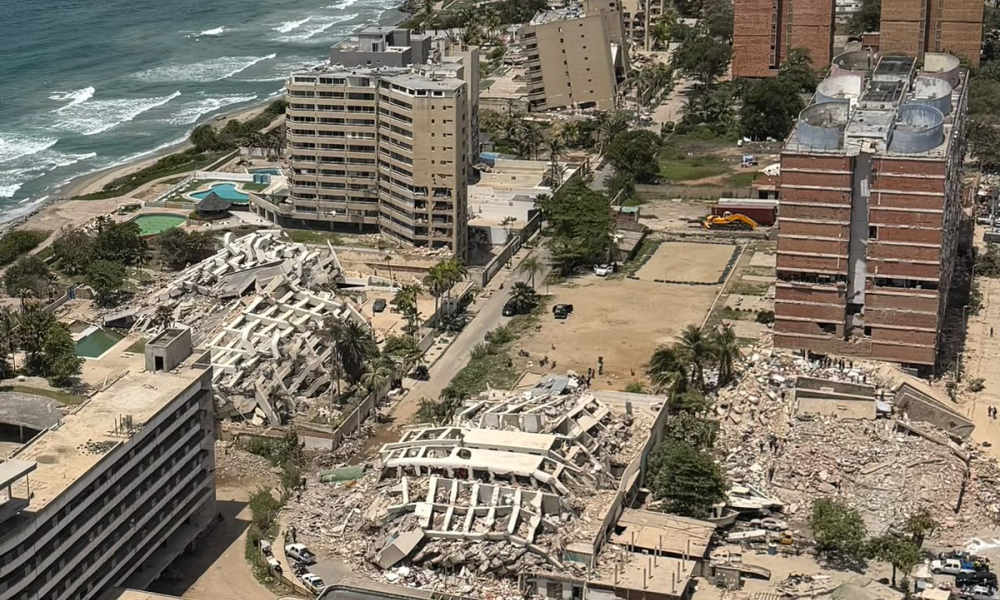
Venezuela’s government has raised its official death toll from the June double earthquake to more than 5,200, while keeping the injured figure unchanged at 16,740, according to BNO News citing state updates and U.S. Geological Survey data. The quakes struck near Montalbán as a “doublet” event, with a second major shock following the first by seconds. Officials also reported thousands rescued and a growing tally of aftershocks.
The headline number is moving faster than the rest of the ledger. In BNO’s reporting, the death toll climbs day by day, while the injured count remains fixed and the government’s other metrics—patients treated, families assisted, people left homeless—accumulate in large, centrally reported totals. That pattern matters because earthquakes are not only a test of buildings; they are a test of record-keeping, triage capacity, and whether local authorities can feed reliable information upward without political filtering. When the state is the sole clearinghouse for numbers, the public is left with one set of totals and few ways to independently verify what is missing.
BNO notes the USGS described the event as a doublet, with two high-magnitude shocks separated by less than a minute—an especially punishing scenario for structures already compromised by the first jolt. Aftershocks have continued into the thousands, adding risk for rescue crews and residents returning to unstable homes. The government says tens of thousands of patients have been treated and that assistance has reached well over a hundred thousand families, figures that imply a response at national scale even as homelessness remains in the tens of thousands.
The disaster is also being slotted into global rankings. BNO describes the Venezuela quake as among the deadliest of the 21st century, surpassing some recent catastrophes elsewhere and trailing others, including a major earthquake in Myanmar in 2025. Such comparisons are a reminder that the same magnitude can produce radically different outcomes depending on construction standards, enforcement, and how quickly medical care and shelter can be delivered. They also show how catastrophe becomes a diplomatic and reputational metric: a number that travels abroad even when the underlying conditions on the ground remain opaque.
In the latest update cited by BNO, the official death toll rose again while the injured figure did not. The aftershocks, meanwhile, kept adding to the count.