
São Tomé and Príncipe votes in tense presidential election
Vila Nova runs as independent after split with ADI, constitutional court disqualification becomes a campaign issue
Images
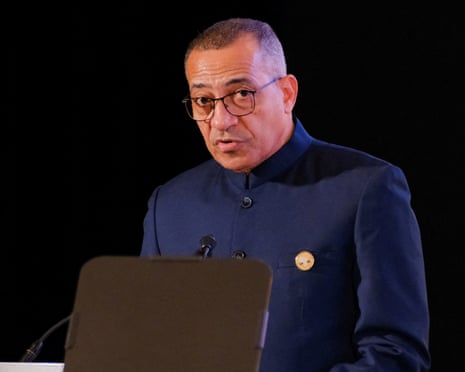 Vila Nova represented the Acção Democrática Independente party when he was elected as president five years ago. Photograph: Francis Kokoroko/Reuters
theguardian.com
Vila Nova represented the Acção Democrática Independente party when he was elected as president five years ago. Photograph: Francis Kokoroko/Reuters
theguardian.com
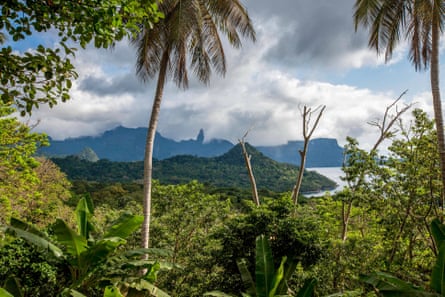 A view across the island of Príncipe. Photograph: Constantino Leite/Alamy
theguardian.com
A view across the island of Príncipe. Photograph: Constantino Leite/Alamy
theguardian.com
São Tomé and Príncipe held a presidential election on Sunday with roughly 142,000 registered voters, according to The Guardian. About 15% of those eligible live abroad, a reminder of how much even a small island state’s politics are shaped by migration and remittances. The incumbent, Carlos Vila Nova, is seeking a second term as an independent in a race monitored by observer missions including the European Union, the G7+ and the Community of Portuguese Language Countries.
The vote lands after a bruising split inside the political machine that originally brought Vila Nova to office. The Guardian traces the current tension to January 2023, when Vila Nova dismissed prime minister Patrice Trovoada, a move that opened a long-running constitutional dispute and a rapid-fire succession that briefly included Ilza Amado Vaz, who resigned after three days. The country now has Américo Ramos as prime minister, but the election has effectively turned into a referendum on whether the presidency can operate independently of the party structures that dominate parliament.
That split also scrambles the usual government–opposition lines. The main opposition party, the Movement for the Liberation of São Tomé and Príncipe, is backing Vila Nova despite opposing the Acção Democrática Independente (ADI), the party he represented when elected in 2021. Meanwhile an ADI faction aligned with Ramos is supporting Nito D’Abreu, the party’s parliamentary leader and one of four challengers to Vila Nova. Former prime minister Jorge Bom Jesus tried to withdraw his independent candidacy but missed the deadline and remained on the ballot, adding another layer of vote-splitting to a contest that may need a second round if no one clears 50%.
Behind the maneuvering is a list of problems voters can measure daily: corruption allegations, high inflation, severe youth unemployment, chronic fuel shortages and frequent blackouts. D’Abreu used a presidential debate to call corruption the country’s greatest catastrophe since independence from Portugal in 1975, an accusation aimed as much at the governing class as at any individual. The stakes are amplified by geography: São Tomé and Príncipe is treated by Western governments as a security and maritime-trade partner in the Gulf of Guinea, a region repeatedly described as a piracy hotspot.
Even the candidate list became an institutional test. Domingos Monteiro, known as “Nino” and head of the São Toméan Football Federation since 2015, was disqualified by the constitutional court on eligibility grounds tied to his parents’ Cape Verdean origin and their lack of naturalisation. Monteiro responded by accusing the court of discrimination and xenophobia, turning a legal ruling into a political grievance in a country where citizenship and belonging are politically charged.
Polling stations closed with observers in place and a field designed for a possible runoff. In a country where blackouts and fuel queues are part of the campaign backdrop, the election’s cleanest output may be the paper ballots themselves.