
Hungary president agrees to stand down
Constitutional amendment ends Tamás Sulyok term as Tisza rewires state after Orbán defeat, rule-of-law warning comes from the man who signed it
Images
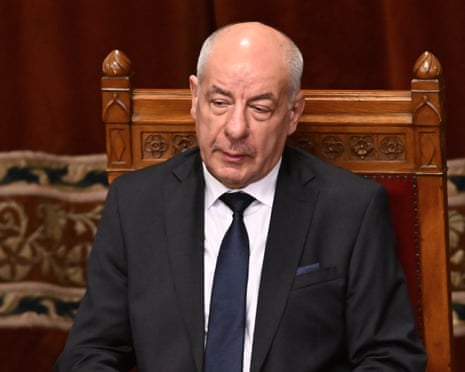 Tamás Sulyok, an ally of the former prime minister Viktor Orbán, said he had no choice but to rubber-stamp the legislation as it respected the letter of the law. Photograph: Dénes Erdős/AP
theguardian.com
Tamás Sulyok, an ally of the former prime minister Viktor Orbán, said he had no choice but to rubber-stamp the legislation as it respected the letter of the law. Photograph: Dénes Erdős/AP
theguardian.com
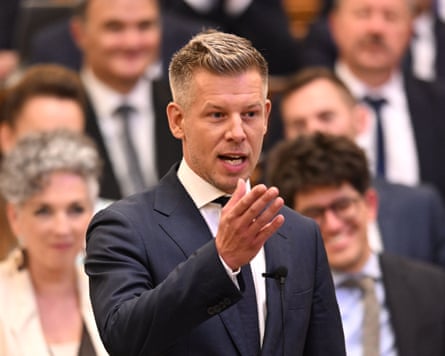 The legislation was part of Péter Magyar’s (pictured) drive to dismantle former prime minister Viktor Orbán’s bastions of power. Photograph: Balint Szentgallay/NurPhoto/Shutterstock
Shutterstock
The legislation was part of Péter Magyar’s (pictured) drive to dismantle former prime minister Viktor Orbán’s bastions of power. Photograph: Balint Szentgallay/NurPhoto/Shutterstock
Shutterstock
Hungary’s president Tamás Sulyok has agreed to leave office after parliament passed a constitutional amendment that ends his term immediately. According to The Guardian, the change was pushed through by Prime Minister Péter Magyar’s Tisza party, which holds a two‑thirds majority, and justified in the text by a “serious loss of confidence” in the head of state. Sulyok, elected in early 2024 by lawmakers from Viktor Orbán’s Fidesz, signed the amendment and said he had no choice if he wanted to avoid a constitutional conflict.
The episode lands in the middle of a rapid institutional reset after Orbán’s election defeat in April, which ended his 16 years in power. Magyar has presented the new government’s program as dismantling the old regime’s entrenched positions and recovering public assets; Orbán, in turn, has framed the move as a warning that legal tools can be turned against anyone once the precedent is set. The mechanics matter as much as the politics: a two‑thirds majority that once allowed Fidesz to rewire the state now allows its successor to do the same, with the presidency becoming a removable part rather than a stabilising fixture.
Sulyok’s own statement sharpened the contradiction. A former constitutional court judge, he argued that the amendment “openly violates the rule of law” by removing officeholders through constitutional engineering rather than ordinary procedures, even as he validated the process by signing it. In practice, the amendment bundles several changes with immediate effects, including a 12‑year term limit for lawmakers and a retirement age of 70 for constitutional court judges, a provision that would force out the court’s current president Péter Polt, described in the reporting as an Orbán ally. That package approach makes the vote easier to sell as reform while ensuring that the most politically sensitive personnel changes ride along.
The near-term question is less who occupies the presidential palace than how quickly Hungary’s new majority can normalise the idea that constitutional text is a management tool for staffing. The Guardian reports that Magyar said parliament speaker Ágnes Forsthoffer would become interim president from Monday, and that parliament will elect a new head of state who serves until a new constitution takes effect or for up to five years. The country’s next president will take office under rules that were rewritten to remove the last one.