
Delhi police remove hunger striker Sonam Wangchuk from protest stage
Authorities cite high court monitoring and medical advice, exam-leak movement loses its public focal point to a hospital transfer
Images
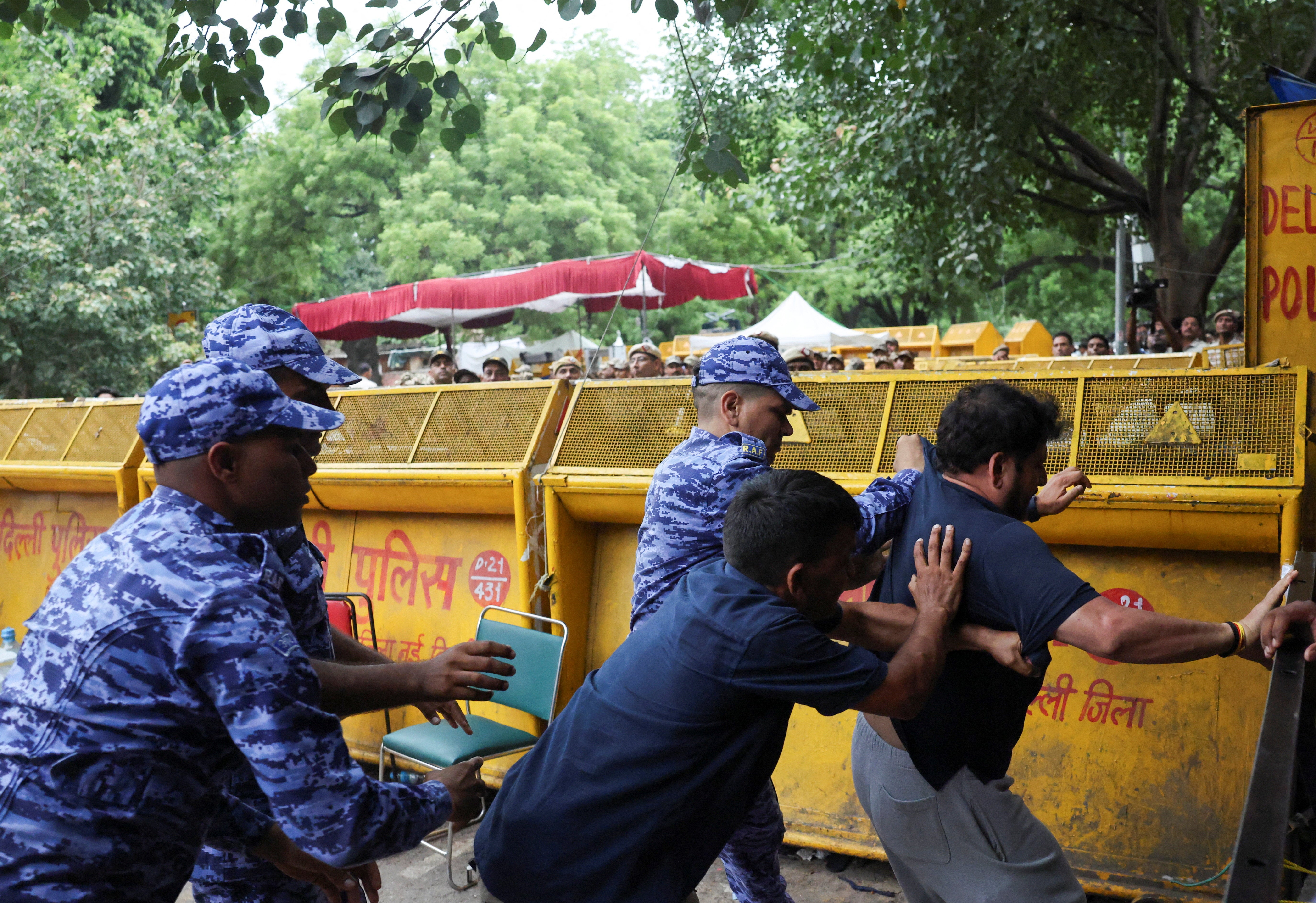 Members of the Indian security forces tussle with a supporter of Cockroach Janta Party (CJP) after authorities took Sonam Wangchuk, an Indian education reformer, who has been on hunger strike, to the hospital (Reuters)
Reuters
Members of the Indian security forces tussle with a supporter of Cockroach Janta Party (CJP) after authorities took Sonam Wangchuk, an Indian education reformer, who has been on hunger strike, to the hospital (Reuters)
Reuters
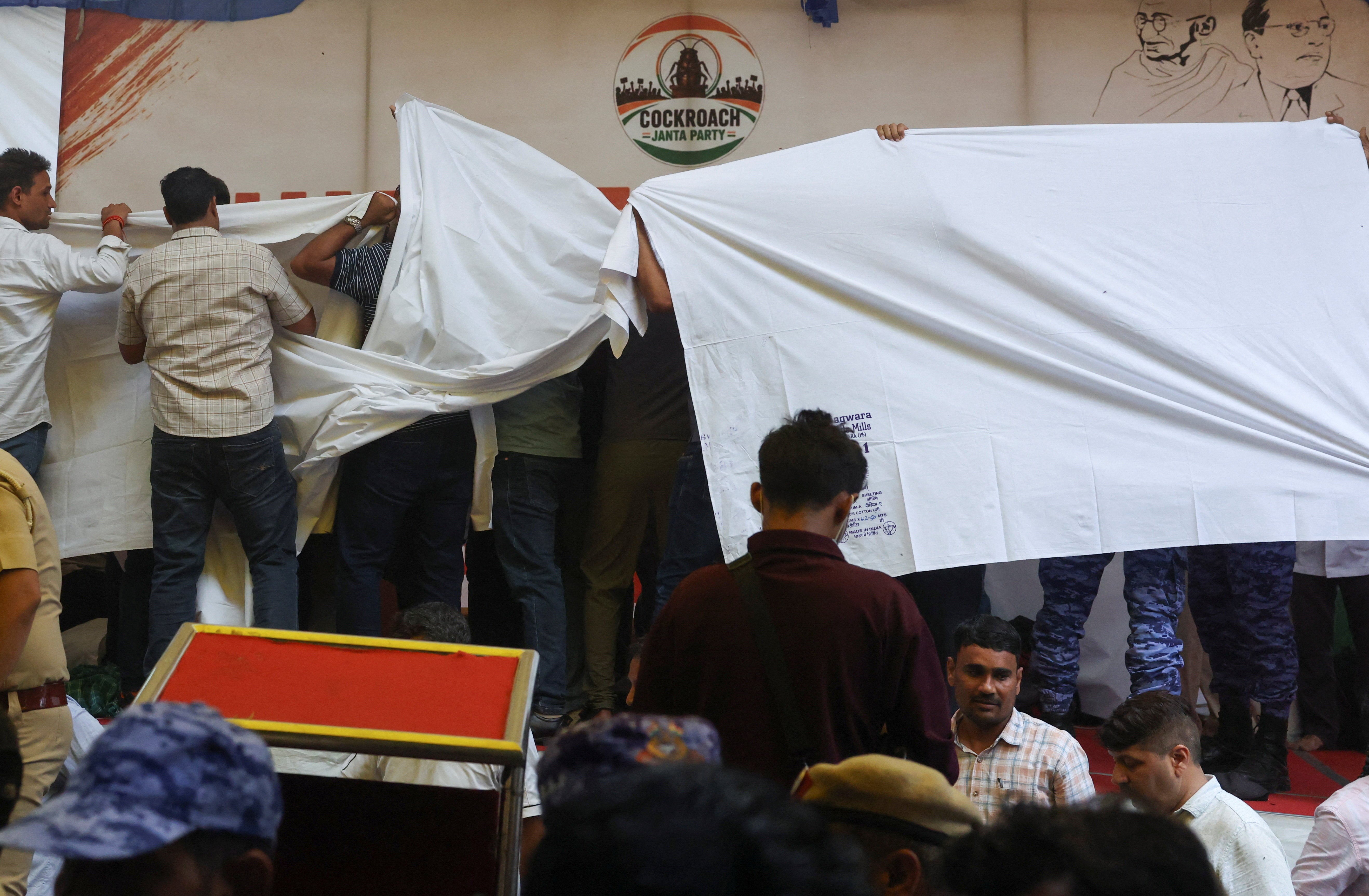 Authorities cover the stage with cloth as they prepare to take Sonam Wangchuk, an Indian education reformer who has been on hunger strike, to the hospital (Reuters)
Reuters
Authorities cover the stage with cloth as they prepare to take Sonam Wangchuk, an Indian education reformer who has been on hunger strike, to the hospital (Reuters)
Reuters
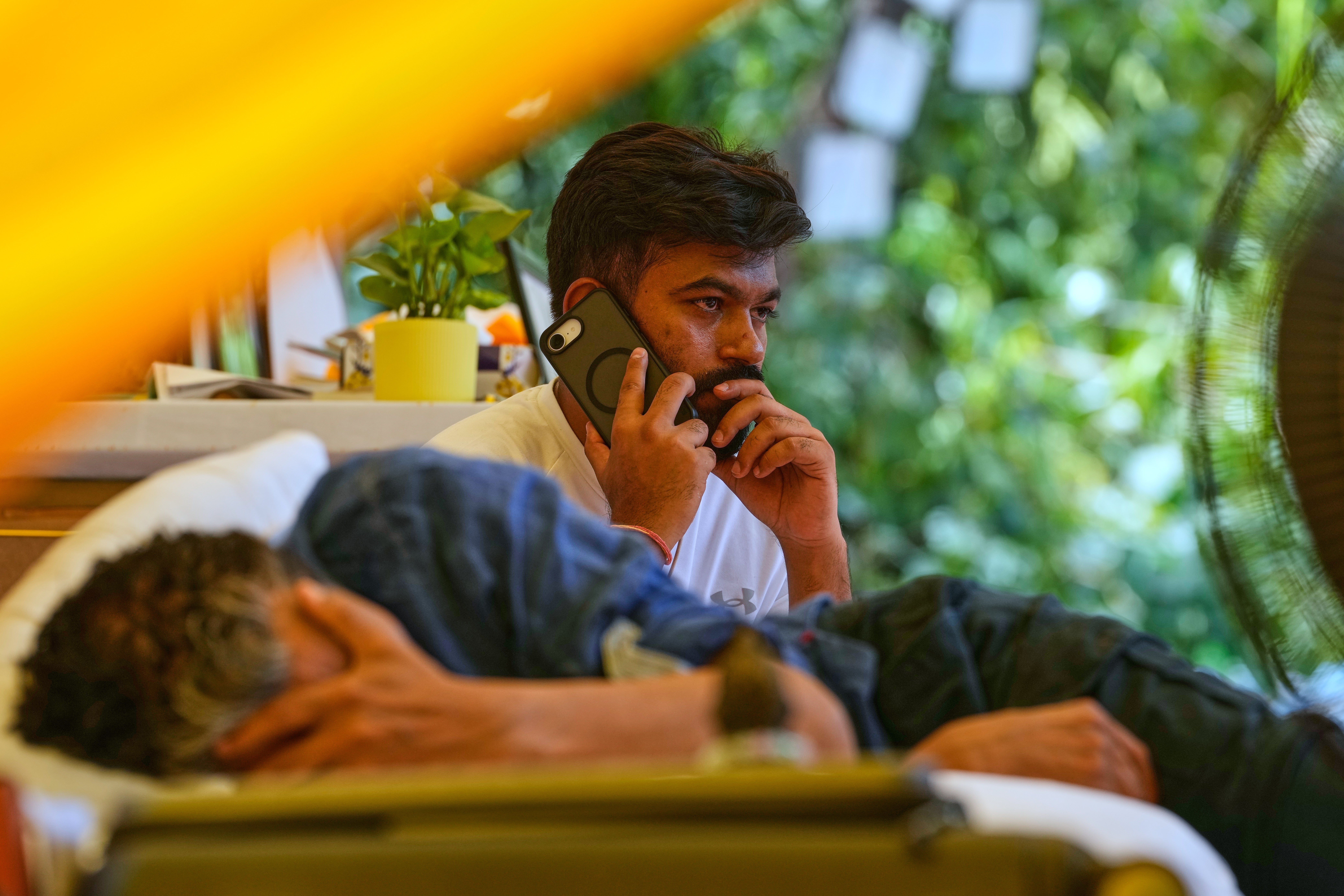 Abhijeet Dipke, founder of the Cockroach Janta Party, talks on his mobile phone as educationist and climate activist Sonam Wangchuk lies beside him (AP)
independent.co.uk
Abhijeet Dipke, founder of the Cockroach Janta Party, talks on his mobile phone as educationist and climate activist Sonam Wangchuk lies beside him (AP)
independent.co.uk
Delhi police remove hunger-striking activist Sonam Wangchuk from protest site, court monitoring and medical intervention cited as rationale, exam-leak anger shifts from street stage to hospital ward
Police in New Delhi removed activist Sonam Wangchuk from a protest stage at Jantar Mantar and took him to Safdarjung Hospital after his health deteriorated, according to The Independent. Wangchuk had been on a hunger strike for about three weeks and had said he intended to continue for six weeks unless he died first. Videos cited by the paper show officers holding up white sheets around him as he was carried down from the stage, while security was increased across parts of the capital.
The action sits at the intersection of public order, courts, and a protest movement trying to turn administrative failure into political cost. Police said the transfer to hospital followed Delhi High Court directions to monitor Wangchuk’s condition and act on medical advice; a petition had asked authorities to force-feed him as his condition worsened. That legal framing matters because it moves the dispute from whether the protest should be allowed to whether the state has a duty to intervene — and who gets to define “intervention” when it involves physically removing a protest leader.
Wangchuk had been fasting in solidarity with the Cockroach Janta Party, which is demanding the resignation of India’s education minister, Dharmendra Pradhan, over exam paper leaks affecting large numbers of medical students, The Independent reports. The group described the police move as a “kidnapping” and said its founder, Abhijeet Dipke, was beaten and briefly detained when he tried to return to the protest site. Dipke called for nationwide protests in a video posted on X, while the group planned a march to parliament as the monsoon session begins.
For the government, the immediate payoff is simple: a protest stage is easier to manage than a rapidly weakening hunger striker in a public square, and a hospital bed is easier to secure than an open plaza. For the protesters, the risk is that the state can convert a voluntary fast — a tactic designed to impose reputational costs — into a medical case managed by officials, with access and visibility controlled by police and administrators. The same mechanism that is presented as safeguarding life can also drain momentum from a protest that depends on being seen.
Wangchuk’s confrontation with the state is not new. The Independent notes that the Modi government previously accused him of inciting people through provocative statements during violent protests in Ladakh; Wangchuk denied the allegations and said the unrest reflected frustration with the federal government. On the third day of his current fast, he told Reuters he was willing to die for the cause but hoped it would not come to that.
On Saturday, police acknowledged a brief commotion as officers approached the stage. By evening, the protest’s most visible symbol was no longer lying on a mattress under the open sky at Jantar Mantar but under supervision inside a government hospital.