
Magnitude 7.4 earthquake hits off Mexico Chiapas coast
US tsunami warning issued after shallow offshore quake, early official updates report no major damage
Images
 USGS
USGS
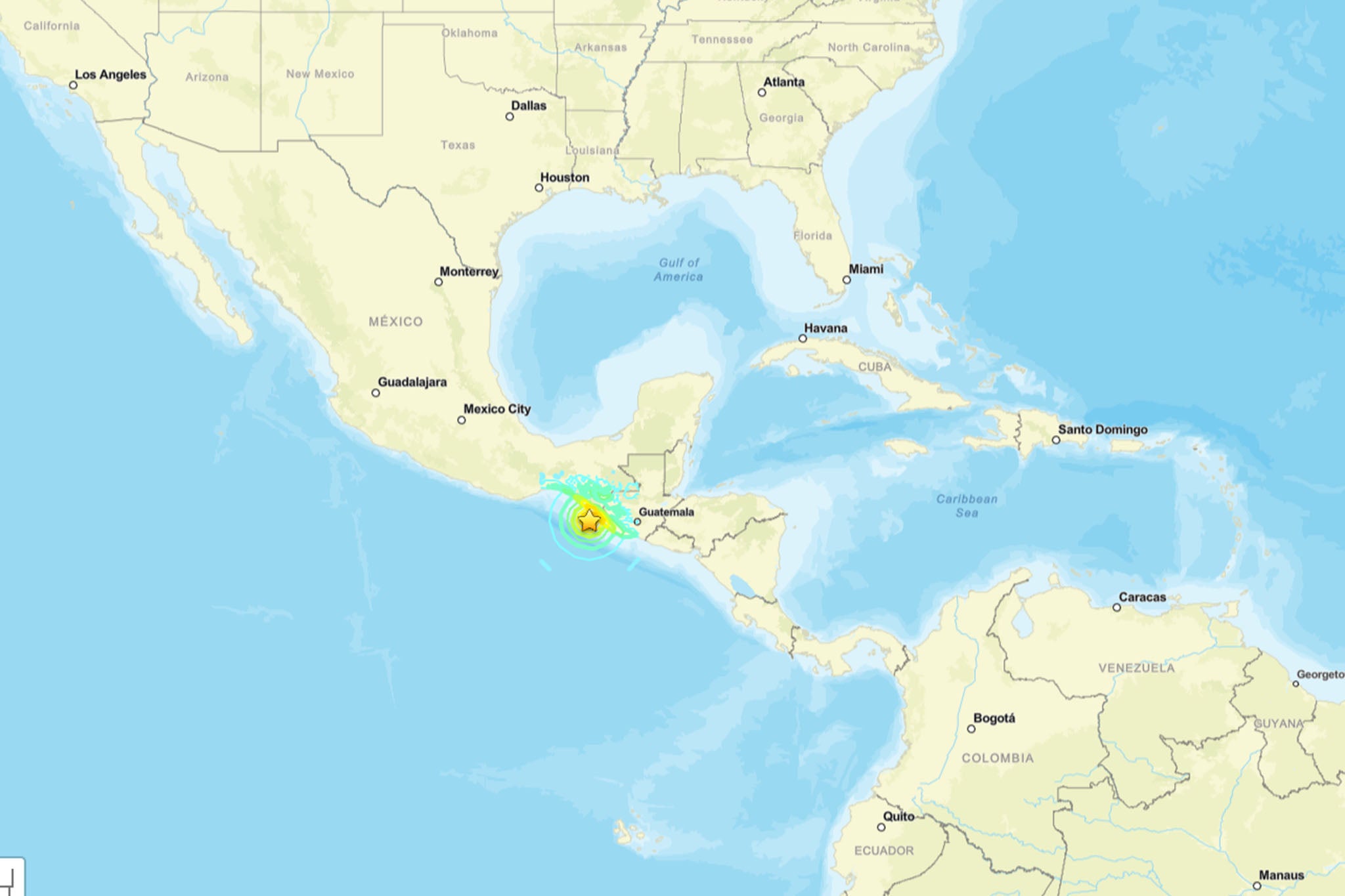
-copy.jpeg) The earthquake occurred off the coast of Mexico's southern state of Chiapas (USGS)
USGS
The earthquake occurred off the coast of Mexico's southern state of Chiapas (USGS)
USGS
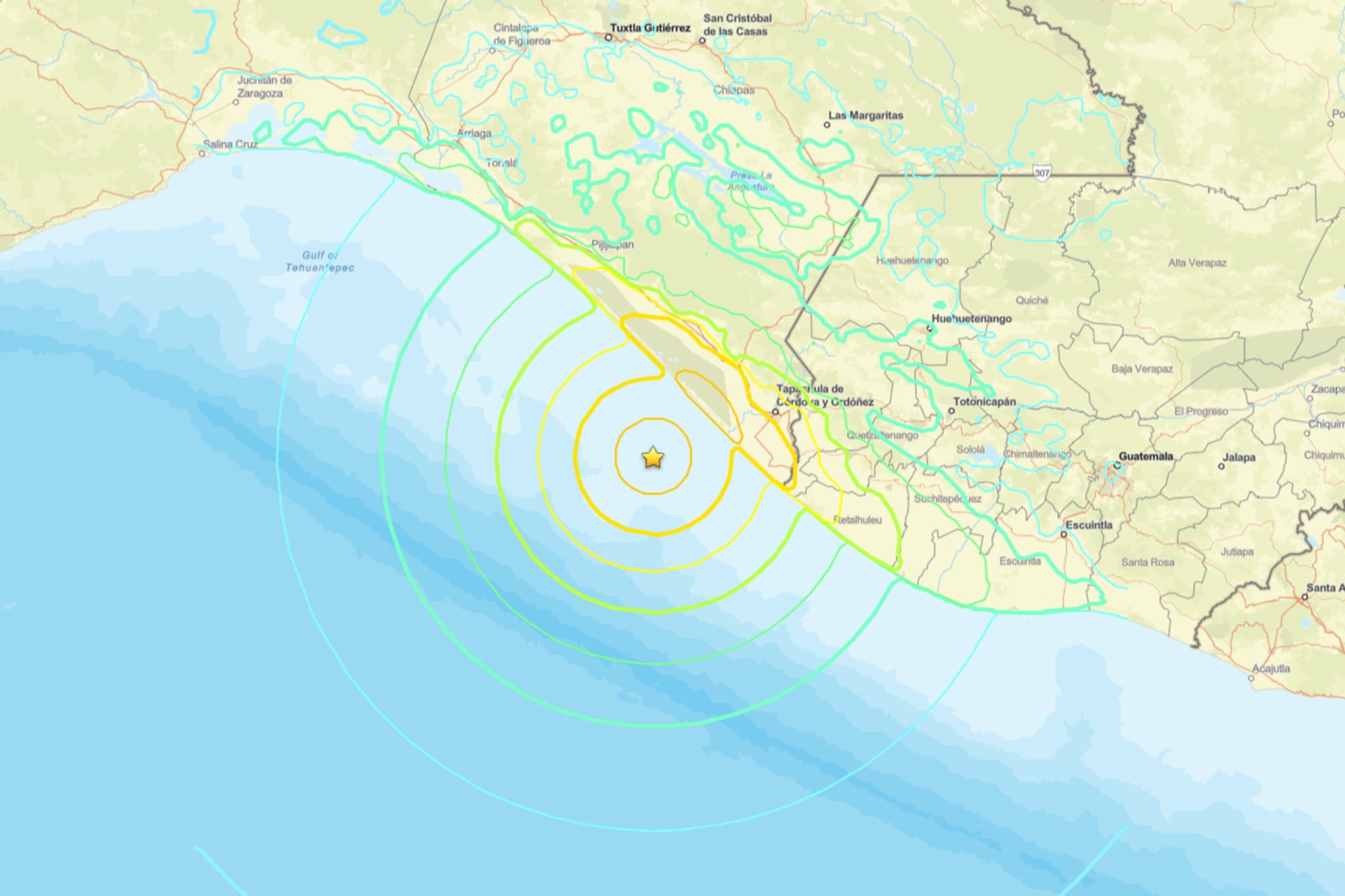 The epicentre of the earthquake, leading to concerns of a potential tsunami (USGS)
USGS
The epicentre of the earthquake, leading to concerns of a potential tsunami (USGS)
USGS
A magnitude 7.4 earthquake struck off Mexico’s southern state of Chiapas on Thursday, triggering a tsunami warning from the U.S. Tsunami Warning System, according to The Independent’s live reporting citing the U.S. Geological Survey. The USGS said the quake was shallow, at a depth of 10 km, and occurred near the coastal city of Puerto Madero.
Initial reports suggested a wide felt area rather than immediate catastrophe. The tremor was felt in Guatemala, where residents in Guatemala City ran into the streets, and local media showed staff evacuating a government building after security protocols were activated. The quake was also felt in El Salvador, underscoring how seismic events off Mexico’s Pacific coast routinely become regional incidents, even when the epicentre is offshore.
The first official messages focused on keeping people calm and channelling attention toward formal alerts. The governor of Oaxaca, a neighbouring southern state, said the earthquake was felt with moderate intensity and urged citizens to follow authorities’ recommendations and stay informed through official channels. As of those statements, no significant damage or injuries had been reported.
The tsunami warning illustrates the operational problem emergency systems face in the minutes after a major quake: coastal authorities must act on imperfect information because waiting for certainty is the costly option. Offshore quakes near the Guatemala border can produce localised sea-level changes, and warning systems are designed to err on the side of evacuation, even when the most likely outcome is a false alarm. That caution has its own price—traffic jams, disrupted commerce, and the public’s gradual habituation to alerts—but the alternative is learning too late.
Mexico sits on an active subduction zone, and the Pacific coast has repeatedly experienced damaging earthquakes. The engineering question is not whether the ground will move again, but whether buildings, roads, and communications can keep working when it does. In the immediate aftermath, the practical test is simpler: whether people receive warnings in time, and whether the routes away from the shoreline stay passable.
The USGS placed the epicentre offshore near Puerto Madero. By early reports, the strongest visible effects were not collapsed buildings but office workers filing out under protocol and waiting for the next instruction.