
EU signs security agreement with Djibouti
Aspides mission reinforced as Bab el-Mandeb closure threat returns, shipping detours become the price signal of proxy war
Images
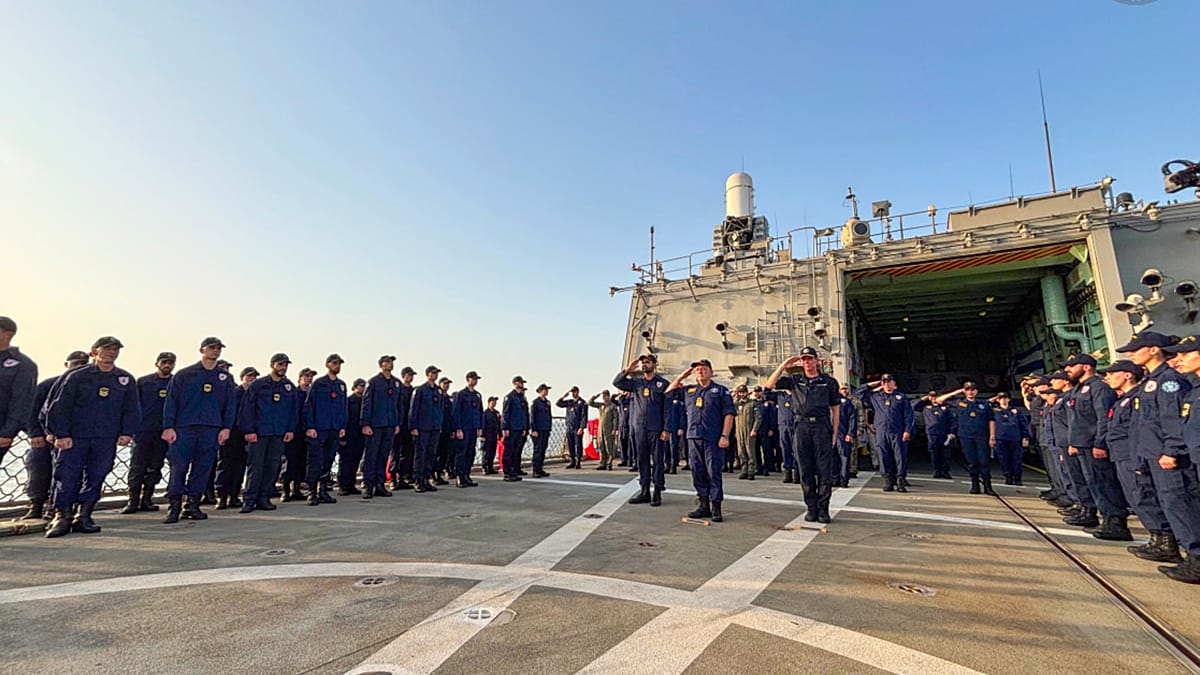 EU bolsters Red Sea mission amid reports Houthis may shut key waterway
euronews.com
EU bolsters Red Sea mission amid reports Houthis may shut key waterway
euronews.com
Kaja Kallas signed a new security agreement with Djibouti on Thursday as the EU moved to reinforce its naval presence in the Red Sea, according to Euronews. The deal, a Status of Forces Agreement for Operation Aspides, is meant to secure access and support for EU ships and air assets operating from Djibouti. The visit comes amid reports that Tehran has asked Yemen’s Houthi movement to prepare to shut the Bab el-Mandeb strait if the US strikes Iranian infrastructure.
Bab el-Mandeb is one of the narrow gates of global commerce: Euronews cites estimates that roughly 10–15% of world maritime trade passes through the passage between Yemen and Djibouti/Eritrea. A closure would push container ships and tankers away from the Suez route and back around the Cape of Good Hope, adding weeks to Asia–Europe journeys and raising costs that would show up first in freight rates and then in consumer prices. The threat also arrives as shipping is already being distorted elsewhere in the region; Kallas said Iran’s repeated attacks on commercial vessels transiting the Strait of Hormuz are “unravelling” an interim understanding with the United States.
The pattern is familiar to shipowners and insurers: the most expensive part of a voyage is not fuel but uncertainty. When attacks become plausible rather than hypothetical, fleets reroute, ports lose throughput, and the remaining traffic concentrates among operators willing to accept higher risk and opacity. The Houthis demonstrated the leverage of a relatively small force over a global chokepoint in late 2023 and early 2024, when their Red Sea campaign contributed to a sharp drop in commercial traffic and forced major companies to detour around Africa. After the US-brokered Israel–Hamas ceasefire in October 2025, the group paused most attacks, but it has repeatedly signalled it can restart if conditions shift.
For Tehran, asking partners to threaten Bab el-Mandeb offers a way to raise the price of pressure without deploying Iranian forces directly. For Europe, the response is an incremental expansion of presence—agreements for basing, overflight, and legal status—rather than a single decisive move that would require unified political backing and a clear end-state. The EU’s maritime missions in Djibouti can escort and deter at the margins, but they cannot eliminate the underlying ability of land-based actors to impose risk on sea lanes.
Kallas’ trip ended with a signed document in Djibouti while the report notes the Strait of Hormuz remains closed. Two chokepoints now sit in the same negotiation: one policed at sea, the other controlled from shore.