
UK nationalises British Steel
Jingye ownership ends after Scunthorpe furnace closure plans, China cites investment treaty and warns of legal measures
Images
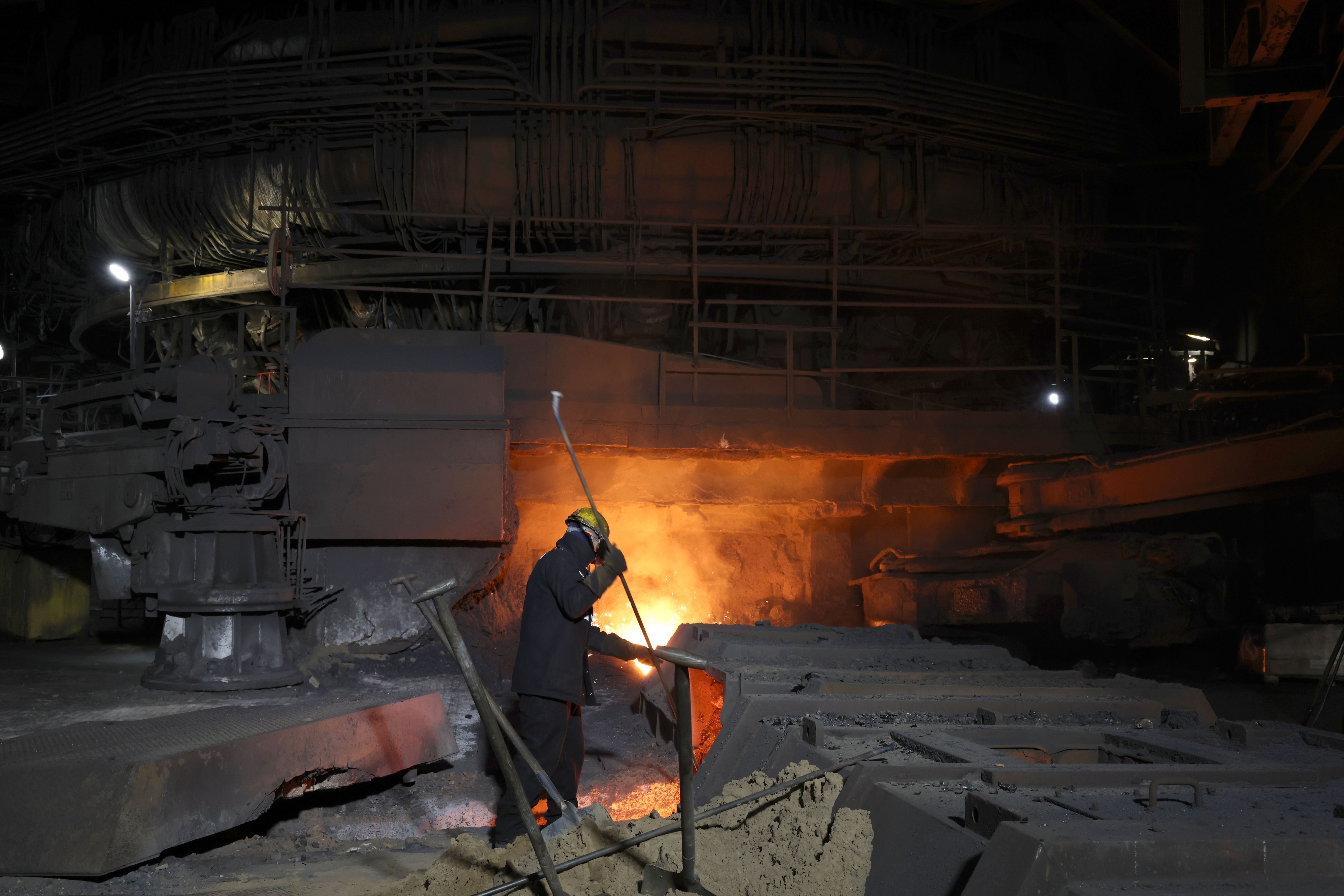 A steel worker at one of the blast furnaces at the British Steel site in Scunthorpe, Lincolnshire (Darren Staples/PA) (PA Archive)
PA Archive
A steel worker at one of the blast furnaces at the British Steel site in Scunthorpe, Lincolnshire (Darren Staples/PA) (PA Archive)
PA Archive
UK nationalises British Steel after Jingye plans Scunthorpe closures, China warns of legal action under investment treaty, industrial policy turns into a test of who carries the losses
Britain’s government brought British Steel into public ownership on Thursday, saying the move was essential to keep steel production going at the company’s Scunthorpe site in Lincolnshire and to protect supply chains, The Independent reports. The company had been owned by China’s Jingye, which had planned to close its blast furnaces in North Lincolnshire before the nationalisation.
Beijing’s response was framed less as a dispute about one plant than as a warning to future capital. China’s Ministry of Commerce said it was “strongly dissatisfied” and that the move dealt “a severe blow” to Chinese companies’ confidence in investing in the UK, according to The Independent. A spokesperson told The Global Times that the UK had forcibly taken control of British Steel and nationalised it on national security grounds, and said China would support Chinese companies in safeguarding their rights through legal means while taking “strong measures” to protect their interests.
The legal scaffolding matters because it signals whether this is presented as an emergency rescue or a repeatable tool. The Independent reports the Steel Industry (Nationalisation) Act 2026 has received royal assent, giving ministers powers to transfer steel businesses’ shares or property into public ownership. Parliament had already been recalled on a Saturday in April 2025 to approve special measures legislation to keep the Scunthorpe plant open, a reminder that the decision has been building through stopgap interventions rather than arriving as a single clean break.
For London, the political case is framed around jobs and “a vital national capability,” in Prime Minister Keir Starmer’s words, and a promise to stabilise the company and turn it into a “commercially sustainable, low-carbon enterprise,” The Independent reports. For Beijing, the argument is about predictability: the ministry urged the UK to abide by international rules and its obligations under the China-UK bilateral investment treaty, and to treat Chinese firms “fairly and impartially.” The gap between those positions is the unresolved question of valuation—what Jingye is owed, what the UK will pay, and how much of the bill ultimately sits with taxpayers rather than with the owners who chose to shut capacity.
Nationalisation also changes the negotiating table for decarbonisation. Private owners can close loss-making furnaces; governments tend to keep them running until the political cost of closure falls. The new leadership team is supposed to deliver a low-carbon transition while remaining commercially viable, but the state now owns the downside risk while trying to preserve the upside of industrial continuity.
China says it will follow developments closely and pursue legal remedies. Britain has already passed the law that lets ministers take the assets.