
US strikes Iran for sixth straight night
Bridges ports and Greater Tunb Island targeted as blockade enforcement expands, oil rises while two export chokepoints are put at risk
Images
 independent.co.uk
 independent.co.uk
US airstrikes hit Iranian bridges and ports for a sixth straight night, Tehran answers with missiles and drones while Houthis are asked to threaten Bab el-Mandeb, oil markets price two chokepoints at once
US forces struck targets in Iran for a sixth consecutive night, including attacks on bridges in Iran’s southern Hormozgan province and other sites around Tehran and in Semnan province, according to The Independent, citing Iranian state media via the Associated Press. US Central Command said strikes also targeted Iranian defence and missile sites on Greater Tunb Island, a position Iran uses to project control over the Strait of Hormuz.
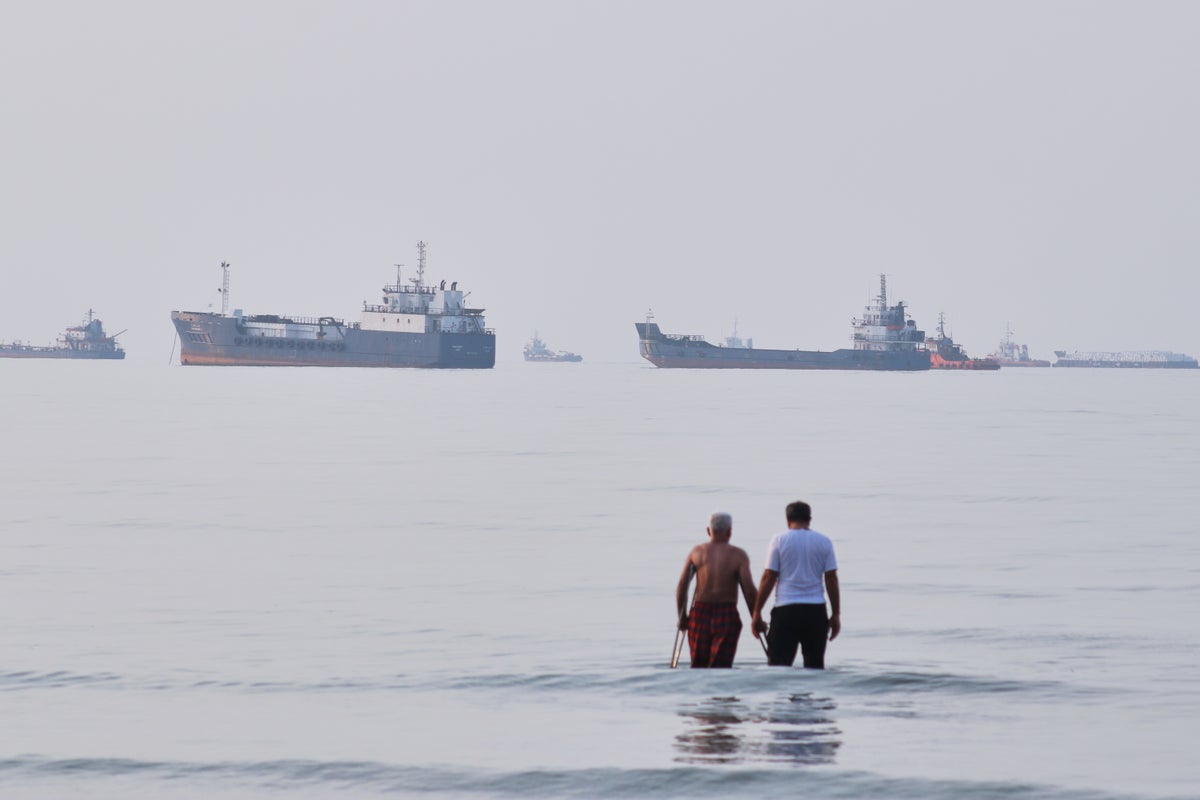
The campaign is being sold as a way to reopen Hormuz by degrading Iran’s military capability, but the operational logic is now bound up with commercial traffic control. The Independent reports that US forces boarded a vessel near the strait to enforce a naval blockade, redirected three commercial vessels attempting to run it, and disabled one that did not comply. When the enforcement mechanism becomes physical interdiction, the boundary between “military pressure” and day-to-day regulation of shipping narrows quickly: compliance is decided in real time by whoever has sailors on deck.
Iran’s response has been to widen the map. The Independent reports missile and drone attacks on US military bases in Bahrain, Jordan and Kuwait, and a warning from an Iranian military chief, Col Ebrahim Zolfaghari, that Iran could strike “all the infrastructure in the region” if Washington escalates against bridges and power plants. At the same time, Tehran has asked Yemen’s Houthi movement to be ready to close the Bab el-Mandeb strait in the Red Sea if US strikes hit Iranian power infrastructure, according to Reuters as cited by The Independent. With Hormuz already described as closed in the reporting, the Houthi lever functions as a second gate: one threat aimed at tankers leaving the Gulf, another at ships transiting toward Europe.
Markets are reacting to the geometry rather than the rhetoric. The Independent reports Brent crude rising to near $85 a barrel and WTI to around $80 as attacks and counter-attacks continued, with the International Energy Agency’s executive director Fatih Birol warning that oil security could worsen in coming weeks. The price move is modest relative to the scale of the stated threats, but it reflects a familiar pattern: traders wait for sustained disruption, while governments talk as if disruption is already a policy instrument.
On Thursday night Trump said the US was “winning big in Iran,” and the air campaign expanded the next day, The Independent reports. The blockade is being enforced vessel by vessel while both sides discuss closing straits that cannot be reopened by speech.