
Trump Board of Peace scales back Gaza rebuild
Flagship plan reduced to Rafah pilot camp, pledged billions and glossy renderings meet border controls and election timing
Images
 Palestinians collect aid supplies from trucks that entered Gaza in October last year. Photograph: Ramadan Abed/Reuters
theguardian.com
Palestinians collect aid supplies from trucks that entered Gaza in October last year. Photograph: Ramadan Abed/Reuters
theguardian.com
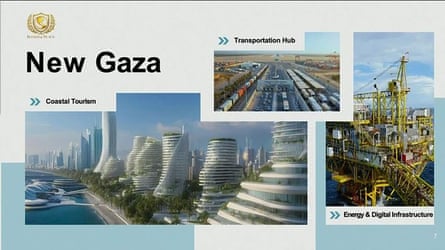 A reconstruction plan for ‘New Gaza’ put together by the Board of Peace. Illustration: Board of Peace
theguardian.com
A reconstruction plan for ‘New Gaza’ put together by the Board of Peace. Illustration: Board of Peace
theguardian.com
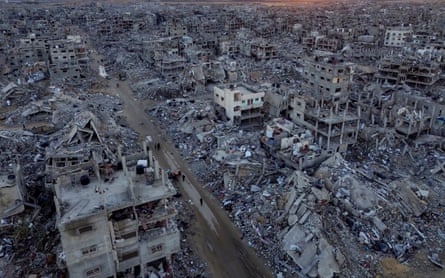 The aftermath of Israel’s air and ground offensive in Rafah, Gaza, photographed in January 2025. Photograph: Jehad Alshrafi/AP
theguardian.com
The aftermath of Israel’s air and ground offensive in Rafah, Gaza, photographed in January 2025. Photograph: Jehad Alshrafi/AP
theguardian.com
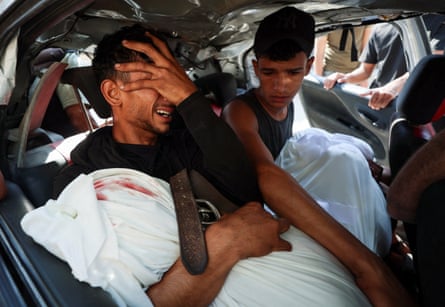 Hamas al-Hdabi, holds the body of his father, Sohail, who was killed in an Israeli strike on Gaza City on Thursday. Photograph: Dawoud Abu Alkas/Reuters
theguardian.com
Hamas al-Hdabi, holds the body of his father, Sohail, who was killed in an Israeli strike on Gaza City on Thursday. Photograph: Dawoud Abu Alkas/Reuters
theguardian.com
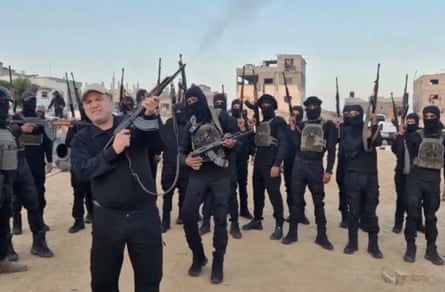 The head of an anti-Hamas faction, Hussam al-Astal, in an Israeli-held area in Khan Younis, Gaza in November 2025. Photograph: Reuters TV
theguardian.com
The head of an anti-Hamas faction, Hussam al-Astal, in an Israeli-held area in Khan Younis, Gaza in November 2025. Photograph: Reuters TV
theguardian.com
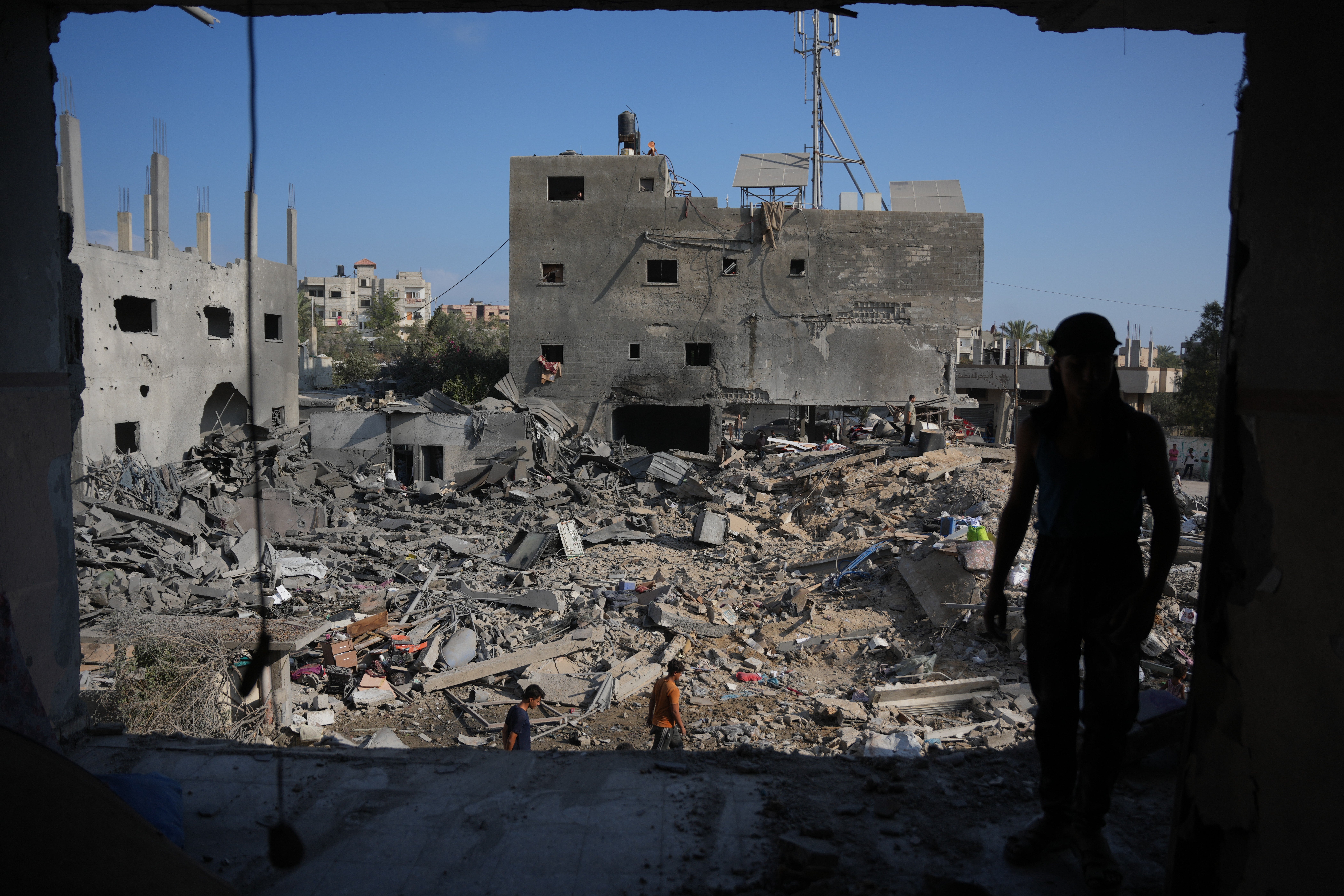 The U.S.-backed Board of Peace is reportedly discussing a humanitarian pilot program to build a small displaced persons camp in Gaza, a far cry from its ambitious announced plans to remake the territory into a modern metropolis (AP)
independent.co.uk
The U.S.-backed Board of Peace is reportedly discussing a humanitarian pilot program to build a small displaced persons camp in Gaza, a far cry from its ambitious announced plans to remake the territory into a modern metropolis (AP)
independent.co.uk
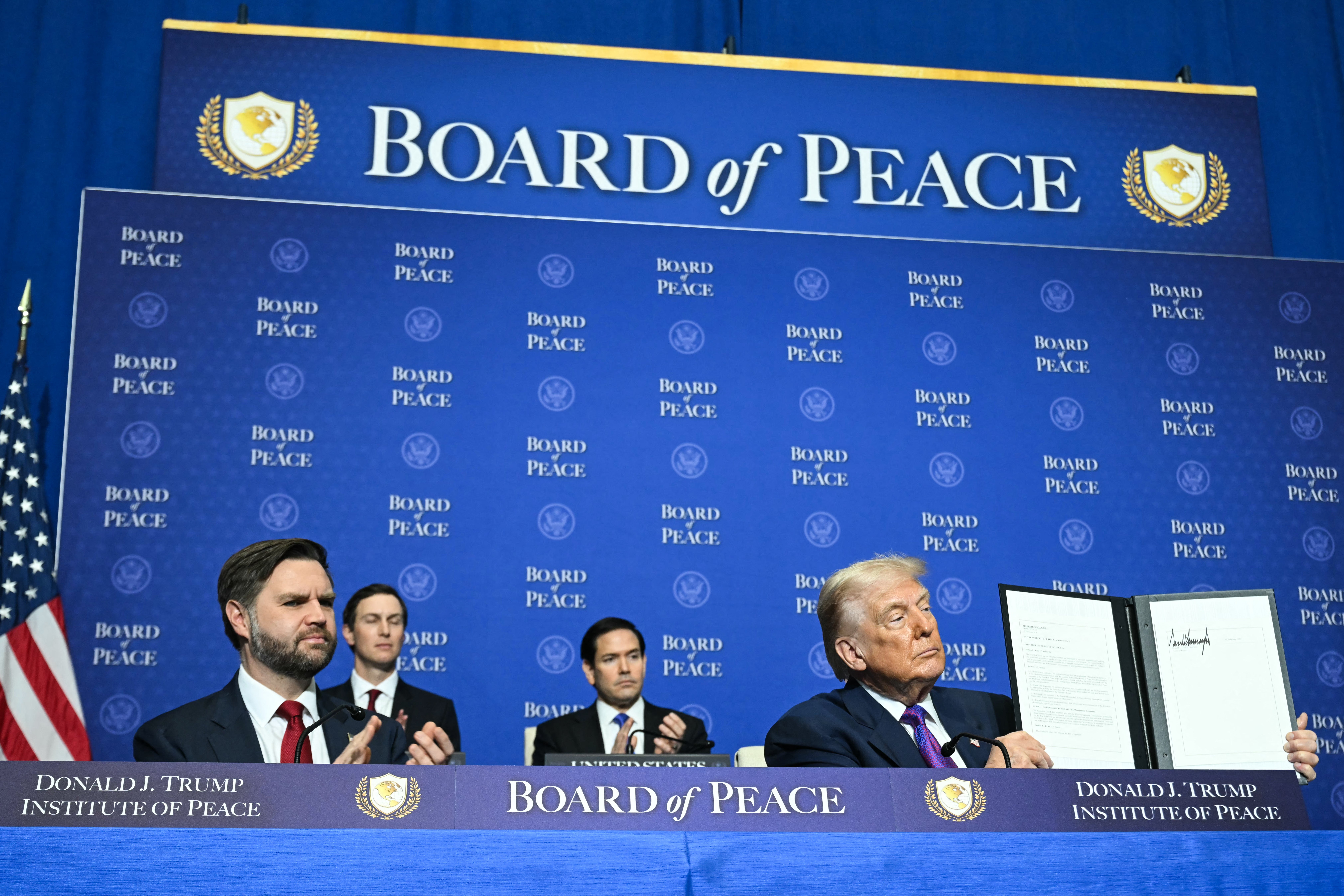 Pledged funds backing the Board of Peace have reportedly been slow to materialize (AFP/Getty)
AFP/Getty
Pledged funds backing the Board of Peace have reportedly been slow to materialize (AFP/Getty)
AFP/Getty
A reconstruction blueprint that was pitched as a $17bn transformation of Gaza has shrunk to a pilot camp that is not expected to open before the end of 2024. According to the Guardian, Donald Trump’s “Board of Peace” has dropped its full recovery plan in favour of a temporary site in the southern Gaza Strip, near Rafah, meant to house only a small fraction of Gaza’s roughly 2 million displaced people.
The retreat from grand design to a single camp is a measure of what still controls Gaza: who can move, who can build, and who can carry weapons. The Independent reports that the Board has floated a camp overseen by an international security force and a newly trained Palestinian police unit, but Israel has not approved either force to operate inside Gaza, and has not allowed the technocratic National Committee for the Administration of Gaza to work on the ground. The World Bank, the Independent adds, had not received any of the pledged billions from donor countries as of early June 2023, leaving “pledges” as press material rather than procurement.
The Guardian describes a small number of Moroccan and Kosovan officers arriving in Israel to form the nucleus of an International Stabilization Force, with a logistical base nearing completion at the Kerem Shalom crossing. Yet preparatory work on the camp itself has not begun, and satellite imagery cited by the Guardian shows disturbed earth near Rafah but no new structures. The timeline is now tied to Israeli domestic politics: diplomats in Jerusalem told the Guardian they do not expect substantial progress before Israel’s election on 27 October.
On paper, the pilot camp is supposed to demonstrate governance: Palestinian administration, Palestinian policing, and a small international security presence. In practice, the project depends on permissions that can be withheld at any point, while the ceasefire that was meant to create working space has remained porous. The Guardian reports Israel has carried out frequent strikes since the ceasefire was declared in October 2023, killing more than 1,100 Palestinians, and that Israeli forces have repeatedly advanced beyond the agreed ceasefire line. It says the Israeli army now directly occupies more than 60% of Gaza and has created a buffer zone beyond that—conditions under which “reconstruction” becomes a negotiation over access, not a construction schedule.
The Board’s own conditions further narrow the field. Nickolay Mladenov, described by the Independent as the Board’s high representative for Gaza, said full disarmament of Hamas and other groups is a precondition for full reconstruction support. Meanwhile, both Hamas and Israel accuse each other of violating ceasefire terms, and negotiations over disarmament remain stalled, according to the Independent. The result is a plan that requires a level of security coordination and political compliance that the parties have not been willing—or able—to deliver.
For now, the most concrete deliverable is not a rebuilt neighbourhood but a support base at a crossing. The “futuristic metropolis” pitch has become a camp that exists mainly in drafts, satellite images, and election calendars.