
Spanish researchers propose carbon credits to refill Aral Sea
Science study links dried seabed to massive CO2 release, restoration pitched as tradable prevention
Images
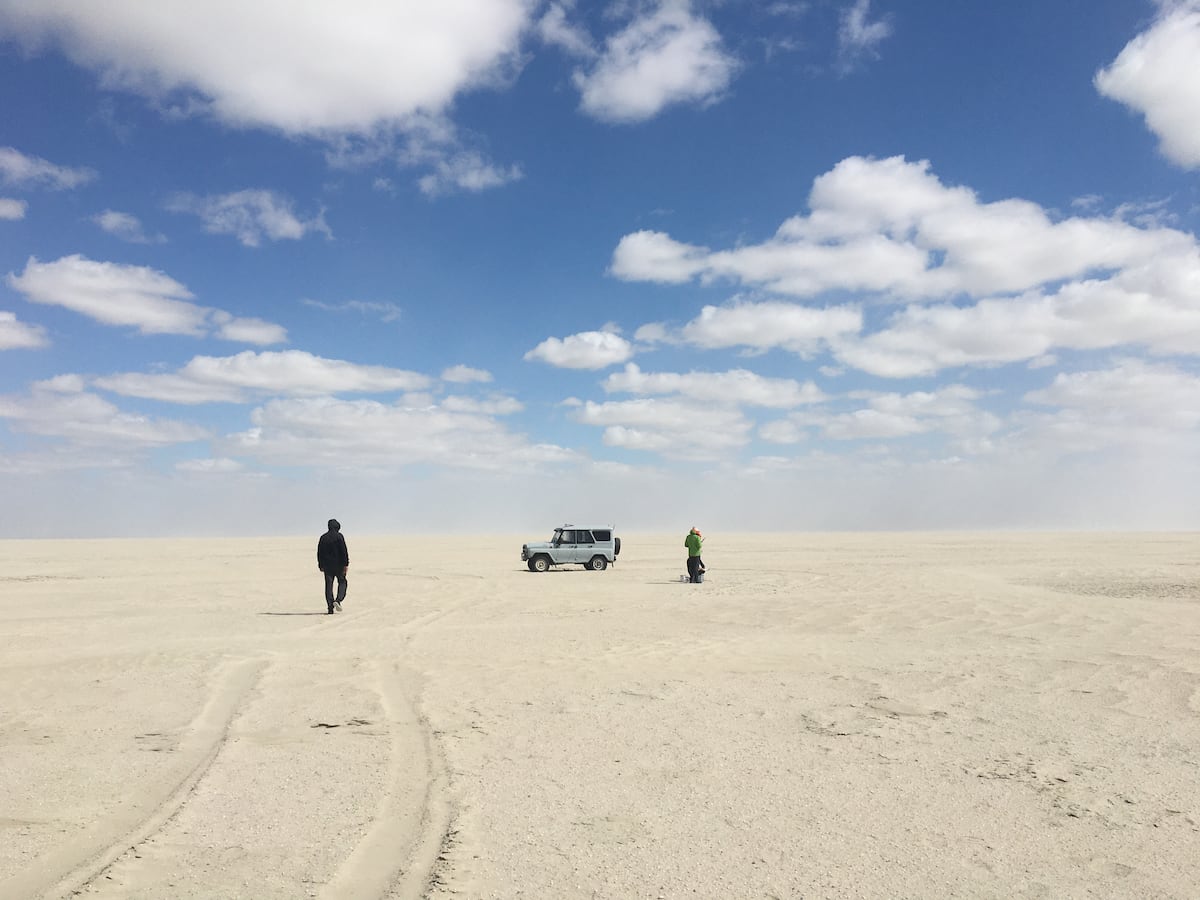 Refilling the Aral Sea: A Spanish scientific proposal to avoid releasing millions of tons of CO₂
english.elpais.com
Refilling the Aral Sea: A Spanish scientific proposal to avoid releasing millions of tons of CO₂
english.elpais.com
Aral Sea drying has already released an estimated 748 million tons of carbon dioxide since 1960, according to a study led by Spanish researchers published on 16 July in the journal Science. The researchers argue that the exposed seabed between Kazakhstan and Uzbekistan has become a major CO₂ source after Soviet-era river diversions for cotton cultivation shrank what had been the world’s fourth-largest lake. Their proposal is bluntly financial: use carbon markets to raise money to bring water back.
According to El País, the team estimates a further 605 million tons of CO₂ could still be emitted from the Aral Sea’s dry bed. The idea is to convert those “not-yet-emitted” tons into tradable carbon credits, with a notional valuation ranging from €3.1 billion to €15.8 billion, depending on carbon prices. Companies would buy credits to fund interventions that prevent the emissions, while using the purchases to offset their own emissions elsewhere.
The paper’s underlying mechanism is physical rather than rhetorical. Lakes and wetlands can store carbon as vegetation and sediments lock it away; when water disappears, oxygen reaches previously submerged organic matter and microbial activity turns stored carbon into atmospheric CO₂. The authors say measurements on the Aral seabed challenge how emissions are currently accounted for in Central Asia, and they report limited CO₂ uptake from revegetation efforts in the region.
The Aral Sea is not presented as a one-off. The study points to other shrinking basins—from the Great Salt Lake and Salton Sea in the United States to Lake Urmia in Iran, Lake Chad, and lakes in Bolivia, Argentina and Tanzania—where drying wetlands flip from carbon sinks into sources. One of the study’s authors, Rafael Marcé of the Blanes Center for Advanced Studies (CSIC), tells El País that the Caspian Sea could face a similar ecological trajectory, with projections that the northern Caspian and the Volga delta could dry over an area far larger than the Aral’s.
The proposal would effectively turn a regional restoration project into a global financial product. Carbon credits have no fixed price and vary widely by quality and verification, which is why the valuation band is so large. But the attraction is obvious: the Aral’s remaining potential emissions are framed as an asset that can be sold to outsiders, rather than a liability that must be paid for locally.
The Aral Sea’s collapse began with a planned agricultural economy; its partial rescue, the authors suggest, may depend on whether today’s carbon markets can price a dry lakebed more reliably than governments once priced water.