
Hundreds feared dead after two suspected shipwrecks off Myanmar
UN agencies say boats carried mainly Rohingya from Rakhine and Bangladesh camps, smuggling routes operate even outside sailing season
Images
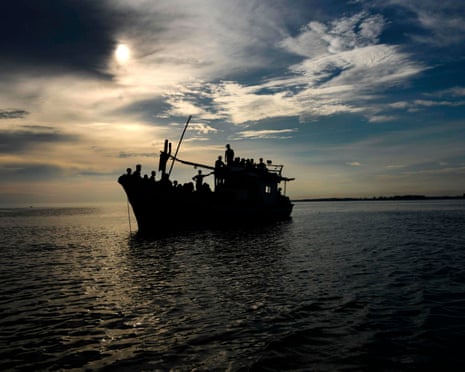 The IOM and UNHCR have voiced alarm in a joint statement at reports ‘that two boats carrying more than 500 people may have capsized off the coast of Myanmar in recent days’. Photograph: Chaideer Mahyuddin/AFP/Getty Images
theguardian.com
The IOM and UNHCR have voiced alarm in a joint statement at reports ‘that two boats carrying more than 500 people may have capsized off the coast of Myanmar in recent days’. Photograph: Chaideer Mahyuddin/AFP/Getty Images
theguardian.com
More than 500 people are feared dead after two suspected boat disasters off Myanmar, according to a joint statement from the International Organization for Migration and the UN refugee agency cited by The Guardian. The agencies said they were alarmed by reports that two vessels carrying people fleeing persecution—mainly Rohingya—may have capsized after departing Myanmar’s Rakhine state in late June. One boat, believed to have about 250 people on board, lost contact shortly after leaving; a second, reportedly carrying about 280, is believed to have sunk off Myanmar’s Ayeyarwady coast on 8 July. Neither incident, nor any casualty figure, has been officially confirmed.
The details point to how displacement markets work when legal exits are scarce and enforcement is uneven. The agencies said some passengers may have travelled from Cox’s Bazar in Bangladesh, where more than a million Rohingya refugees live in camps. Movement out of those camps is constrained, work is limited, and resettlement opportunities are thin; the “choice” becomes a smuggler’s seat on an overloaded boat. IOM and UNHCR said the crossings took place outside the regular sailing season, when conditions are typically more hazardous, and that torrential rain and flooding in the region had increased the risks—exactly the period when a rational operator with safety obligations would cancel departures, but a smuggling network paid per passenger departs anyway.
If verified, the two wrecks would add to nearly 300 people reported missing or dead in the Andaman Sea and Bay of Bengal so far this year, including Rohingya refugees and Bangladeshi nationals, the statement said. Last year, nearly 900 Rohingya were reported missing or dead at sea in the northern Indian Ocean out of more than 6,500 who attempted crossings. Those numbers describe a recurring pipeline: the sea route remains viable for traffickers because the cost of failure is carried by the passengers and their families, while the profits are collected upfront.
The UN agencies called for enhanced search and rescue operations, access to asylum and protection, and action against smuggling and trafficking networks. They also praised Bangladesh for hosting Rohingya refugees for years while stressing that host communities and refugees need sustained international support. The statement’s framing makes clear the bind: humanitarian budgets can keep camps running, but they cannot by themselves produce lawful status, durable security in Myanmar, or a credible alternative to the boat.
The boats left Rakhine in late June. Days later, the agencies say, contact was lost and the sea kept its own records.