
Hong Kong police arrest five booksellers
Raids on Mong Kok shops cite seditious publications under 2024 security law, customs referral turns overseas shipments into enforcement trigger
Images
 A policeman stands at the entrance to the Have A Nice Stay independent bookstore after the officers raided the premises and arrested employees in Hong Kong on Wednesday. Photograph: Catherine Lai/AFP/Getty Images
theguardian.com
A policeman stands at the entrance to the Have A Nice Stay independent bookstore after the officers raided the premises and arrested employees in Hong Kong on Wednesday. Photograph: Catherine Lai/AFP/Getty Images
theguardian.com
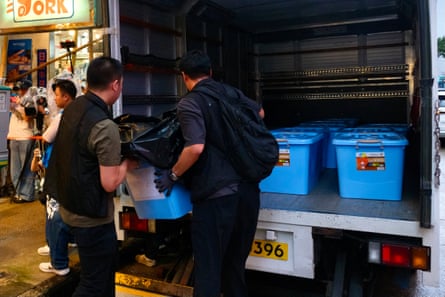 Police officers load confiscated items from independent bookstore Have A Nice Stay. Photograph: Tommy Wang/AFP/Getty Images
theguardian.com
Police officers load confiscated items from independent bookstore Have A Nice Stay. Photograph: Tommy Wang/AFP/Getty Images
theguardian.com
Five people were arrested after Hong Kong police raided two independent bookstores in Mong Kok, seizing boxes of publications and accusing the sellers of offering items with “seditious intention” under the territory’s 2024 national security law. According to The Guardian, the shops targeted were Have A Nice Stay and Greenfield Book Store, and the arrests followed a referral from customs officials who said they found allegedly seditious books in an overseas shipment.
The case is the third round of arrests linked to independent bookstores this year, after similar operations in March and June, a pattern that has pushed small retailers into a permanent guessing game about what is still allowed. Police did not specify which titles triggered the raids, but said the publications could “stir up hatred” against the government, judiciary and law enforcement — a definition broad enough to cover everything from memoir to reportage. Have A Nice Stay, founded by former journalists, has already announced it will close later this summer, citing financial difficulties and what it described as an elusive red line.
Hong Kong’s book trade once served as a pressure valve for the mainland: Chinese visitors crossed the border to buy political titles that could not be sold at home, and publishers could rely on a predictable legal boundary between controversial speech and criminal liability. The post-2019 shift has moved that boundary from courts to enforcement decisions, where the cost is borne not by the state but by shop owners who must decide what to stock, what to hide, and whether to stay open at all. The government says the security laws are essential for stability; at the same time, the secretary for security, Chris Tang, has argued against publishing a list of banned books, calling such a list pointless.
That leaves the market with the worst of both worlds: compliance risk without clear rules, and enforcement that can be triggered by a shipment inspection rather than a public complaint. The Guardian notes that the death earlier this month of Lam Wing-kee, the former owner of Causeway Bay Books, revived memories of the 2015 disappearances of booksellers linked to that shop and Lam’s later account of being held by Chinese authorities after crossing into Shenzhen. For the remaining independent stores, the message is delivered less through courtroom precedent than through the sight of boxes leaving a storefront and handcuffs entering a van.
Police said the arrests involved two men and three women. Have A Nice Stay says it will shut its doors on 30 August.