
US disables oil tanker near Iran under Hormuz blockade
Centcom says vessel ignored warnings while heading toward Kharg Island, commercial shipping learns the rules in real time
Images
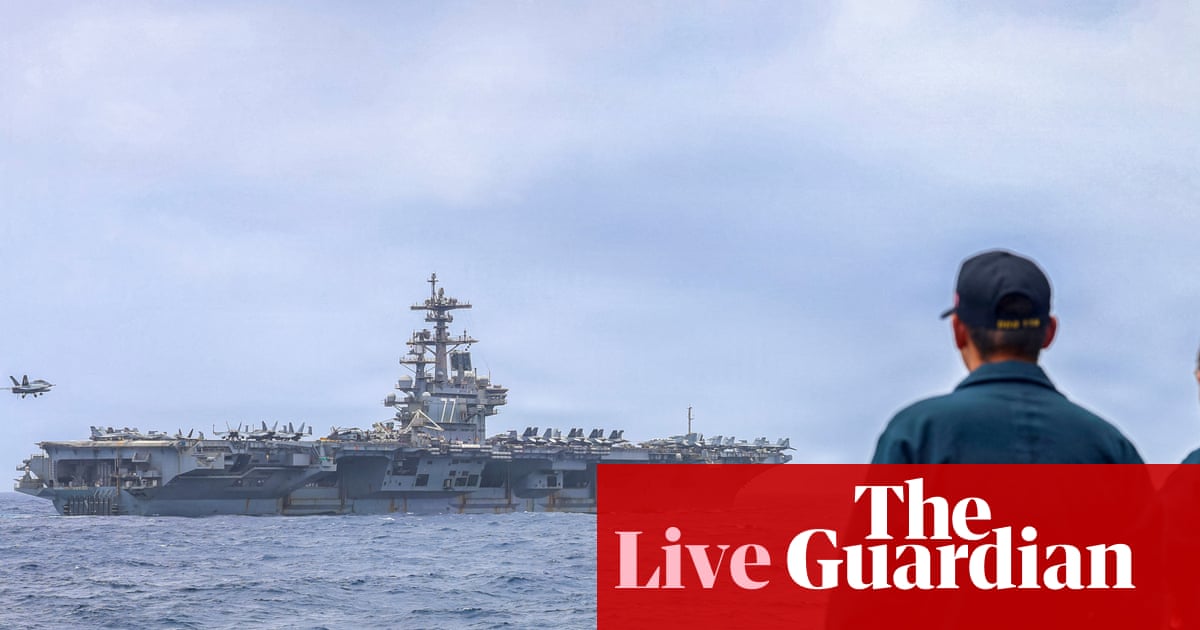 US military says it disabled tanker trying to breach blockade amid new wave of strikes on Iran – Middle East crisis live
theguardian.com
US military says it disabled tanker trying to breach blockade amid new wave of strikes on Iran – Middle East crisis live
theguardian.com
 Iran war live: Trump launches third wave of strikes as IMF warns of energy disruption
independent.co.uk
Iran war live: Trump launches third wave of strikes as IMF warns of energy disruption
independent.co.uk
US forces fired missiles into an oil tanker’s smokestack in the Strait of Hormuz on July 15, disabling the vessel after it ignored warnings and continued toward an Iranian port, according to US Central Command. The tanker was unladen and was described by Centcom as attempting to violate a US naval blockade of Iranian ports. The Independent reported that President Donald Trump ordered a third wave of US strikes on Iran within 24 hours as Washington escalated military pressure around the waterway.
The episode illustrates how quickly a regional confrontation turns into a compliance regime for commercial shipping. A blockade is not only a military posture; it is an administrative system of warnings, interdictions, and discretionary enforcement decisions made in real time by commanders who are also trying to deter Iran. In Centcom’s account, the tanker was moving in international waters toward Kharg Island when it was struck, a reminder that the key choke points are not only the narrow strait itself but the approach lanes to export infrastructure. Once the US is in the business of deciding which hulls may proceed and which must stop, shipowners and insurers have to price not just missile risk but the risk of being treated as a test case.
The Independent’s live coverage tied the blockade to a rapid tempo of airstrikes aimed at Iranian capabilities used to threaten vessels transiting Hormuz, while also noting Trump had reversed a separate plan to impose a fee on maritime traffic. That reversal keeps the policy framed as security rather than revenue, but the practical effect for shipping is still a pay-to-play environment—only the “payment” is paperwork, routing, and political alignment rather than an explicit toll. The IMF’s strategy director warned that prolonged disruption to energy supplies would hit the global economic outlook, a point that becomes less abstract when enforcement actions start targeting individual commercial vessels.
For Iran, the blockade and strikes raise the value of ambiguity and deniability—using proxies, dispersing assets, and exploiting the reluctance of private actors to sail into a zone where identification systems may be switched off and rules can change overnight. For the US, each interdiction also carries a signaling burden: too soft, and the blockade becomes porous; too hard, and neutral shipping treats the Gulf as uninsurable. Either way, the costs travel outward, from the strait to freight rates, to fuel prices, to the balance sheets of importers far from the region.
Centcom said the tanker stopped its transit toward Iran after the missile strike. A blockade that needs Hellfire missiles to enforce warnings is already being priced into the world’s energy corridor.