
Gibraltar and Spain lift border checks
Brussels and London sign post Brexit deal aligning territory with Schengen, passport controls shift to airport and port
Images
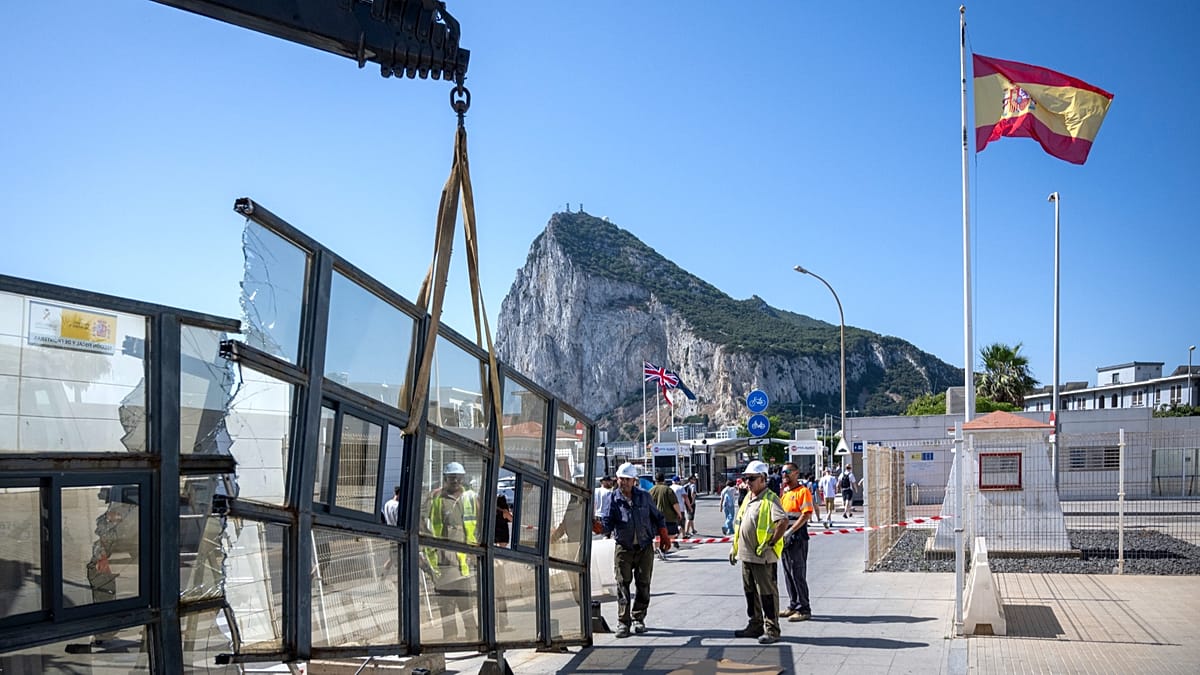 Gibraltar and Spain end border checks, ushering in 'new era'
euronews.com
Gibraltar and Spain end border checks, ushering in 'new era'
euronews.com
Gibraltar and Spain lift border checks after Brussels deal, daily commuters regain frictionless crossing as Schengen rules move to the airport
Border checks between Spain and Gibraltar were lifted just after midnight on July 15, with people and vehicles crossing without customs controls within minutes, according to Euronews citing an AFP journalist at the scene. Several hundred people gathered at the frontier as the change took effect, some waving Spanish flags. Gibraltar Chief Minister Fabian Picardo marked the moment by saying “Europe is back.”
The practical stakes are large for a territory of about 40,000 people that depends on daily inflows of labour. Euronews reports that around 15,500 workers cross from Spain into Gibraltar each day, and that queues at rush hour had become routine due to document checks. For Gibraltar’s economy—built around financial services and online gaming—border friction functions like a tax on staffing: delays reduce the effective labour pool, raise recruitment costs, and push businesses to rely more on residents in a jurisdiction with limited space and high costs.
The agreement was signed in Brussels on July 14, the product of negotiations between London and Brussels after Britain left the EU in 2020, Euronews reports. EU trade chief Maroš Šefčovič attended alongside British and Spanish ministers and Picardo. Spain’s foreign minister José Manuel Albares called the deal a new era bringing “enormous opportunities,” while Gibraltar’s small-business federation said smoother crossings would help firms recruit and retain Spanish workers.
The arrangement also shows how sovereignty disputes are often administered through mundane choke points. Spain has long claimed sovereignty over Gibraltar, and past diplomatic tensions have translated into tightened controls and longer waits. The border was closed entirely in 1969 under Francisco Franco after Gibraltar voted to remain British, and remained shut for 13 years, cutting families and workers off from each other. Even after reopening, the threat of unpredictable delays has lingered as a lever that can be pulled without changing any formal legal position.
Under the new deal, Gibraltar is aligned with Schengen rules for land crossings, while travellers arriving from outside the Schengen zone will still show passports at Gibraltar’s airport and port, according to Euronews. That division pushes the hard border outward: the land frontier becomes a commuter corridor, and the external-facing controls concentrate at transport hubs where checks are easier to standardise and less visible to daily life.
In recent weeks, workers removed the old chain-link fencing along the frontier zone. On July 15, people crossed the same line without stopping.