
US and Iraq set September deadline for US troop exit
Pentagon cites earlier anti-Islamic State agreement, White House says troops out while companies stay
Images
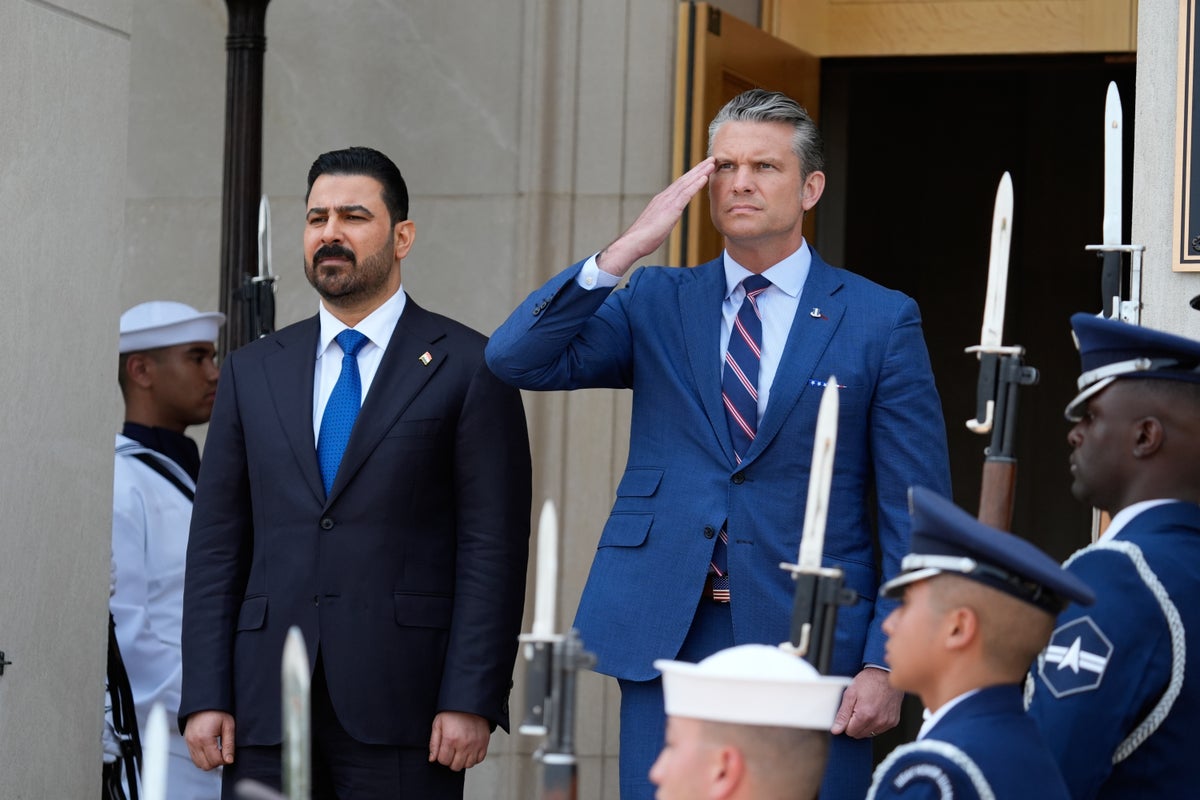 US military will be out of Iraq by end of September, Iraqi prime minister and Pentagon say
independent.co.uk
US military will be out of Iraq by end of September, Iraqi prime minister and Pentagon say
independent.co.uk
The US military will leave Iraq by the end of September 2024, President Donald Trump said alongside Iraq’s new prime minister Ali al-Zaidi at the White House, according to The Independent. Al-Zaidi, speaking through an interpreter, said US forces would be out by September 30 while “US companies will be inside Iraq,” and the Pentagon later reiterated a 2024 bilateral agreement to end the US mission against Islamic State.
The announcement closes a long loop that began with the 2003 invasion and a “shock and awe” bombing campaign that toppled Saddam Hussein but did not uncover the weapons of mass destruction cited as the casus belli, The Independent reports. After the last US combat troops left in 2011, Washington returned in 2014 at Baghdad’s invitation as Islamic State captured large areas of Iraq and Syria, rebuilding and retraining Iraqi units that had collapsed. Coalition combat operations ended in 2021, but a smaller US presence remained for training and partnered counter-IS work; The Independent says the US maintained about 2,500 troops in Iraq after 2021, with many already withdrawn since the 2024 agreement.
What remains is a narrower, more transactional relationship. Trump framed the shift as a product of broader ties, pointing to Iraq’s growing relationships with oil companies and saying the “whole big relationship” no longer requires a US military footprint. Al-Zaidi’s formulation—troops out, companies in—draws a clean line between security guarantees and commercial access, and it highlights how influence is increasingly exercised through contracts, banking channels and technical support rather than large garrisons.
That division also moves risk back onto Iraqi institutions. Training missions and embedded advisers have been one way Washington priced the danger of an Islamic State resurgence and the political costs of Iraqi factionalism. Removing them makes Baghdad’s security services the final backstop, while the US retains the option to re-engage from offshore or through regional bases if threats reappear. The Pentagon statement, as described by The Independent, ties the withdrawal to an existing agreement rather than a sudden break—suggesting a drawdown that has already been happening quietly, base by base.
The timeline is unusually concrete for a relationship that has often been managed through open-ended “missions,” but it comes with a familiar asymmetry: the departure date is fixed, while the conditions Iraq must meet to keep militants contained are not. The US arrived in 2003 with a maximal political project and is leaving in 2024 with a minimal one.
On the White House stage, the two leaders reduced 23 years of war, state-building and counterinsurgency to a single sentence: US forces will be out by the end of September, and US companies will stay.