
UN verifies executions of Ukrainian prisoners of war
Kyiv cites hundreds more since 2022, prosecutors say policy claims rise as evidence trails the battlefield
Images
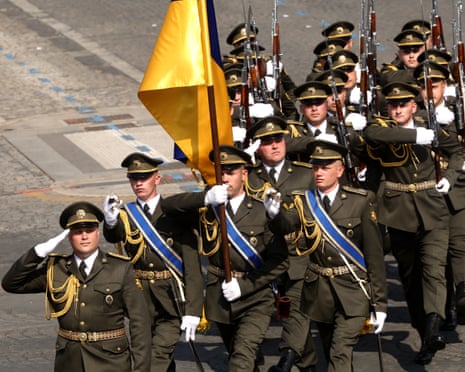 Ukrainian troops take part in the Bastille Day military parade on the Champs-Élysées in Paris. Photograph: Teresa Suárez/EPA
theguardian.com
Ukrainian troops take part in the Bastille Day military parade on the Champs-Élysées in Paris. Photograph: Teresa Suárez/EPA
theguardian.com
Russian forces have executed Ukrainian prisoners of war in at least 129 verified cases, according to a United Nations report cited in June, while Kyiv says the real toll runs into the hundreds. A Ukrainian intelligence official told AFP they have tracked more than 900 Ukrainian military personnel killed in more than 340 incidents since 2022, and described that figure as only a fraction of the total. Moscow rejects the allegations.
The gap between “verified” and “tracked” captures the basic problem of war-crimes accountability in a fast-moving front: evidence is perishable, access is contested, and the institutions that can document abuses often arrive late or not at all. Under the Geneva Conventions, combatants are protected as prisoners of war from the moment they issue a clear surrender; executions, if proven, are not battlefield excess but a categorical breach. Ukrainian prosecutors say they have opened 116 investigations into killings of 306 servicemen since 2022, and an official in the prosecutor general’s office, Andriy Atamantchuk, described the deaths as stemming from a Russian policy that “encouraged and enabled” such crimes, including orders from commanders.
If the claim is that policy sits above the level of individual units, then the practical questions shift from “who pulled the trigger” to “who made it safe to do so.” That is a higher evidentiary bar, but it is also where deterrence lives: commanders are harder to replace than front-line soldiers, and doctrines outlast rotations. The UN has already warned of a marked increase in reported cases, suggesting that even partial documentation may reflect a larger change in battlefield norms.
The allegations also arrive as Ukraine intensifies its campaign against Russia’s logistics and export revenues. According to the same Guardian briefing, Ukraine’s drone forces say they hit 116 vessels over nine days in the Sea of Azov, aiming at Russia’s “shadow fleet” and fuel supplies to Moscow-controlled Crimea; Russia’s transport ministry has acknowledged it may have to divert cargo away from the area. Kyiv says it struck two oil refineries, and Russian authorities confirmed fires at facilities in the Krasnodar region and in Bashkortostan. In Russian-controlled Sevastopol, local authorities announced electricity rationing—two hours on followed by six-hour outages—while Crimea introduced restrictions on gasoline usage amid reported shortages.
Taken together, the picture is of a war where the front line and the rear are being pulled into the same contest: prisoners become leverage, shipping becomes a target set, and fuel becomes a constraint rather than a commodity. The UN can count bodies it can verify, prosecutors can open files they may never be able to serve, and each new strike on refineries or ports makes the next week’s battlefield decisions more dependent on what still moves.
Ukraine’s prosecutors say they are investigating hundreds of deaths; the UN says it has verified 129 executions. The difference between those numbers is where the war is still being fought—on the ground, and in the record.