
Counter-terror police take over Ann Widdecombe killing investigation
Detectives probe leftwing or single-issue motive and hostility to Reform UK, security decisions shift only after a death
Images
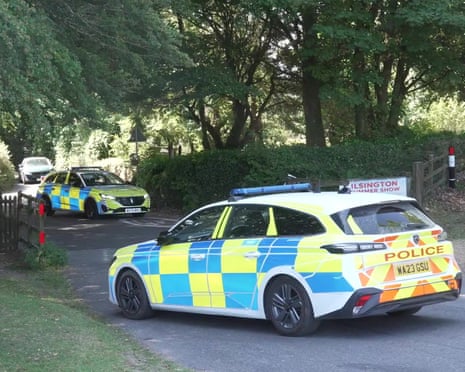 Police outside the house of Ann Widdecombe in Haytor, Dartmoor, as the investigation into her murder continues. Photograph: Oscar Rihil/PA
theguardian.com
Police outside the house of Ann Widdecombe in Haytor, Dartmoor, as the investigation into her murder continues. Photograph: Oscar Rihil/PA
theguardian.com
Counter-terrorism police in England have taken over the investigation into the killing of Ann Widdecombe, calling it a “targeted attack” and re-arresting a suspect on terrorism charges, according to The Guardian. A 28-year-old man from Rotherham was arrested on suspicion of murder after Widdecombe was attacked at her home outside Haytor Vale near Dartmoor, police believe at about 12.30pm.
Detectives are examining whether the motive was political, including what counter-terrorism policing describes as leftwing, anarchist and single-issue terrorism. The Guardian reports that investigators are also looking at whether Widdecombe’s long-held and often polarising public views — including on homosexuality — made her a focus of hatred, and whether hostility to Reform UK played a role. Police have said the inquiry is at an early stage and that initial assumptions can change as new material emerges.
The case lands in a Britain that has spent years expanding security architecture while leaving much of day-to-day political protection to ad hoc decisions. Widdecombe was not a serving MP, but she remained a recognisable figure after senior roles in the Conservative party and later as a spokesperson for Reform UK. That mix — high profile, contested views, and ambiguous status in the formal hierarchy of “protected” political figures — is exactly where gaps tend to open: the state can monitor broad threat environments, but it still has to decide whose personal safety is worth the cost and bureaucracy of preventive coverage.
Reform UK is already trying to turn the killing into an argument about institutional priorities. The party’s Treasury spokesperson Robert Jenrick criticised the government for not offering Nigel Farage a security meeting earlier, telling the BBC that the meeting only happened “as a result” of Widdecombe’s death, The Guardian reports. Counter-terrorism police, for their part, have avoided validating any party-political framing: Assistant Commissioner Laurence Taylor said investigators are working to understand the planning, preparation and motivation behind the attack, and declined to comment on whether it was an attack on Reform UK.
Investigators are also examining the suspect’s history of mental health and neurodivergence, a reminder that modern political violence cases often sit uncomfortably between ideology and personal pathology. That ambiguity matters operationally: proving motive is central to terrorism charges, but protecting public figures depends less on courtroom labels than on whether agencies can identify credible threats in time.
Police have been granted seven additional days to question the suspect. The first hard public fact in the case remains the simplest one: a prominent political figure was killed at her home, and the investigation has already moved from local policing to the national counter-terrorism system.