
Idaho abortion initiative qualifies for November ballot
Near-total ban could shift to fetal viability standard, post-Dobbs policy now runs through petition drives
Images
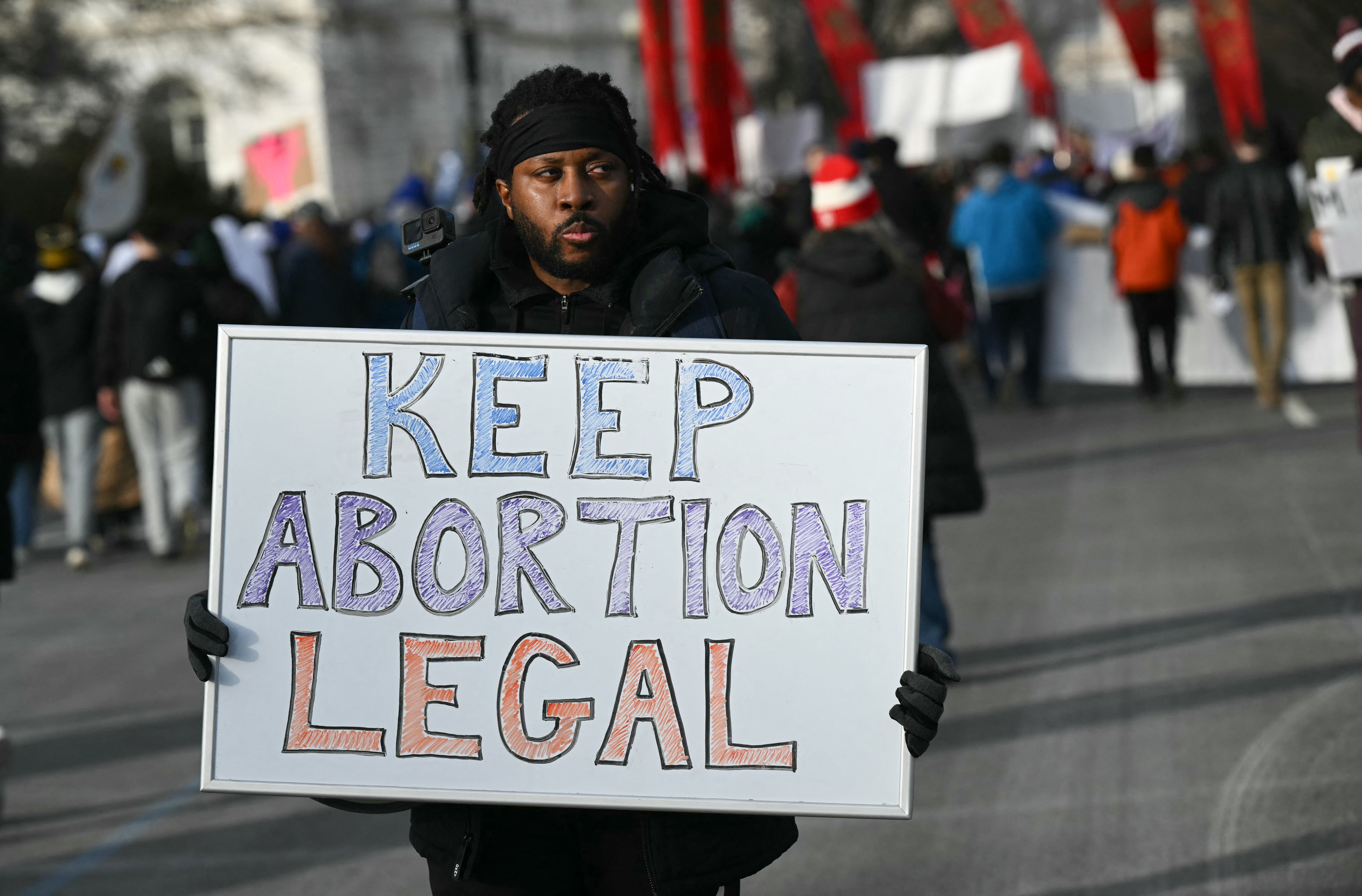 Idaho voters will decide whether to roll back the state’s abortion ban, the secretary of state told the group behind the initiative in a letter Monday, joining three other states where abortion will be directly on the ballot on Nov. 3 (AFP/Getty)
AFP/Getty
Idaho voters will decide whether to roll back the state’s abortion ban, the secretary of state told the group behind the initiative in a letter Monday, joining three other states where abortion will be directly on the ballot on Nov. 3 (AFP/Getty)
AFP/Getty
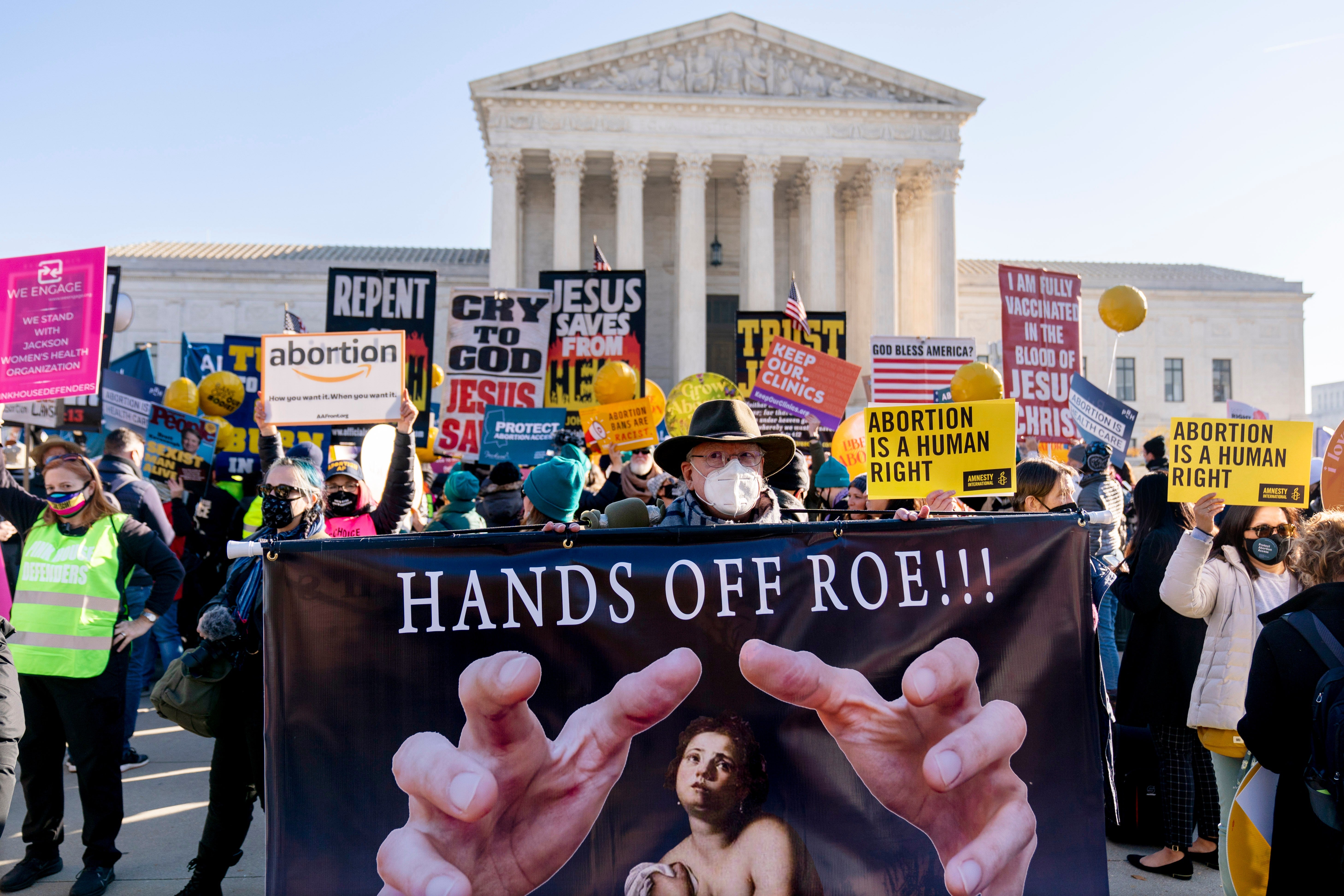 Stephen Parlato of Boulder, Colo., holds a sign that reads "Hands Off Roe!!!" as abortion rights advocates and anti-abortion protesters demonstrate in front of the U.S. Supreme Court (Copyright 2021 The Associated Press. All rights reserved)
independent.co.uk
Stephen Parlato of Boulder, Colo., holds a sign that reads "Hands Off Roe!!!" as abortion rights advocates and anti-abortion protesters demonstrate in front of the U.S. Supreme Court (Copyright 2021 The Associated Press. All rights reserved)
independent.co.uk
 President Donald Trump spoke of his pride that his Supreme Court choices led to the overturning of Roe V Wade during the 2024 campaign (AFP/Getty)
AFP/Getty
President Donald Trump spoke of his pride that his Supreme Court choices led to the overturning of Roe V Wade during the 2024 campaign (AFP/Getty)
AFP/Getty
Idaho abortion initiative qualifies for November ballot, near-total ban could be replaced with viability standard, state policy shifts now run through petition drives and court calendars
Idaho’s secretary of state has confirmed that a citizen-led initiative to loosen the state’s near-total abortion ban has qualified for the November ballot, according to The Independent. The measure would replace Idaho’s current ban with a law allowing abortions until fetal viability, generally described as after 21 weeks of pregnancy.
The initiative lands in a state where abortion is banned at all stages of pregnancy without an exception for the pregnant person’s health, with abortions permitted only to save the patient’s life or in cases of rape or incest. That legal baseline pushes medical discretion into a narrow corridor: doctors and hospitals face criminal exposure if prosecutors later argue a case did not meet the statute’s thresholds. The Independent notes that Idaho in 2023 also became the first state to criminalize helping a minor obtain an abortion without parental consent, with core provisions surviving court challenges.
Idaho is not an outlier in using direct democracy as the pressure valve. Since the 2022 Dobbs decision, abortion-rights supporters have won 14 statewide ballot measures and lost four, The Independent reports. The pattern is less about a single election-night result than about where decisions get made: legislatures write bans, courts arbitrate edge cases, and campaigns then move to signature drives and ballot language fights. Each stage has its own gatekeepers—lawmakers, judges, election officials—and each stage shifts costs onto different actors, from hospitals and insurers to volunteers collecting signatures.
The same November date will also put abortion-related measures before voters in Virginia, Nevada, and Missouri, The Independent reports, but the direction of travel differs. Missouri, which was the first state to ban nearly all abortions after Roe fell, saw voters reverse that ban last year through a constitutional amendment; voters are now being asked to approve a new amendment that would reinstate broad restrictions with exceptions for medical emergencies, rape, incest, and fetal anomalies. Missouri’s proposal would also add a ban on certain gender-affirming care for minors to the state constitution, tying two separate policy fights into a single up-or-down vote.
In Nevada and Virginia, voters will consider constitutional amendments protecting abortion rights; both states already allow abortion through at least 24 weeks of pregnancy, and Nevada’s proposal must pass a second statewide vote after clearing the first by nearly a two-to-one margin last year, according to The Independent.
In Idaho, the immediate question is whether a volunteer petition drive can now outcompete a legislature that spent years tightening the law. The longer-running question is how many major healthcare rules will be written in campaign-season ballot summaries rather than in hospital policy manuals.