
Mitch McConnell discloses fall and pneumonia after weeks off the Senate floor
Office cites post-polio falls and intensive rehab, Washington runs on attendance until it does not
Images
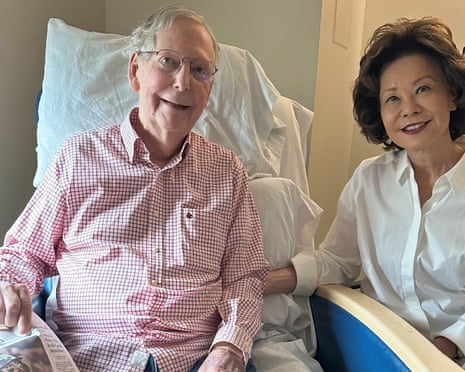 Mitch McConnell holds a copy of today’s Washington Post sports section with his wife, Elaine Chao, in a photo released by his office. Photograph: Office of Mitch McConnell
theguardian.com
Mitch McConnell holds a copy of today’s Washington Post sports section with his wife, Elaine Chao, in a photo released by his office. Photograph: Office of Mitch McConnell
theguardian.com
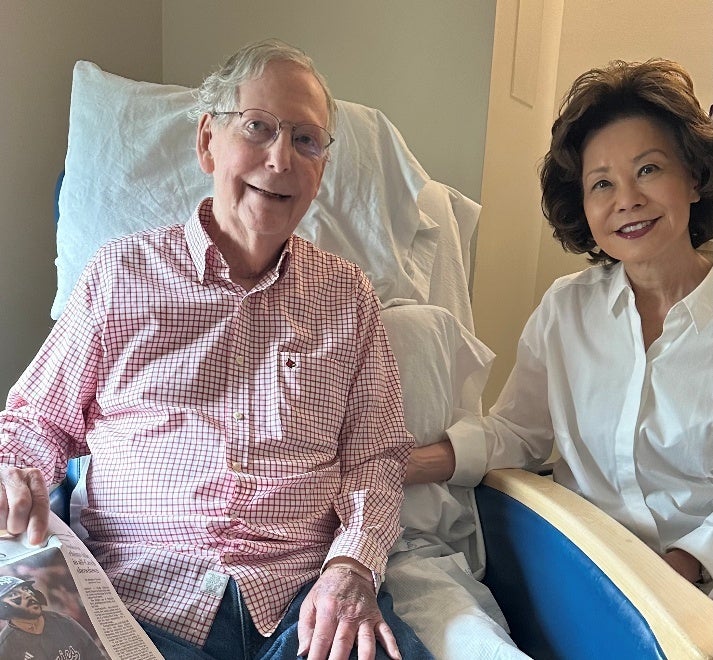 Senator Mitch McConnell with his wife, former US Labor Secretary Elaine Chao, in his first photo since he suffered a fall and required hospitalization in June (Sen. Mitch McConnell)
Sen. Mitch McConnell
Senator Mitch McConnell with his wife, former US Labor Secretary Elaine Chao, in his first photo since he suffered a fall and required hospitalization in June (Sen. Mitch McConnell)
Sen. Mitch McConnell
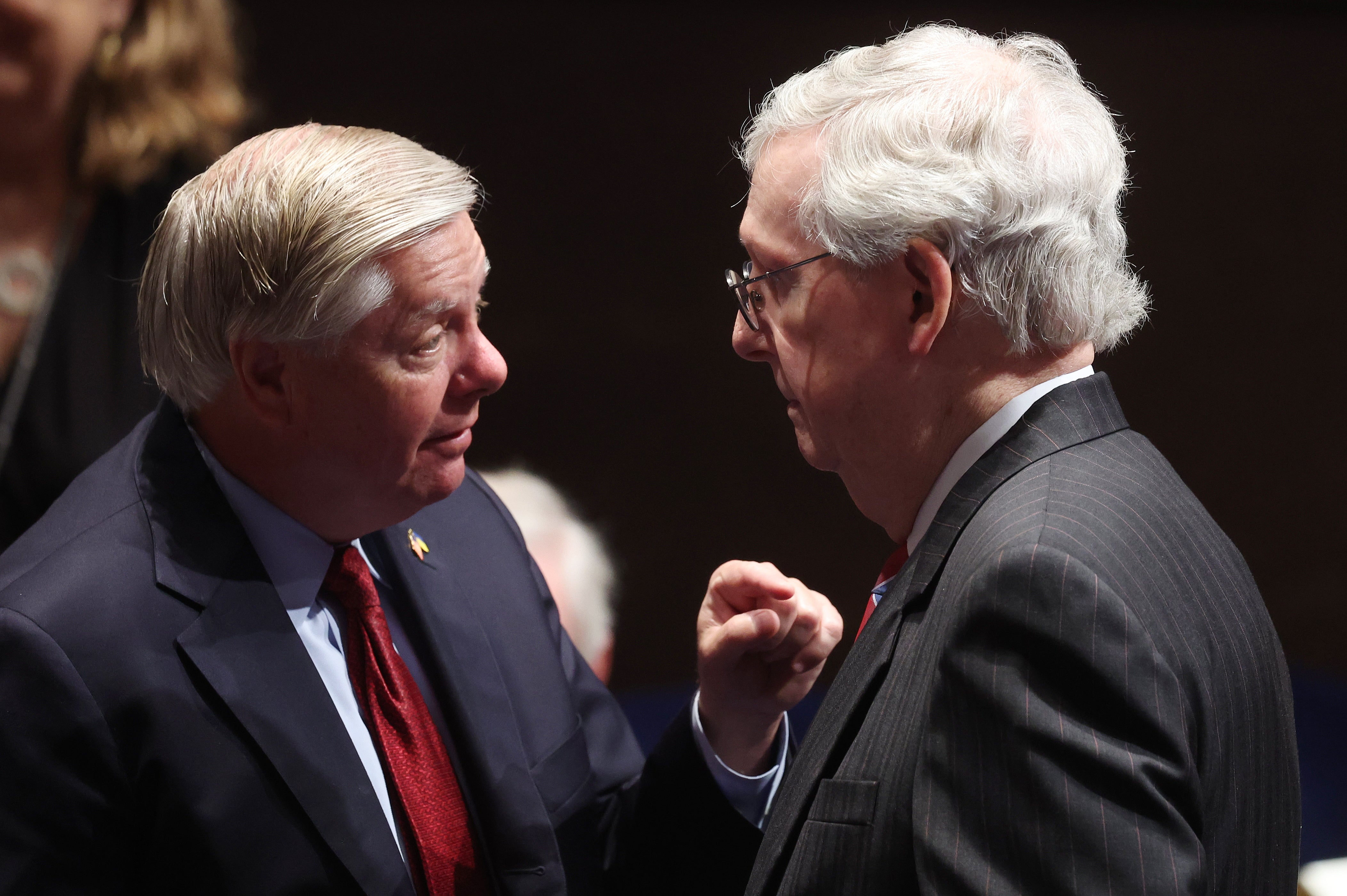 Senator Lindsey Graham, left, speaks with Senator Mitch McConnell, right. McConnell issued an update on his health less than a day after it was revealed that Graham died from a ‘brief and sudden illness’ (Getty)
Getty
Senator Lindsey Graham, left, speaks with Senator Mitch McConnell, right. McConnell issued an update on his health less than a day after it was revealed that Graham died from a ‘brief and sudden illness’ (Getty)
Getty
Mitch McConnell said on Sunday that a fall left him briefly unconscious and led to a hospital stay that has kept him away from the US Senate for weeks. According to The Guardian, the Kentucky Republican said doctors found no broken bones or concussion and ruled out a heart attack, stroke, tumours or haemorrhages, but treated him for a mild case of pneumonia. He said he is now in a rehabilitation centre and will not return to the Senate floor immediately, while continuing to work with staff.
The update lands after a month in which McConnell’s office offered only sparse statements about his condition, and as rumours and online speculation filled the gap. The Independent reports that Kentucky’s Democratic governor, Andy Beshear, had urged McConnell to be more transparent, a rare public prod that underscored how much of Washington’s day-to-day power depends on the health of a small number of elderly officeholders. McConnell’s statement also included a note from the Office of the Attending Physician saying he had experienced several falls this year linked to a post-polio condition, and that the remainder of his hospitalisation focused on physical therapy and reducing fall risk.
The practical question is not whether a senator can answer emails from a rehab facility, but what happens to legislative throughput when senior figures vanish without a timetable. In the Senate, where narrow margins and procedural choke points can make a single vote decisive, prolonged absences shift leverage to party whips, committee chairs and whoever can reliably show up. McConnell has already said his health contributed to his plan to retire at the end of his term, but his continued absence still affects the near-term arithmetic on confirmations, negotiations and floor votes.
The timing adds another layer. McConnell’s statement came shortly after the sudden death of fellow Republican senator Lindsey Graham, reported by both outlets, which sharpened attention on continuity planning inside the party. In that context, the carefully itemised list of ailments McConnell does not have reads like an attempt to close off the most destabilising interpretations, after weeks in which the public was asked to accept “recovering” as a sufficient description.
McConnell said he has submitted to every test doctors could think of to determine the cause of his fall. For now, the Senate has one of its most influential members doing his job from a rehabilitation centre, and no date for when he will next vote on the floor.