
Venezuela raises official earthquake death toll to 4,490
Government updates list tens of thousands treated and thousands homeless, disaster response runs through the same strained state channels
Images
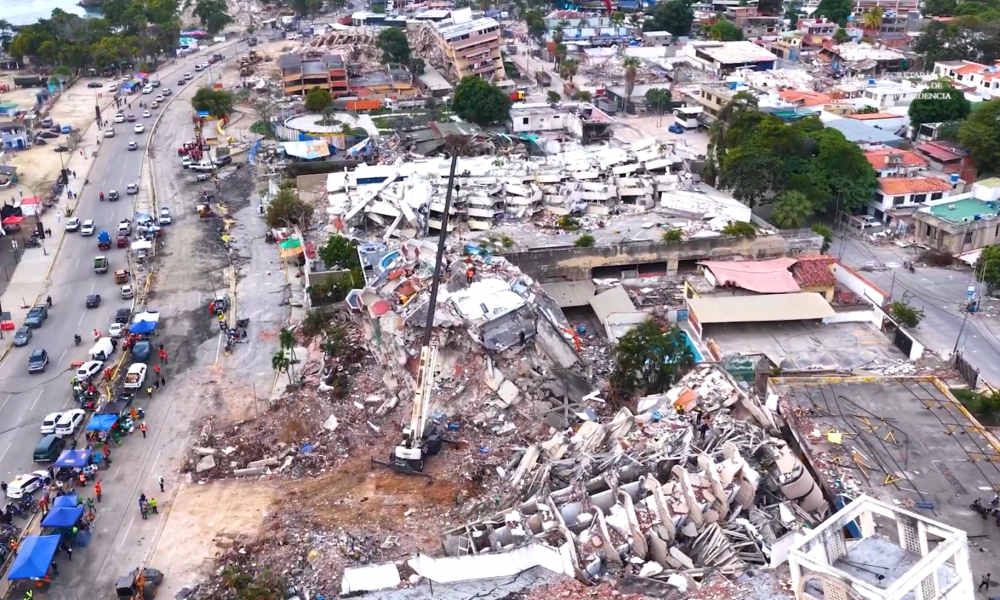 bnonews.com
 bnonews.com
 bnonews.com
 bnonews.com
 bnonews.com
Venezuela’s government has raised the official death toll from the country’s June 24 double earthquake to 4,490, according to figures cited by BNO News. The same update keeps the number of injured at 16,740 and says 6,462 people were rescued, as aftershocks continue to rattle the affected area.
The revised tally is presented as a running ledger of state activity: 32,401 patients treated, 120,794 families receiving assistance, and 17,907 people left homeless, BNO News reports. Those numbers do not settle the harder question for Venezuelans—what “assistance” means in a country where basic services have long been uneven and where disaster response depends on the same institutions that struggle to provide routine healthcare, electricity, and housing. In practice, a mass-casualty event turns every existing bottleneck into a triage decision: which neighborhoods get cleared first, which hospitals receive supplies, and which families are counted quickly enough to qualify for whatever aid is distributed.
The earthquakes struck near Montalbán and were described by the US Geological Survey as a “doublet,” with two major shocks separated by seconds. That technical detail matters on the ground because it changes the pattern of damage: a first shock weakens buildings and infrastructure, and the second arrives before people can evacuate or before emergency services can assess what is safe to enter. Authorities have also reported at least 1,222 aftershocks, a figure that keeps rescue work and temporary shelter from stabilizing into a routine.
Officials’ reliance on centrally announced totals also shapes incentives. When the state is the primary allocator of emergency support, being visible to the state becomes a survival strategy—registered addresses, documented losses, and access to local officials can determine who gets counted as homeless or “assisted.” In a country where many people already depend on informal networks to obtain fuel, food, or medicine, a disaster can push more of daily life into ad hoc arrangements while the official system concentrates on what can be measured and reported.
The government’s latest update adds 157 deaths from the prior day’s official count, while holding other headline figures steady. The same bulletin says more than 17,000 people are now homeless.
Venezuela is still recording aftershocks, and each new tremor tests the structures that survived the first two shocks.