
Lindsey Graham dies after sudden illness
Long-serving South Carolina senator became key Trump ally after years of public feuding, foreign-policy hawk leaves a vacancy shaped by relationships
Images
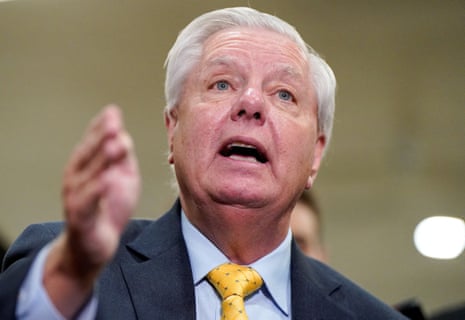 US senator Lindsey Graham ran for president in 2016 and was a sharp critic of Donald Trump but later became on his most loyal backers on Capitol Hill. Photograph: Elizabeth Frantz/Reuters
theguardian.com
US senator Lindsey Graham ran for president in 2016 and was a sharp critic of Donald Trump but later became on his most loyal backers on Capitol Hill. Photograph: Elizabeth Frantz/Reuters
theguardian.com
Lindsey Graham died after a sudden illness, his office said, removing a long-serving US senator who had become one of Donald Trump’s most reliable allies. According to the Guardian, Graham had served in the Senate since 2003 and had recently travelled to Ukraine, where President Volodymyr Zelenskyy later described a good meeting and thanked him for support.
Graham’s career was built on being useful to multiple factions at different moments, and his death lands when Washington is already pricing foreign policy through personalities rather than settled doctrine. The Guardian notes that Graham was a retired Air Force Reserve colonel and military lawyer, and that he was widely known as a hawk—supporting the Iraq war, urging military action against Iran, and opposing the nuclear agreement negotiated under Barack Obama. That posture made him a natural bridge between Republicans who treat US power projection as default policy and a Trump coalition that often sells itself as sceptical of foreign entanglements while still rewarding loud, television-ready defenders.
His relationship with Trump also illustrated how fast reputations can be repriced in party politics. Graham ran for president in 2016 and publicly attacked Trump in unusually blunt terms, only to later become a valued interlocutor between the White House and Congress once Trump took office, the Guardian reports. He defended Trump’s Supreme Court nominee Brett Kavanaugh in 2018; he expressed disapproval on January 6, 2021, saying “enough is enough,” but later refused to vote to convict Trump at the impeachment trial that followed. The result was a senator who could signal outrage when it was costless, and deliver votes when it mattered.
Tributes arriving from South Carolina and Israel point to the networks Graham cultivated and the constituencies that treated him as an asset. South Carolina governor Henry McMaster called him irreplaceable, and several Israeli leaders offered condolences, with national security minister Itamar Ben-Gvir describing Graham as one of Israel’s greatest friends, according to the Guardian. That mix of local patronage and foreign-policy alignment is a reminder that Senate influence is not only about committee seats; it is also about relationships that route talking points, introductions, and favours across borders.
Graham’s office asked for prayers and privacy, and the Guardian reported no known prior health concerns. He died after a week that included a public visit to a war zone and ended with a short statement from staff.