
Fourteen countries reaffirm South China Sea arbitration ruling
Joint statement says China claims illegal under UNCLOS, sea confrontations continue despite legal language
Images
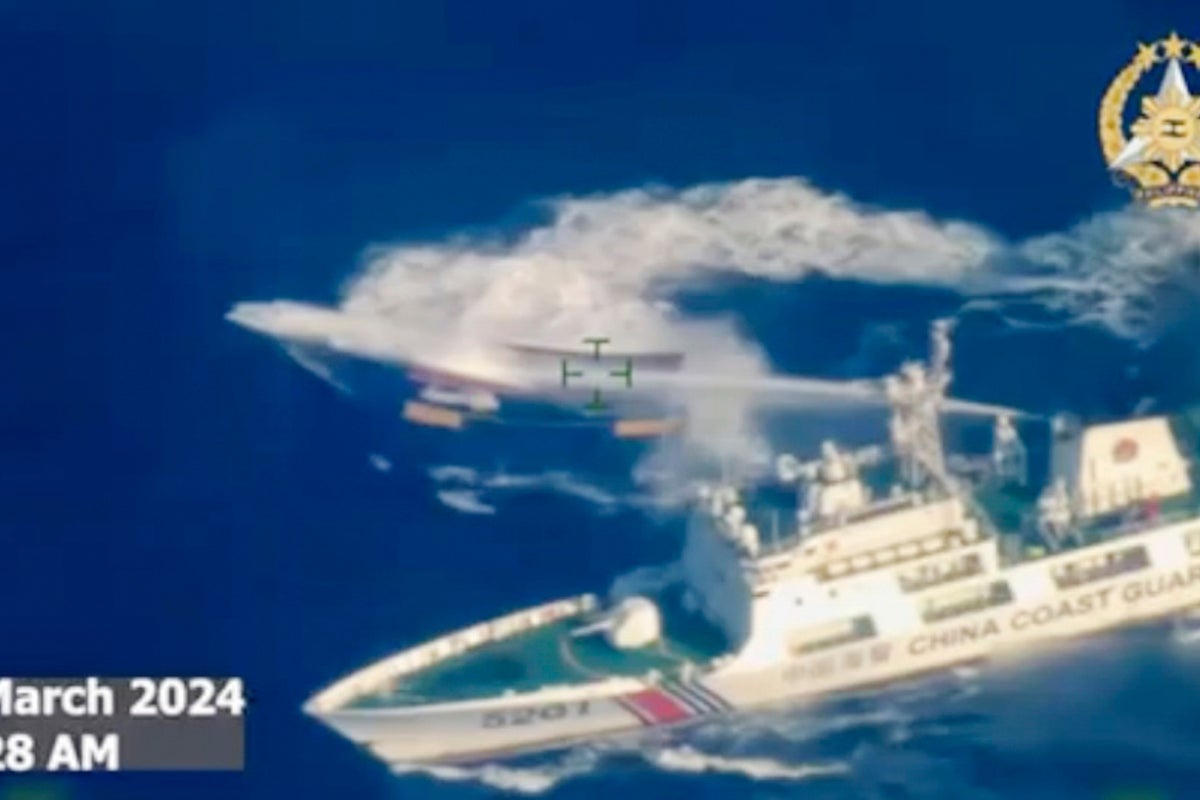 US, UK and 12 other nations reaffirm 2016 ruling invalidating China's claims in South China Sea
independent.co.uk
US, UK and 12 other nations reaffirm 2016 ruling invalidating China's claims in South China Sea
independent.co.uk
Fourteen countries including the United States and United Kingdom issued a joint statement on Sunday reaffirming that China’s sweeping claims in the South China Sea have no legal basis under a 2016 arbitration ruling. According to The Independent, the statement marks the anniversary of the July 12, 2016 decision by a Hague-based tribunal convened under the UN Convention on the Law of the Sea after a Philippine complaint.
The text is written like a legal brief but aimed at behavior on the water. The signatories reject what they call “destabilizing” actions and single out the use of coast guard, military and “maritime militia” forces to harass or obstruct other states’ lawful operations at sea and in the air. That language tracks a pattern seen in recent years: confrontations that stop short of naval combat but still impose costs through collisions, dangerous blocking maneuvers, and the use of water cannons and military-grade lasers against rival claimants’ vessels and fishermen.
The 2016 case matters because it narrows what can be claimed from what. The tribunal largely sided with the Philippines and ruled that, under UNCLOS, there was no legal basis for China to claim “historic rights” to resources across most of the sea beyond the maritime zones the convention recognizes. UNCLOS has been in force since the mid-1990s and is widely ratified, including by China and the Philippines, which makes the dispute less about whether rules exist and more about who can enforce them.
The list of signatories mixes regional states with European governments that have no coastline in the dispute but do have trade and security interests tied to uninterrupted shipping. Alongside the US and UK, the statement includes the Philippines, Japan, Australia, New Zealand, Canada, Germany, Italy and several Baltic and eastern European countries. The breadth signals a diplomatic attempt to turn a set of bilateral sea-lane incidents into a reputational and economic issue for Beijing, even as China has demonstrated it can absorb statements while maintaining a permanent operating presence.
China has refused to recognize the arbitration from the start, declining to participate in proceedings initiated by Manila in 2013 after a 2012 standoff that ended with Beijing effectively taking control of a disputed shoal. The Independent reports that China’s embassy in Manila recently reiterated it would never accept the award, calling it “illegal, null and void,” and insisting the ruling does not alter what it describes as China’s sovereignty over the islands and adjacent waters.
For Washington, the legal argument sits alongside a deterrence promise. The US has repeatedly urged China to comply with the ruling, and both the former Biden administration and the current Trump administration have warned that the United States is obligated to defend the Philippines.
On Sunday, China did not immediately respond to the joint statement. The ships, fishing fleets and coast guard cutters in the contested waters did not move because a tribunal anniversary was marked in a communiqué.