
Typhoon Bavi drives mass evacuations in eastern China
Storm disrupts Taiwan and Japan travel before expected landfall near Wenzhou, shutdown logistics become the first line of defence
Images
 A person applies tape to a glass wall on a pedestrian bridge to secure it as Typhoon Bavi approaches Wenzhou (Reuters)
Reuters
A person applies tape to a glass wall on a pedestrian bridge to secure it as Typhoon Bavi approaches Wenzhou (Reuters)
Reuters
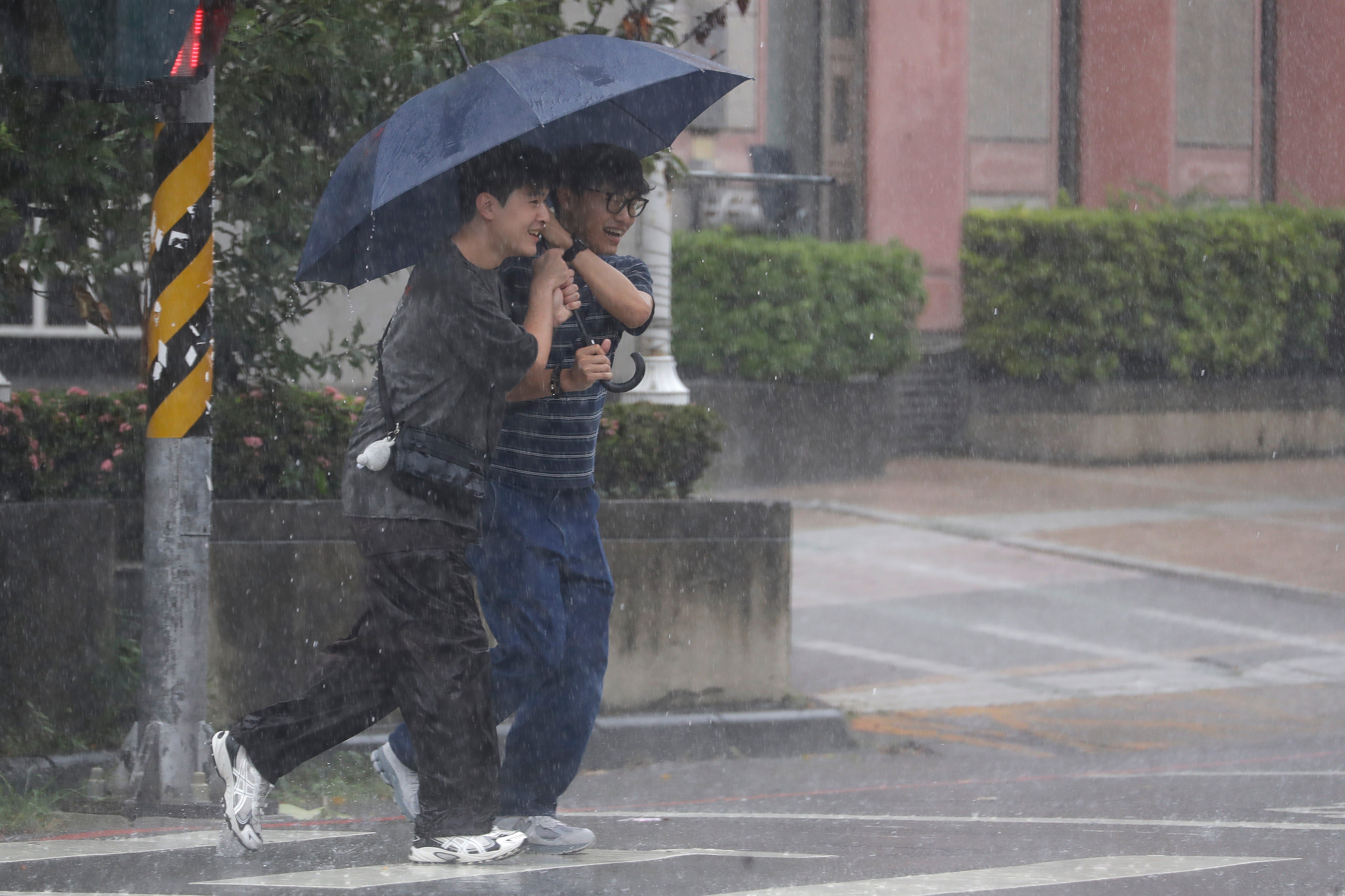 People make their way through rain caused by Typhoon Bavi in Taichung, Taiwan (AP)
independent.co.uk
People make their way through rain caused by Typhoon Bavi in Taichung, Taiwan (AP)
independent.co.uk
More than half a million people were evacuated in China’s Zhejiang province as Typhoon Bavi approached landfall near the coastal city of Wenzhou, according to The Independent. The storm had already disrupted travel in Taiwan and brushed Japan’s southern Sakishima island chain, with flight cancellations and typhoon holidays used to clear streets ahead of heavy rain and wind.
Bavi’s path shows how modern disaster management in East Asia increasingly begins with logistics rather than rescue: shutting airports, reducing rail services, and moving people out of low-lying or mountainous areas before rivers rise. Taiwan’s government evacuated thousands, closed its main international airport near Taipei, and canceled large numbers of flights, while some shops in the capital stayed open as residents stocked up for a short shutdown. In China, authorities ordered evacuations across multiple provinces, a familiar choreography in which local governments demonstrate readiness through visible movement of people and equipment.
But the same reports point to the limits of this approach when extreme weather arrives in clusters. The Independent links Bavi to a broader season of overlapping hazards—storms, landslides, dam failures and monsoon-driven flooding—where the question is less whether warnings can be issued than whether infrastructure can absorb repeated hits. The article notes recent deadly events elsewhere in the region, including deaths in the Philippines from rain tied to an enhanced monsoon system. The pattern is that each storm is treated as a discrete emergency, while the costs accumulate across transport networks, supply chains, and households that are repeatedly told to prepare for “two to three days” of disruption.
For governments, mass evacuation is both a safety measure and a performance: numbers are countable, orders are documentable, and accountability can be framed around compliance. The harder work—maintaining drainage, enforcing building standards in flood-prone areas, and pricing risk into where people are allowed to build—does not produce the same immediate images of control. As meteorologists warn of a complex season shaped by warming and El Niño conditions, the public-facing response remains dominated by closures and relocations that push the bill into lost workdays and interrupted commerce.
In Wenzhou, residents described stocking water and buying groceries before markets closed. The storm itself had not yet arrived, but the city was already operating on emergency rules.