
Ryanair passenger nearly pulled through shattered window, engine debris damages cabin as flight turns back to Thessaloniki
Airline statement describes window dislodging and normal landing
Images
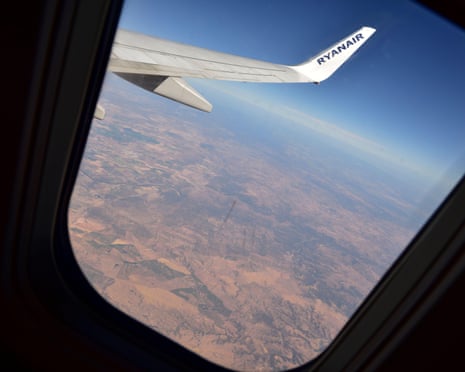 The incident took place on Ryanair flight FR1879, which was scheduled to fly from Thessaloniki in Greece to Memmingen near Munich on Thursday. Photograph: Charles Stirling/Alamy
theguardian.com
The incident took place on Ryanair flight FR1879, which was scheduled to fly from Thessaloniki in Greece to Memmingen near Munich on Thursday. Photograph: Charles Stirling/Alamy
theguardian.com
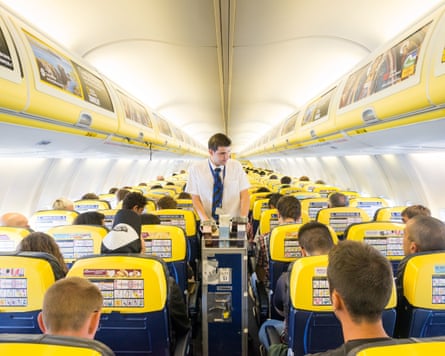 Ryanair flight FR1879 was being operated by the carrier’s subsidiary Malta Air. Photograph: Alex Segre/Alamy
theguardian.com
Ryanair flight FR1879 was being operated by the carrier’s subsidiary Malta Air. Photograph: Alex Segre/Alamy
theguardian.com
A Ryanair flight from Thessaloniki to Memmingen turned back after an engine failure sent debris into a cabin window, leaving one passenger briefly hanging headfirst outside the aircraft, according to The Guardian. The flight, operated by Malta Air, a Ryanair subsidiary, returned to Thessaloniki shortly after takeoff. Oxygen masks deployed as the window was damaged and the cabin depressurised.
The Guardian reports that the passenger — a 61-year-old Serbian man — was lifted out of his seat when the acrylic window shattered. His wife held onto his legs until the aircraft descended and the situation stabilised. He was taken to hospital with shock and friction burns from the freezing airflow.
Ryanair’s public description of the incident is narrower: the airline said the flight returned due to a window “dislodging,” landed normally, and that one passenger requested medical assistance on the ground. A replacement aircraft was arranged to continue the journey.
The episode lands in a year when commercial aviation has been forced to explain, repeatedly, how small component failures become headline events. The Guardian links it to a separate 2024 Alaska Airlines incident in which a cabin panel blew out mid-flight, later traced in a final report to missing bolts that were removed during manufacturing work and not reinstalled. Different aircraft, different companies, same uncomfortable reality: passengers experience quality control as a binary — either the fuselage stays intact, or it does not.
Low-cost carriers sell reliability as a schedule and a price, not as a brand promise of engineering excellence. That does not mean corners are cut on purpose; it means the operational focus is on utilisation, turnaround time and keeping aircraft flying. When something goes wrong, the paperwork and the public statements tend to describe the failure in the smallest possible terms, because liability and reputation scale faster than ticket revenue.
Flight tracking data cited by The Guardian shows the aircraft was airborne for just over an hour and reached 16,000 feet before descending back to Thessaloniki. The passenger who nearly exited through the window did not buy a different class of ticket for a different safety outcome.
The flight landed normally, passengers returned to the terminal, and the airline sent another aircraft. The only visible difference between an uneventful trip and an emergency, in this case, was a cracked piece of acrylic and someone’s grip on a pair of legs.