
China shoe factory fire kills at least 28 people
State media reports blaze at Huiteng Shoes in Jinjiang Fujian, accountability orders follow televised rescue response
Images
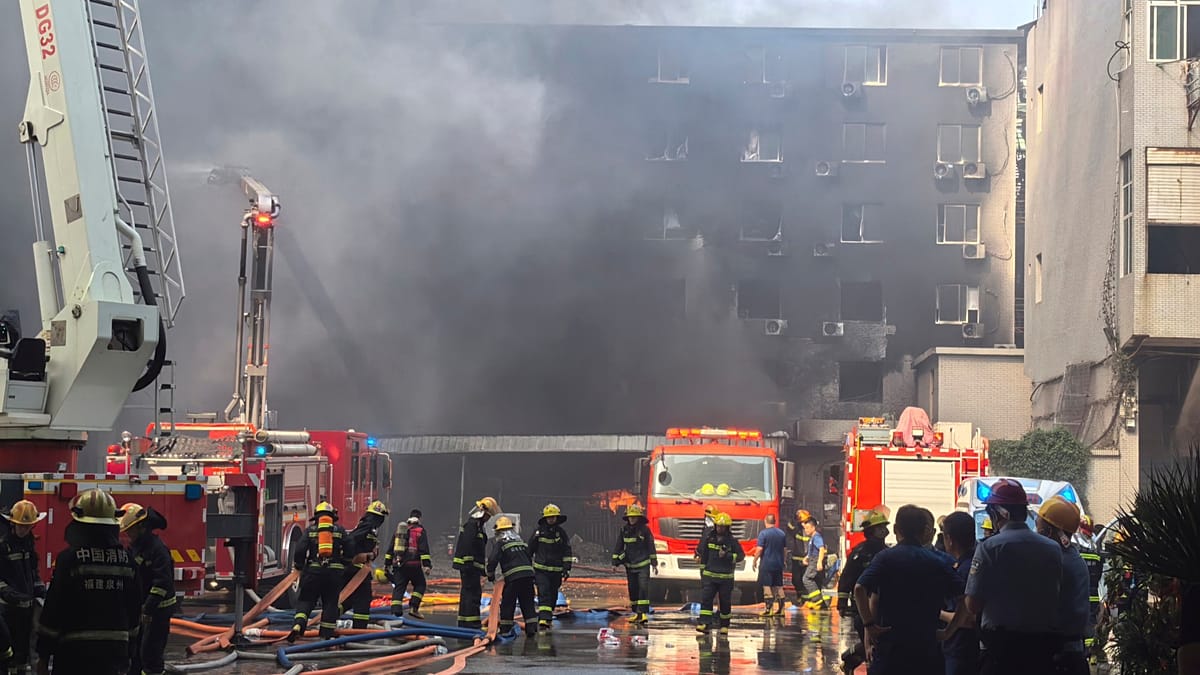 At least 28 dead in fire at China shoe factory, state media reports
euronews.com
At least 28 dead in fire at China shoe factory, state media reports
euronews.com
 bnonews.com
 bnonews.com
 bnonews.com
 bnonews.com
 bnonews.com
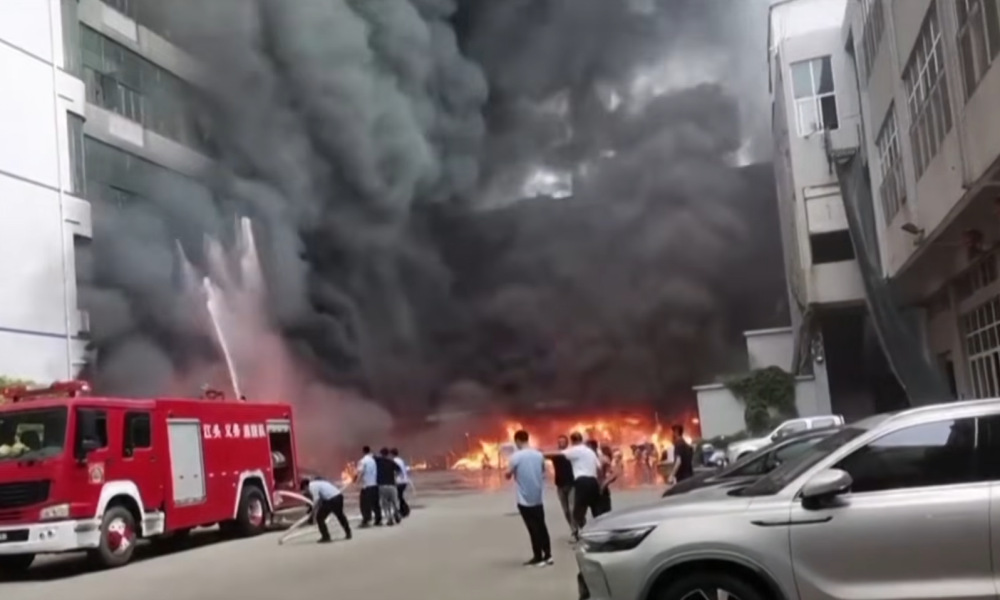
A fire tore through the Huiteng Shoes factory in Jinjiang in China’s Fujian province around midday on Thursday, killing at least 28 people, according to state media cited by Euronews and BNO News. CCTV footage aired by Chinese state television showed firefighters directing hoses into a multi-storey building as thick smoke poured from broken windows. Xinhua said some people were initially trapped and “out of contact,” while China’s Ministry of Emergency Management said it dispatched 183 personnel and 35 vehicles to the scene.
President Xi Jinping described the blaze as causing “heavy human losses” and ordered officials to identify the cause quickly and hold those responsible “strictly accountable,” according to the reports. That familiar sequence—mass casualty incident, televised response, presidential instruction—sits on top of a production model that concentrates workers, machinery and flammable materials inside dense industrial clusters. Jinjiang is widely known as a manufacturing hub for footwear and related supply chains; when a factory fails, it fails at scale.
The official response also reflects how safety enforcement is often treated as an after-the-fact campaign rather than a priced-in cost of doing business. Euronews notes China launched a national push against fire hazards in high-rise buildings in November after a major fire in Hong Kong killed 168 people, followed by another deadly residential building fire in Guangdong. Yet the Jinjiang incident is a workplace fire, not a residential one, underscoring how regulatory drives can be narrowly targeted at last month’s headline while other high-risk environments continue operating under routine assumptions.
BNO News reported that the factory’s owner and other people linked to the company were detained and that the company’s bank accounts were frozen, measures that signal seriousness while also shifting the immediate burden onto a discrete set of individuals. What remains unclear in the early reporting is the more basic question that determines how such disasters repeat: how many workers were inside, what exits were usable, and whether the factory’s operating incentives rewarded uninterrupted output over enforceable evacuation standards.
By Thursday afternoon, state television was broadcasting images of a charred facade still venting smoke. The death toll being cited—at least 28—arrived long before any public explanation of how the building became a trap.