
Italy expels two Russian military attaches
Arrests of former Italian intelligence agents widen espionage case, military-aid details become the contested commodity
Images
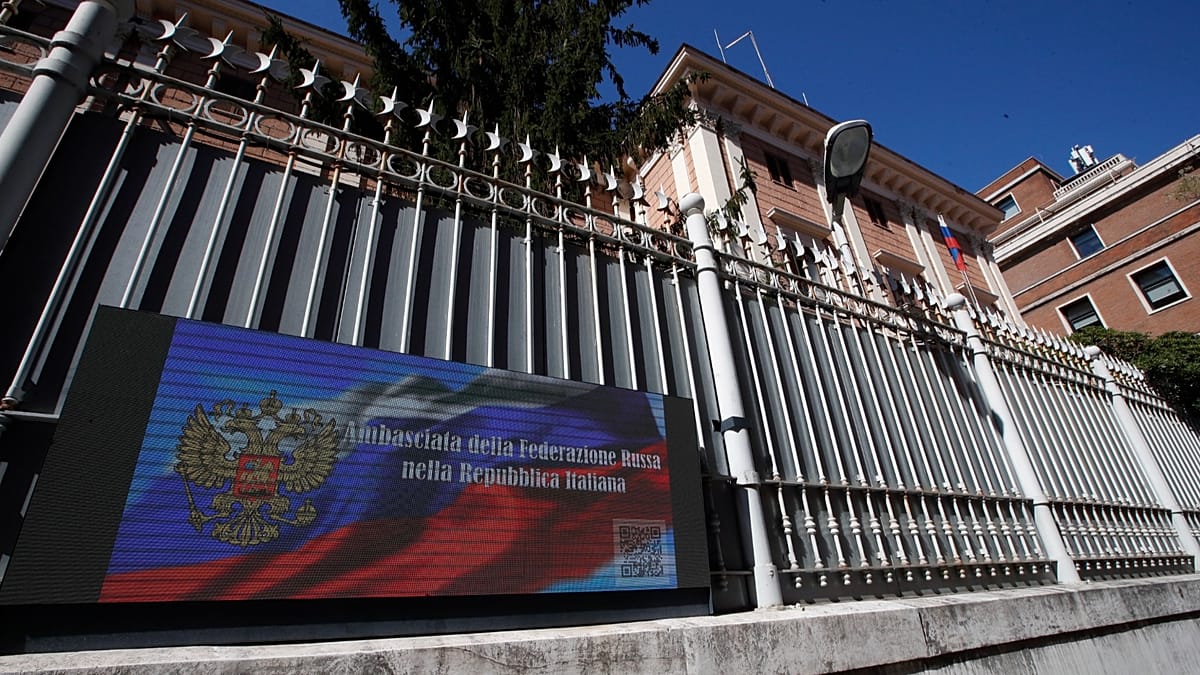 Italy expels two Russian diplomats accused of spying, minister says
euronews.com
Italy expels two Russian diplomats accused of spying, minister says
euronews.com
Two Russian military attaches have been ordered to leave Italy within three days after Rome accused them of espionage. The expulsions came days after Italian police announced the arrest of two former Italian intelligence agents suspected of passing secrets on military aid to Ukraine to Russian handlers, according to Euronews.
Italy’s foreign minister Antonio Tajani said the decision responded to “serious and unacceptable acts of interference” by Moscow, and named the expelled officials as Ivan Petrovich Gorbachev and Mikhail Vasilyevich Astakhov. Prosecutors, Euronews reports, allege a network that did not just trade in abstract “state secrets” but in operational details: information on military assistance to Ukraine, including material related to the Italian-French SAMP/T air-defence system scheduled for delivery to Ukraine in 2026 and Aster missiles already sent to Kyiv. The same reporting says Russian handlers sought details on a Nato mission in Bulgaria and on the Italian company Avio, which makes motors for drones and supersonic missiles.
The case points to a familiar European pattern: the most consequential “hybrid” activity is often not a spectacular cyberattack but the steady extraction of institutional knowledge—who is watching whom, what is being shipped when, and which bureaucratic chokepoints can be pressured. In this instance, media reports cited by Euronews say the suspect also provided the identities of Italian counter-espionage agents monitoring Russians. That is the kind of information that does not need to be classified to be valuable; it is valuable because it changes behaviour, forcing security services to burn sources and reorganise.
Italian authorities describe the alleged flow of information as long-running. La Stampa, quoted by Euronews, reported telephone conversations suggesting “thousands” of items were provided over a 12-year period. A lawyer for the former Italian spy denied treason and argued the man gathered only publicly available information—an argument that, if accepted, would narrow the state’s ability to treat systematic collection as espionage when it is routed through insiders and combined with access.
Diplomatic expulsions are a blunt tool, but they are also one of the few levers governments can pull quickly without exposing investigative methods in court. Russia’s foreign ministry, quoted by RIA Novosti, said it would respond with “an appropriate response,” while Russia’s ambassador to Italy Sergei Paramonov framed the move as an attempt to limit Russian influence. The tit-for-tat is not new: Euronews notes that after an earlier Italian case, Rome expelled Russian officials and Moscow retaliated by expelling an Italian diplomat.
Italy’s defence minister Guido Crosetto called the latest case “just the tip of the iceberg.” The iceberg, for European states, is that every additional layer of secrecy and vetting slows procurement and coordination—yet every leaked detail can make a future shipment, deployment, or negotiation more expensive.
For now, the concrete outcome is procedural: two military attaches must pack up and go, and Italy’s prosecutors will question a former intelligence officer as the country tries to work out how much of its Ukraine pipeline was being read from the inside.