
London Marathon ballot draws more than one million applicants
Organisers stage two-day 2027 race with 100000 places, charity and school entries grow as access shifts from luck to institutions
Images
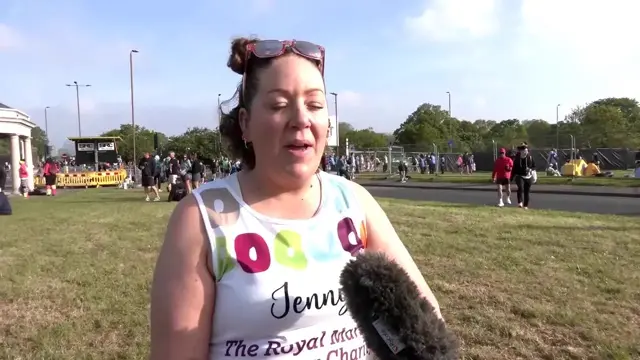 Runner with inoperable cancer takes on London Marathon for research charity
standard.co.uk
Runner with inoperable cancer takes on London Marathon for research charity
standard.co.uk
 <p>Joe Wicks and Daddy Pig after finishing the 2026 TCS London Marathon. Picture date: Sunday April 26, 2026.</p>
standard.co.uk
<p>Joe Wicks and Daddy Pig after finishing the 2026 TCS London Marathon. Picture date: Sunday April 26, 2026.</p>
standard.co.uk
 General view of runners during the 2026 TCS London Marathon. Picture date: Sunday April 26, 2026.
standard.co.uk
General view of runners during the 2026 TCS London Marathon. Picture date: Sunday April 26, 2026.
standard.co.uk
 standard.co.uk
 Runners are seen from inside Tower Bridge as they cross the River Thames
standard.co.uk
Runners are seen from inside Tower Bridge as they cross the River Thames
standard.co.uk
London Marathon ballot draws more than one million applicants, organisers plan two-day 2027 race with 100000 places, charity entries expand as demand outgrows the draw
More than one million people entered the ballot for the 2027 London Marathon, as organisers prepare to stage the race over two days with 100,000 participants, according to the Evening Standard. The paper says ballot results are being released this week, with successful applicants required to confirm details by the end of the month to secure their entry.
The Standard reports the 2027 event will run on a Saturday and Sunday, with 45,000 runners scheduled for the first day and 55,000 for the second. The route remains the familiar London showcase—starting in Greenwich Park and finishing on The Mall—passing landmarks including Tower Bridge, the Cutty Sark and the Elizabeth Tower. Organisers have described the two-day format as a one-off, even as the ballot numbers suggest demand is not a temporary spike.
The scale matters because the London Marathon has become a hybrid of mass sport, tourism product and fundraising machine. The Standard notes that the 2026 race drew more than 59,000 starters and raised more than £90 million, described as a UK sporting event record. When a single weekend reliably moves that much money through charities, sponsors and city logistics, the race stops being just a run and starts behaving like an annual allocation system—places are the scarce asset, and the ballot is the rationing mechanism.
That rationing is increasingly supplemented by guaranteed routes in. The Standard says thousands of places are reserved for charity runners, with hundreds of UK charities offering entries in exchange for fundraising commitments. It also reports that every school in London will receive two guaranteed entries for teachers or staff, and that extra guaranteed entries have been allocated to every London borough along the route. The effect is to shift a portion of access away from chance and towards institutional channels that can absorb administrative burden and raise money.
Those channels also change what the marathon selects for. A pure ballot rewards persistence and luck; charity places reward networks, time and the ability to commit to fundraising targets. The Standard highlights a virtual option, London Marathon MyWay, allowing runners to complete the distance outdoors on either day, a format that turns the event into a branded measurement rather than a single shared street race.
The Standard’s explainer is aimed at entrants who missed out, but the numbers do most of the explaining. When more than one million people apply for 100,000 places, the ballot becomes less a gateway to sport than a yearly reminder of how many people want the same sanctioned experience.
Organisers say the two-day expansion is temporary. The ballot queue suggests the pressure is not.