
Israeli strike kills Gaza aid worker who organised World Cup screenings
Israel says intended target was Hamas fighter and victim was not, a taxi ride to a match becomes a battlefield decision
Images
 Palestinians in Gaza City watch Egypt play Argentina in the World Cup shortly after Mohamed al-Wahidi was killed. Photograph: Mohammed M Skaik/Jna Press/Nexpher/ZUMA Press Wire/Shutterstock
theguardian.com
Palestinians in Gaza City watch Egypt play Argentina in the World Cup shortly after Mohamed al-Wahidi was killed. Photograph: Mohammed M Skaik/Jna Press/Nexpher/ZUMA Press Wire/Shutterstock
theguardian.com
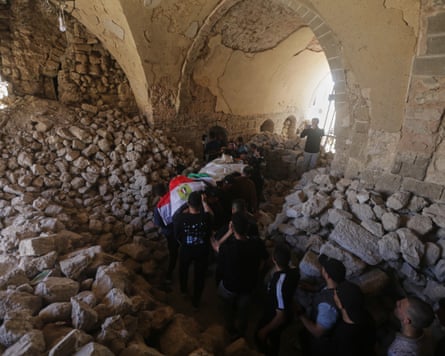 Palestinians carry the body of Mohamed al-Wahidi out of the Great Omari mosque in Gaza City after his funeral. Photograph: Yousef Al Zanoun/AP
theguardian.com
Palestinians carry the body of Mohamed al-Wahidi out of the Great Omari mosque in Gaza City after his funeral. Photograph: Yousef Al Zanoun/AP
theguardian.com
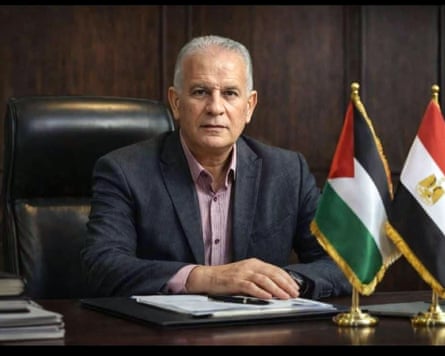 Mohamed al-Wahidi. Photograph: Egyptian Committee in Gaza
theguardian.com
Mohamed al-Wahidi. Photograph: Egyptian Committee in Gaza
theguardian.com
A Palestinian aid worker who organised public World Cup screenings across Gaza was killed on Tuesday evening when an Israeli missile struck the taxi he was riding in, according to The Guardian. The Israeli military confirmed the strike, saying the intended target was a member of Hamas’ military wing and that Mohamed al-Wahidi was not the person it was aiming at.
The strike came shortly before the World Cup match between Egypt and Argentina, and hit in the Sabra district of Gaza City about an hour before kick-off, the Times reports. Al-Wahidi was travelling to a screening in Tel al-Hawa in southern Gaza City, part of an effort that had turned football into a rare public diversion amid continuing Israeli strikes and severe restrictions on humanitarian aid.
That combination—mass entertainment, communal gatherings, and a densely surveilled battlefield—creates a recurring problem for civilians trying to use normal life as cover from abnormal risk. A screening is a crowd; a crowd is visibility; visibility draws attention from multiple armed actors who do not share a duty of care. When militaries describe civilian deaths as collateral to a specific target, the practical question becomes who is expected to stop the chain: the operator choosing the strike window, the intelligence unit validating identity, or the local population expected to avoid any place that might be mistaken for a meeting.
The Guardian reports that two brothers, Fari and Hamza al-Deri, aged eight and ten, were killed in the street near the blast. Another man, Ahmed Daghmush, 30, was hit by shrapnel and later died after being taken to hospital; his relatives described him as a hard-working young man supporting his family. Al-Wahidi’s taxi driver survived.
Al-Wahidi had worked for years on aid and development projects in Gaza and was known locally for public speaking and community involvement, the paper reports. His screenings were a small piece of civil society operating in a place where fuel, food and medical supplies are rationed by border controls and the tempo of fighting.
Palestinians in Gaza City watched the Egypt-Argentina match shortly after his death. The screening went ahead, and the taxi did not.