
Severe storms kill 15 in China
Tornadoes landslides and typhoon-linked floods hit multiple provinces, summer disaster response becomes a rolling operation
Images
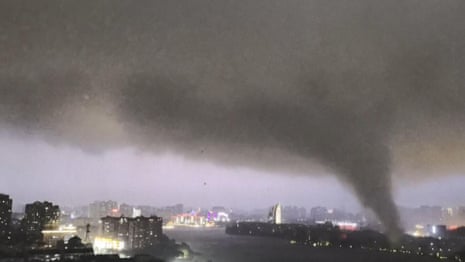 Lethal tornado tears through Chinese province amid devastating storms – video
theguardian.com
Lethal tornado tears through Chinese province amid devastating storms – video
theguardian.com
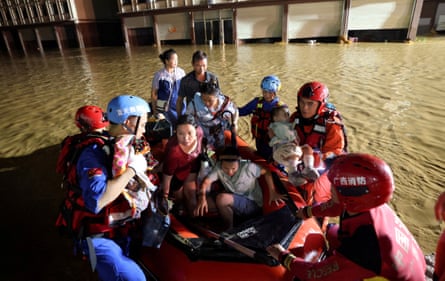 Rescue workers evacuate residents in a rubber dinghy after flood waters inundate villages in Hengzhou, Guangxi. Photograph: cnsphoto/Reuters
Reuters
Rescue workers evacuate residents in a rubber dinghy after flood waters inundate villages in Hengzhou, Guangxi. Photograph: cnsphoto/Reuters
Reuters
Fifteen people have been killed in severe storms across parts of China and hundreds more injured as tornadoes, landslides and flooding hit multiple provinces, according to Agence France-Presse citing Chinese state media. In Hubei province, thunderstorms and gale-force winds killed at least 11 people and injured 331, while Xinhua said thousands of homes were damaged and some collapsed. In Gansu province, CCTV reported a landslide in a village buried dozens of people, with rescuers pulling some out alive as searches continued. In Guangxi, heavy rain and flooding linked to a typhoon system forced large-scale evacuations and prompted authorities in the regional capital Nanning to raise flood-control measures to the highest level after dams were breached.
The storms show how China’s summer disaster season is increasingly defined less by a single headline event than by overlapping emergencies that strain the same local capacity: emergency shelters, road access, power restoration and medical care. State television footage of rescuers in life vests using inflatable boats, and of muddy water rushing through broken concrete at a burst reservoir, doubles as documentation and as a signal that the centre is watching. President Xi Jinping’s call for “all out” rescue efforts, as reported by AFP, is a familiar feature of these cycles: visible mobilisation, followed by relocation and rebuilding orders, and warnings about “secondary disasters” such as further landslides.
But repeated disruption carries a quieter bill. Tens of thousands of evacuations mean lost workdays, damaged inventories and schools turned into temporary housing, while repairs to homes, roads and floodworks compete with other local spending. When storms arrive with sudden, short-duration winds—what Chinese media described as “severe convective weather”—the damage pattern is scattered: roofs torn off here, a collapsed wall there, and a long list of claims too small to make national news but large enough to drain household savings.
Scientists have warned that fossil-fuel emissions are increasing the intensity and frequency of extreme weather, and China’s recent record offers a steady stream of examples. AFP noted that heavy rains in May killed at least 22 people in central and southern regions, with some places reporting record-breaking rainfall. Each new round of destruction also tests the credibility of local prevention work: whether dams were maintained, whether hillside construction was permitted, and whether early warnings reached the people who needed them.
For now, the official count is still rising in a country where the same week can bring tornadoes in one province and floods in another. The rescue boats and the broken reservoir walls are the parts that make it onto video; the rest is measured in repaired roofs, emergency budgets, and the next evacuation order.