
Nigel Farage resigns to force Clacton by election
Guardian reports bankers filed suspicious activity report over £5 million gift, main parties decline to run while standards process continues
Images
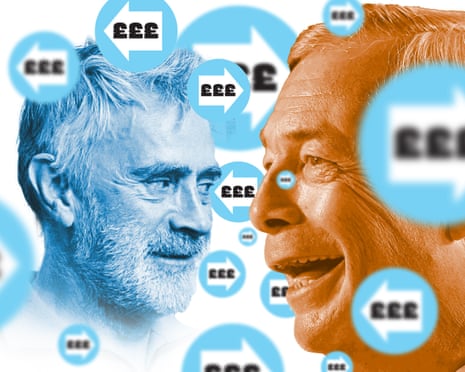 The Guardian first revealed in April that Farage had been given £5m by the Reform donor Christopher Harborne. Illustration: Guardian Design/Getty
theguardian.com
The Guardian first revealed in April that Farage had been given £5m by the Reform donor Christopher Harborne. Illustration: Guardian Design/Getty
theguardian.com
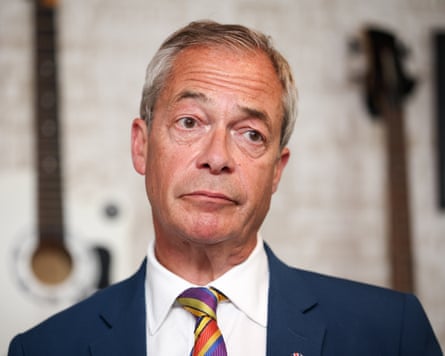 Farage has said he had no obligation to disclose the £5m gift. Photograph: Ryan Jenkinson/Getty Images
theguardian.com
Farage has said he had no obligation to disclose the £5m gift. Photograph: Ryan Jenkinson/Getty Images
theguardian.com
 Labour, Tories and Lib Dems refuse to stand in byelection with Farage’s resignation labelled ‘desperate stunt’ – UK politics live
theguardian.com
Labour, Tories and Lib Dems refuse to stand in byelection with Farage’s resignation labelled ‘desperate stunt’ – UK politics live
theguardian.com
Nigel Farage resigned from parliament on Tuesday to trigger a by-election in Clacton-on-Sea, after the Guardian reported that bankers filed a suspicious activity report over a £5 million gift he received from Reform UK donor Christopher Harborne. Within hours, the Conservatives, Labour and the Liberal Democrats said they would not contest the seat, turning the vote into a referendum on one MP’s finances rather than a normal party fight.
According to the Guardian, the £5 million transfer was flagged to the UK National Crime Agency because bank staff said they could not satisfactorily trace the ultimate origin of the funds. Banks apply extra scrutiny to transactions involving “politically exposed persons”, and the paper reports that Harborne’s links to cryptocurrency increased the compliance risk because crypto transactions can be harder to follow. The Guardian says Farage has offered differing explanations for what the money was for, while also arguing he had no obligation to declare it because he was not a politician at the time he received it. Financial industry sources cited by the paper say at least some of the money arrived after Farage announced on 23 May 2024 that he would not stand for parliament, with further payments coming shortly before he reversed course and ran for Clacton.
The political response has focused less on the substance of the allegation than on the procedural battlefield it opens. In the Guardian’s live coverage, Conservative leader Kemi Badenoch called the resignation a “fake by-election” designed to distract from a standards investigation into Farage’s finances, and said he should have held a press conference to explain his dealings. Yet the Conservatives also said they would not field a candidate, despite having previously held the seat and having finished second there in 2024, leaving voters with fewer mainstream options and Farage with a clearer runway to frame the contest on his own terms.
Even if Farage wins again, the Guardian notes he is still likely to face a parliamentary investigation and possible reprimand over the undeclared gift. The by-election therefore does not settle the underlying question of disclosure; it simply changes the order of events, putting an electoral mandate ahead of the standards process. That sequencing matters in a system where parties and MPs can treat compliance as an afterthought, and where enforcement depends on institutions that move slowly while campaigns move fast.
Farage said in correspondence with the Guardian that he did not know about the suspicious activity report and had “no reason to doubt the ultimate source of the money.” The Guardian reports that Harborne’s lawyers did not give substantive answers to detailed questions about the transfer.
Farage announced his resignation in a video at 2pm, after being given a deadline to respond to the paper’s reporting. By the end of the day, the major parties had opted out of the contest he created.