
Donald Trump renews Greenland takeover rhetoric
Denmark rebukes him at Nato summit in Ankara, troop-withdrawal threat turns alliance into a bargaining table
Images
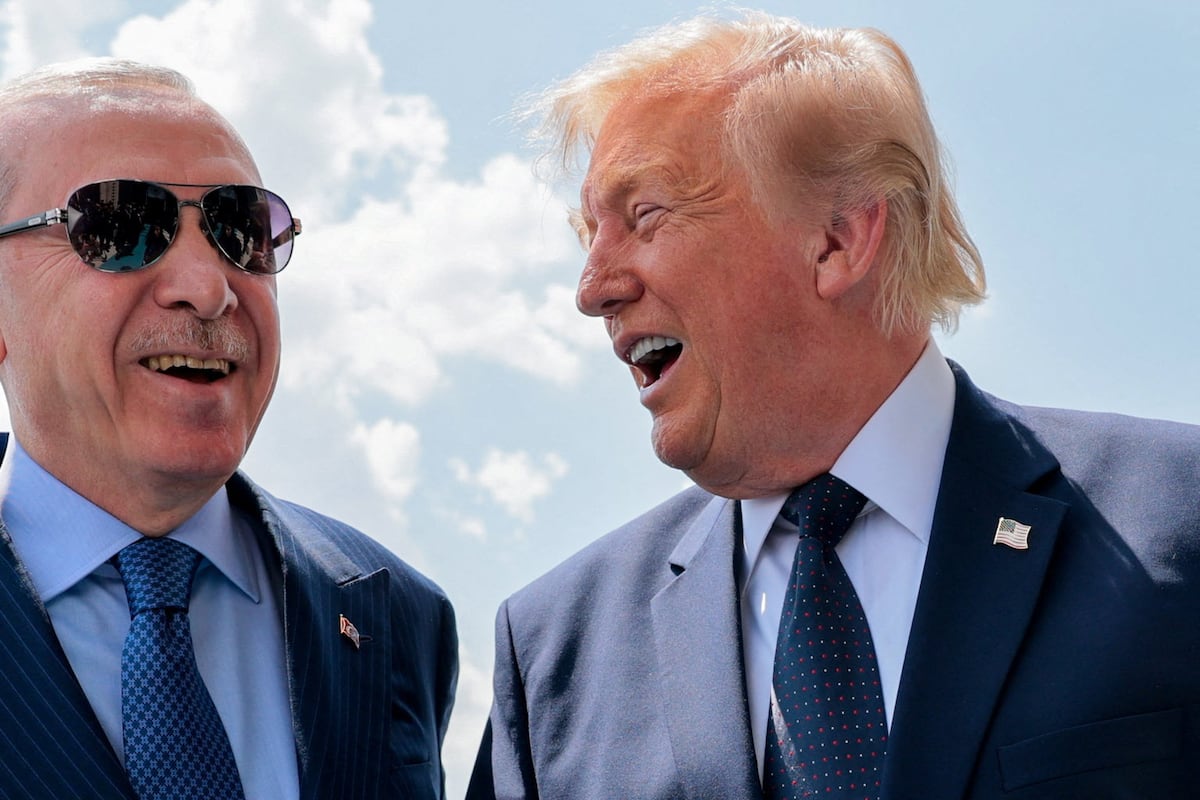 At NATO summit, Trump renews his threats over Greenland and lashes out at European allies
english.elpais.com
At NATO summit, Trump renews his threats over Greenland and lashes out at European allies
english.elpais.com
 globalnews.ca
 Click to play video: 'Canada ‘will continue to stand with Denmark and Greenland’: Carney on Arctic Security'
globalnews.ca
Click to play video: 'Canada ‘will continue to stand with Denmark and Greenland’: Carney on Arctic Security'
globalnews.ca
Donald Trump renews Greenland takeover rhetoric, Nato summit in Ankara turns into dispute with Denmark and troop-withdrawal threat, Europe is asked to pay while sovereignty becomes negotiable
OPENING Donald Trump used the Nato summit in Ankara to revive his long-running demand that the United States should control Greenland, according to El País and Global News. Speaking before a bilateral meeting with Turkey’s president Recep Tayyip Erdoğan, Trump said Greenland “should be controlled by the United States, not by Denmark,” and suggested the issue had damaged his relationship with the alliance. In separate remarks reported by Global News, he also raised the possibility of pulling US troops out of Europe.
BROADENING The episode lands on a predictable fault line inside Nato: Washington treats geography and basing rights as strategic assets, while European allies treat borders as settled facts. Greenland is part of the Danish kingdom, and Denmark is a founding Nato member; turning that relationship into a public bargaining session forces Copenhagen to defend sovereignty at the same table where it is being asked to commit to collective defence. Danish prime minister Mette Frederiksen responded in Ankara by saying she expected allies to respect the sovereignty of the Danish kingdom and that Greenland was not for sale, Global News reports.
Trump’s pitch also sits inside a broader demand that Europe shoulder more of its own security burden. El País reports he arrived in Ankara with a negative view of many European leaders and used his first address to attack major European governments for not backing him in the war on Iran, arguing the US has “spent years defending Europe” while Europe refused to help strike Tehran. European leaders, El País notes, have said they cannot support a conflict that is illegal and lacks a UN mandate.
The practical problem for Europe is that the same country providing a large share of Nato’s military weight can also create uncertainty at low cost. A troop-withdrawal threat does not require legislation, procurement, or a battlefield victory; it is a sentence at a podium, followed by months of planning ambiguity for European defence ministries. The Greenland line works similarly: even if it never becomes policy, it turns a remote territory into a recurring test of how much public pressure Denmark must absorb to keep a status quo that used to be assumed.
El País describes Trump being received with honours and cleared streets for his motorcade in Ankara, a contrast with the domestic clampdown around the summit that other reporting has highlighted. The choreography matters because it shows what a host state can deliver immediately—security, spectacle, access—while European capitals are asked for longer-term commitments measured in spending targets and deployments.
CLOSING Greenland’s foreign minister Mute Egede wrote on Facebook that Greenland’s future should be decided by its people, Global News reports. In Ankara, the US president was discussing that future as a question of who controls the map.