
Tanker is hit in Strait of Hormuz
UK maritime centre reports fire off Oman, shipping becomes enforcement tool in Iran route dispute
Images
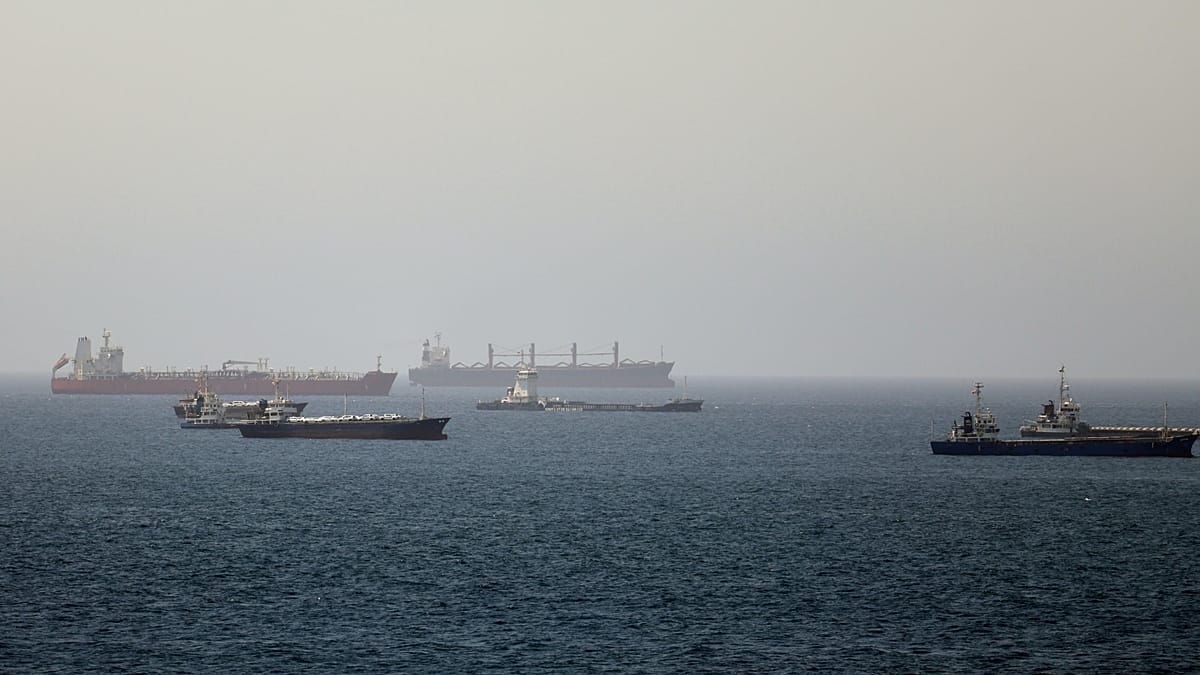 Oil tanker reportedly hit by 'unknown projectile' in Strait of Hormuz
euronews.com
Oil tanker reportedly hit by 'unknown projectile' in Strait of Hormuz
euronews.com
Tanker traffic through the Strait of Hormuz faced a fresh shock after a vessel off Oman caught fire when it was struck by an “unknown projectile,” according to the United Kingdom Maritime Trade Operations (UKMTO) centre.
Euronews reports the strike hit the port side of the ship as it travelled south out of the strait toward the Gulf of Oman, with UKMTO saying there was no environmental impact and that authorities were investigating. Iranian state television, citing anonymous sources, suggested the target was a liquefied natural gas tanker that had ignored warnings, and implied Tehran carried out the attack, though Iran has not made an official claim.
The incident lands in a corridor where rules are increasingly being rewritten in real time. Hormuz is narrow, commercially vital, and politically contested, and the past months have turned it into a bargaining table: Euronews says Iran and the United States reached an interim arrangement to allow ships to pass without charges for 60 days, while Tehran insists it must control routing and later charge fees for passage—an attempt to replace long-standing practice with a toll regime enforced by armed threat.
Iran’s joint military command last week warned that tankers must use “approved routes,” and that failure to comply with designated navigation protocols would be met with “immediate and forceful” response, according to Euronews. The same message threatened a “rapid and decisive reaction” to any interference by US forces. That combination—commercial regulation announced by a military command—compresses what is normally a mix of maritime law, insurer risk models, and naval deterrence into a single lever: obey the routing instructions or accept the possibility of fire at sea.
Second-order effects are already visible in how the strait is being treated as a fee gate rather than a transit lane. If passage depends on compliance with Iran-approved routes and on the political status of a temporary deal, costs do not stay in the Gulf: they flow into freight rates, insurance premia, and energy pricing, with downstream consequences for import-dependent economies. Euronews notes prior attempts to establish new routing near Oman’s shore have been linked to regional attacks, a reminder that even technical adjustments—where ships are told to sail—can be read as a shift in control.
For now, UKMTO’s bulletin describes a single burning tanker and an investigation, while Iranian media points to “warnings” and enforcement.
The strait remains open on paper, but the conditions of using it are increasingly being set by whoever is willing to back routing instructions with rockets.