
Cuba suffers another nationwide blackout
Third island-wide outage in six months as fuel shortages persist, surgeries and transport disruptions track grid failure
Images
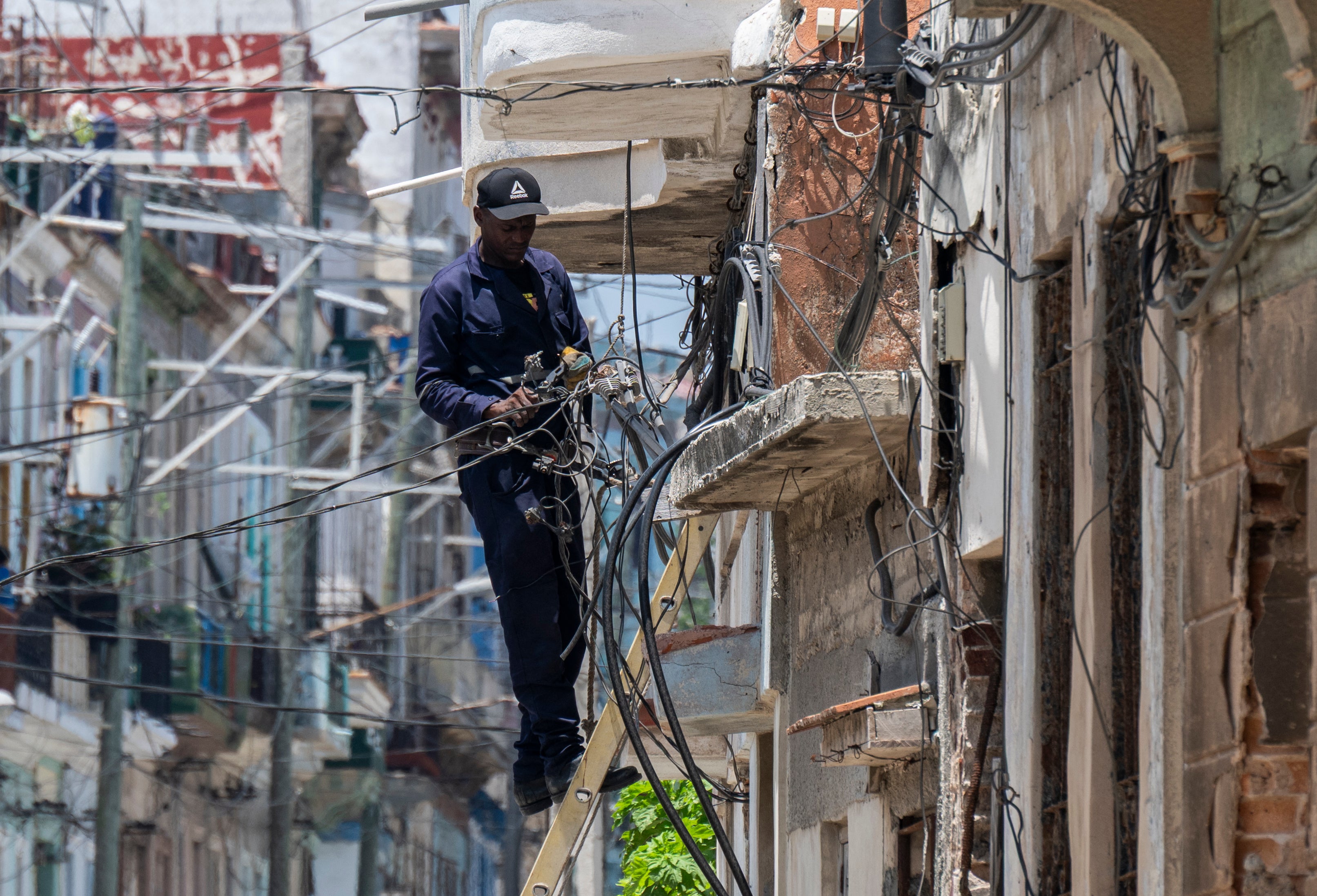
 The state has imposed increasingly drastic power cuts across Cuba in an attempt to conserve fuel. Photograph: Anadolu/Getty Images
theguardian.com
The state has imposed increasingly drastic power cuts across Cuba in an attempt to conserve fuel. Photograph: Anadolu/Getty Images
theguardian.com
 (AFP/Getty)
AFP/Getty
(AFP/Getty)
AFP/Getty
Cuba’s national electricity system suffered another island-wide failure on Monday, the third nationwide blackout in six months, according to Agence France-Presse reporting carried by The Guardian. The state electricity company UNE said the grid experienced a “total disconnection” and that it was investigating the cause, while the energy ministry said protocols had been activated to restore power.
The repeated blackouts are no longer a one-off crisis but a governing condition for a country of roughly 9.6 million people. AFP, cited by The Guardian, describes an electricity system still heavily reliant on aging Soviet-era plants and on fuel supplies that have become increasingly uncertain. The Independent reports that dwindling fuel reserves and a deteriorating grid were central to the latest failure, and that the government has resorted to rationing electricity through intentional outages that can last more than a day.
The economic effects are cumulative because electricity is not a sector in Cuba; it is the prerequisite for all the others. The Independent reports that fuel scarcity has disrupted public transport and led to the cancellation of tens of thousands of surgeries, while broader shortages of food, drinking water and medicine have intensified. When outages stretch beyond 24 hours — and, in some rural areas, beyond 70 hours, according to AFP — households and small businesses are pushed toward private generators, informal fuel markets, and ad hoc workarounds that depend on personal connections rather than formal supply.
Both accounts tie the acceleration of outages to external pressure on oil flows. AFP says US President Donald Trump imposed an oil blockade in January 2024, while The Independent reports that the situation worsened after Trump threatened tariffs on countries providing oil to Cuba. The Independent adds that a Russian tanker delivered oil in late March but that the shipment was depleted by the end of April, illustrating how a single delivery can temporarily stabilise the system without changing the underlying arithmetic.
The government has promoted investment in solar power as a partial fix; AFP puts solar at about 10% of the energy mix. But the immediate problem described in both reports is not long-term generation capacity so much as the day-to-day availability of fuel and a grid that repeatedly fails under strain.
UNE says it is investigating what caused Monday’s disconnection. For many Cubans, the more actionable question is how long the next “intentional” outage will last.