
Russian missiles and drones strike Kyiv, attack kills 14 ahead of Nato summit in Turkey
Rescue crews search damaged apartment blocks as Moscow cites energy and military targets
Images
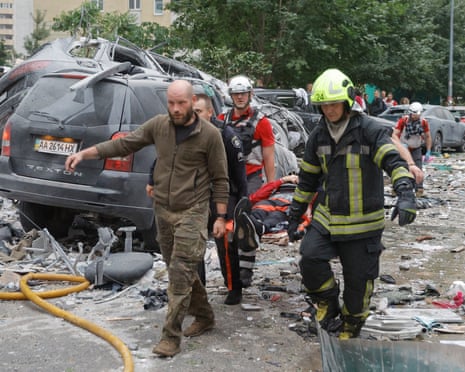 Ukrainian rescuers work at the site of a Russian missile strike on a residential area in Kyiv, Ukraine, Photograph: Sergey Dolzhenko/EPA
theguardian.com
Ukrainian rescuers work at the site of a Russian missile strike on a residential area in Kyiv, Ukraine, Photograph: Sergey Dolzhenko/EPA
theguardian.com
Russian missiles and drones hit Kyiv overnight ahead of a Nato summit in Turkey, killing 14 people and injuring 117, according to Ukraine’s prosecutor general’s office as cited by the Guardian’s live coverage. Rescue work was still under way on Monday morning, with Kyiv regional military administration head Tymur Tkachenko warning the death toll could rise. The strikes heavily damaged apartment blocks and other buildings, and dozens of people were taken to hospital, including several children.
The timing puts civilian casualties and air-defence capacity back at the centre of Ukraine’s diplomacy. President Volodymyr Zelenskyy used the attack to urge “strong decisions” from Nato leaders, framing the summit as a test of whether commitments translate into matériel quickly enough to matter. Russia, for its part, confirmed it carried out what it called a “massive” attack using long-range weapons and drones, and said it targeted military and energy facilities in Kyiv and the surrounding area, according to a Telegram statement cited by the Guardian.
That pairing—Kyiv describing shattered housing blocks, Moscow describing infrastructure and military targets—has become a standard feature of the war’s messaging. It also leaves a practical question for allies: Ukraine’s ability to keep cities functioning depends on interceptors that are expensive, finite and consumed fastest during large combined attacks. Each surge forces air-defence commanders to choose what to protect, and every missed intercept turns into a visible political fact: dead civilians, burned-out apartments, and emergency crews digging through rubble.
For Russia, massed strikes serve several purposes at once. They impose direct costs on Ukraine’s population and economy, they pressure the government to divert scarce resources toward air defence and repairs, and they test the limits of Western resupply. They also compete with summit agendas: leaders can talk about long-term industrial planning, but the news cycle is set by what happens in the hours before they meet.
By Monday morning, Ukrainian officials were still counting the dead in Kyiv while Nato leaders prepared to gather in Turkey.