
Super Typhoon Bavi hits Northern Mariana Islands
Emergency declaration triggers federal aid as shelter in place orders cover Rota Saipan and Guam, destructive winds and flooding threaten fragile island infrastructure
Images
 bnonews.com
 bnonews.com
 bnonews.com
 bnonews.com
 bnonews.com
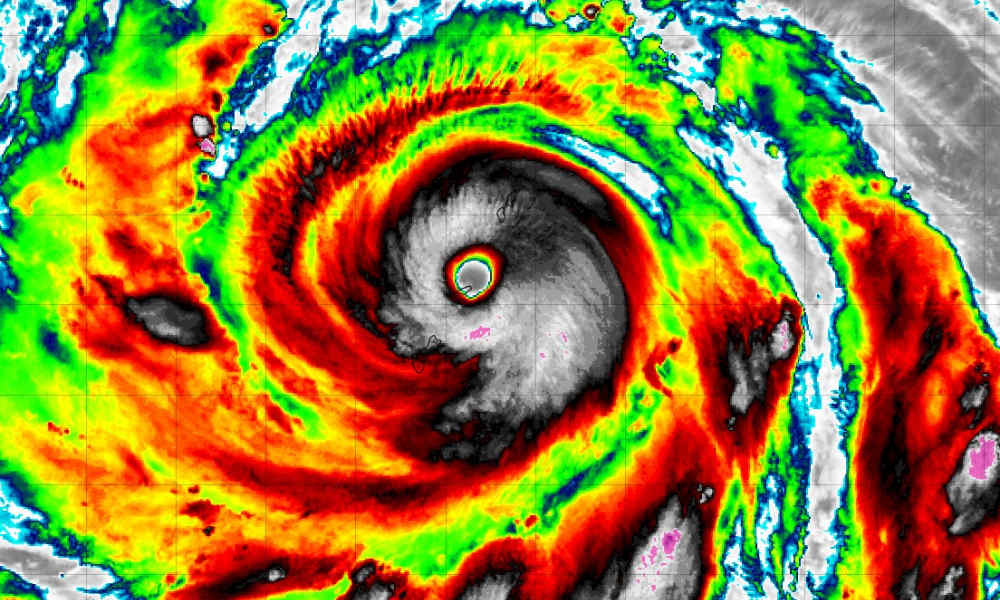
Category 5 Super Typhoon Bavi is moving across the Northern Mariana Islands with sustained winds reported at 180 mph, according to BNO News, citing local emergency officials. Residents in the U.S. commonwealth have been ordered to shelter in place as the eyewall passes over the island of Rota on Monday morning local time. Typhoon warnings are in effect for Guam, Rota, Tinian and Saipan, with officials warning of destructive winds and flash flooding.
The details in the emergency guidance show how quickly the margin disappears for small island grids and supply chains. Officials in Saipan, Tinian and Rota told residents to stay in an interior room on the lowest floor and keep away from windows and doors, an instruction that assumes buildings are both intact and built to modern standards. Guam remained under its highest readiness level as conditions deteriorated, with authorities expecting sustained winds of 50 to 80 mph and gusts up to 100 mph through Monday afternoon.
The storm’s track puts multiple populated islands into the same window of risk. BNO News reports that at 7 a.m. local time the center was about 20 miles east of Rota, with the system also close to Tinian and Saipan and to Guam. Rainfall of 12 to 20 inches is possible during Bavi’s passage, creating a flash-flood threat through early Tuesday, while “life-threatening seas” are expected to persist until Thursday.
Washington is already formally involved. President Donald Trump approved an emergency declaration for the Northern Mariana Islands two days before the storm, enabling federal assistance to support local response efforts, according to the report. Such declarations can unlock money and logistics, but they also highlight the basic asymmetry of U.S. Pacific territories: strategic geography and military relevance, paired with limited local capacity when ports, airports, and power lines fail at the same time.
Recent history provides the clearest benchmark. The Northern Marianas have been hit by powerful typhoons before, including Super Typhoon Yutu in 2018 and Typhoon Soudelor in 2015, disasters that turned into long rebuilds as tourism revenues fell and construction capacity bottlenecked.
On Monday morning, residents were being told not to go outside and not to go into the water, while the sea state was expected to remain dangerous for days after the eyewall moved on.