
China releases Zion Church founder Ezra Jin
Underground churches face raids and fraud charges as worship stays confined to state-approved venues, pastor lands in United States after Trump raised case with Xi
Images
 Zion Church founder Ezra Jin was among dozens who were detained in China in October in a sweeping crackdown on Christians. Photograph: Ng Han Guan/AP
theguardian.com
Zion Church founder Ezra Jin was among dozens who were detained in China in October in a sweeping crackdown on Christians. Photograph: Ng Han Guan/AP
theguardian.com
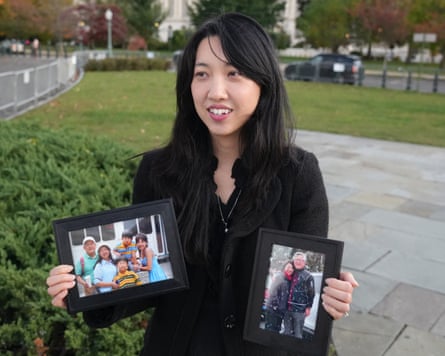 Grace Jin Drexel, the daughter of Ezra Jin, in Washington DC. Photograph: Archana Thiyagarajan/AFP/Getty Images
theguardian.com
Grace Jin Drexel, the daughter of Ezra Jin, in Washington DC. Photograph: Archana Thiyagarajan/AFP/Getty Images
theguardian.com
China has released Ezra Jin, the founder of the underground Zion Church, after his detention in an October crackdown on Christians, and he has arrived in the United States, The Guardian reports. Jin, a Chinese citizen, was among dozens of church members detained; his family said he landed in the US on a Friday evening and thanked President Trump and his administration for their role. China’s foreign ministry did not immediately respond to requests for comment.
The episode sits at the intersection of domestic control and external bargaining. Christianity is legal in China, but worship is permitted only in government-controlled churches; many believers instead attend unregistered “house churches” such as Zion. Founded by Jin in 2007, Zion Church was forced to close its physical location in Beijing in 2018 and moved to online sermons that expanded its reach to thousands of members, according to The Guardian. Official figures put China’s Christian population at 44 million, while other estimates including unregistered believers run much higher.
Over the past year, the authorities have intensified pressure on house churches. The Guardian notes detentions involving Early Rain Church, including a June raid in Sichuan province in which more than 30 people were held for questioning, and says several Zion Church members remain in detention. Last month, prosecutors took over the cases of nine Zion Church members, including Jin, on charges of illegal business operations and fraud, while nine others were released on bail pending trial.
Jin’s release stands out because it appears tied to high-level US lobbying rather than a change in enforcement. The Guardian reports that Trump raised Jin’s case during a visit to Beijing in May, saying Xi Jinping was “seriously considering” releasing pastors jailed in China, while noting that progress on other detainees such as British citizen Jimmy Lai was more difficult. Jin’s wife and children live in the US and had repeatedly appealed to US officials; his daughter, Grace Jin Drexel, testified before Congress in November.
For Beijing, selective releases can reduce diplomatic friction without altering the underlying apparatus: the rules remain, the prosecutions continue, and the state retains the option to reframe religious activity as business crime. For Washington, individual cases offer visible wins that do not require broader agreements on speech, religion, or legal process.
Jin is out of prison and on US soil. Several of his church members are still in the Chinese system, with their cases now in prosecutors’ hands.