
Iran stages mass funeral rites for Ali Khamenei
Successor Mojtaba Khamenei stays out of sight as crowds chant for Trump’s death, Trump tells Axios one shot could kill assembled leaders
Images
 People gather to pray for Ali Khamenei during the second day of funeral ceremonies at the Grand Mosalla in Tehran. Photograph: Atta Kenare/AFP/Getty Images
theguardian.com
People gather to pray for Ali Khamenei during the second day of funeral ceremonies at the Grand Mosalla in Tehran. Photograph: Atta Kenare/AFP/Getty Images
theguardian.com
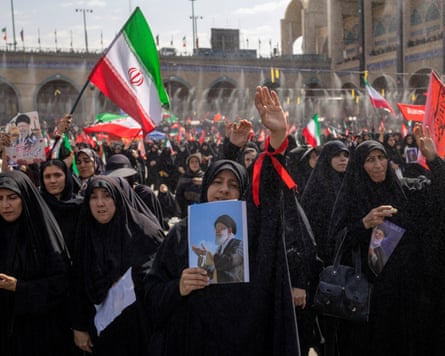 Mourners pay their respects to the late ayatollah at the Imam Khomeini Grand Mosalla. Photograph: Alkis Konstantinidis/Reuters
theguardian.com
Mourners pay their respects to the late ayatollah at the Imam Khomeini Grand Mosalla. Photograph: Alkis Konstantinidis/Reuters
theguardian.com
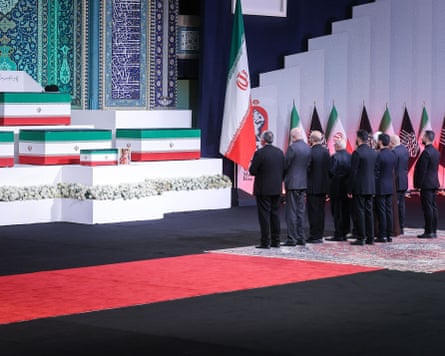 Iranian officials at the state ceremony for Ali Khamenei. Photograph: Anadolu/Getty Images
theguardian.com
Iranian officials at the state ceremony for Ali Khamenei. Photograph: Anadolu/Getty Images
theguardian.com
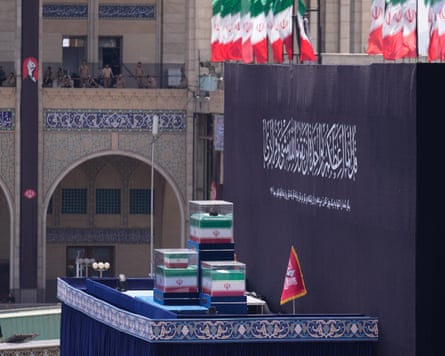 The coffins of the late Ayatollah Ali Khamenei and members of his family displayed at the Imam Khomeini Mosalla in Tehran on Sunday. Photograph: Altaf Qadri/AP
theguardian.com
The coffins of the late Ayatollah Ali Khamenei and members of his family displayed at the Imam Khomeini Mosalla in Tehran on Sunday. Photograph: Altaf Qadri/AP
theguardian.com
 (AFP/Getty)
AFP/Getty
(AFP/Getty)
AFP/Getty
A week of funeral processions for Iran’s assassinated former supreme leader Ali Khamenei drew larger and more militant crowds on its second day in Tehran, according to The Guardian. The paper reports that prayers at the Imam Khomeini Grand Mosalla featured chants and a poem read to loudspeaker applause that called for the killing of US President Donald Trump. While Khamenei’s sons stood beside the coffin, his successor and son, Mojtaba Khamenei, remained absent from public view.
The optics mattered because the ceremony doubled as a public test of continuity after a leadership transition carried out under wartime conditions. The Guardian says Mojtaba Khamenei was appointed supreme leader 10 days after his father’s death but has not appeared in public or released an audio message for months, and he did not attend his wife’s funeral. Streets around the mosque were decorated with pictures of him, while senior political, military and judicial officials attended in person, including commanders of the IRGC and the al-Quds force—figures whose visibility signals that the security apparatus is still functioning after the February attack.
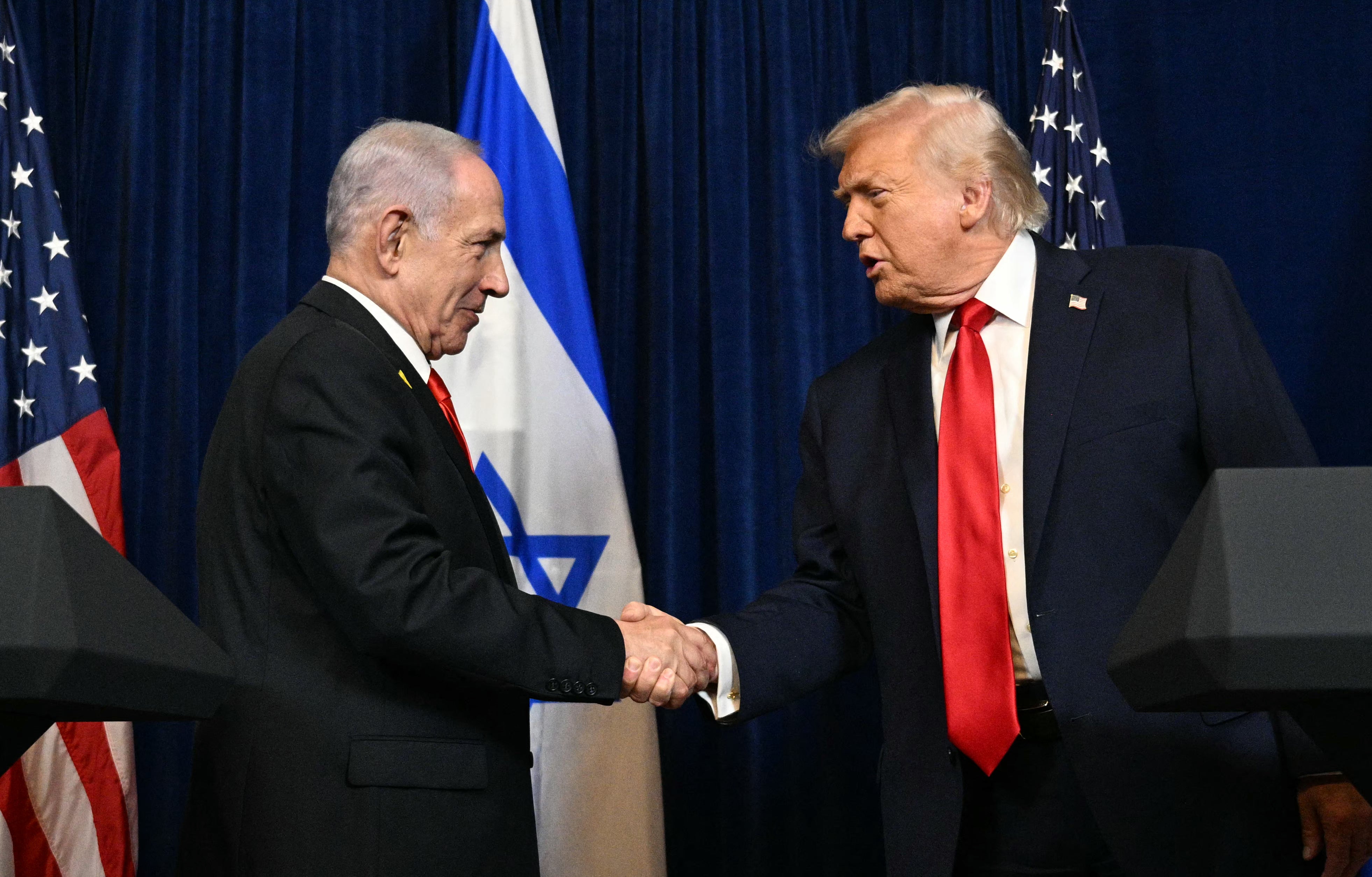
Outside Iran, the funeral became a prompt for American political theatre. The Independent reports that Trump told Axios he was surprised to see thousands mourning Khamenei and said that “one shot” could kill all the regime’s leaders gathered at the funeral, adding that the US would not do so because it would leave “nobody to negotiate with.” Iran criticised the remark as offensive, while Iranian messaging framed the killing as martyrdom rather than decapitation.
The juxtaposition is a familiar one in Middle East crises: a state uses mass ritual to display legitimacy, while opponents talk as if leadership is a target set. Iranian officials, according to The Guardian, appeared confident that a ceasefire agreed with the US would prevent an attack on the ceremony, even as pro-Trump figures on social media described the gathering as a “target-rich environment.” The same week, The Independent notes that maritime trade between Iran and Qatar resumed after a months-long suspension, a reminder that regional commerce often restarts before political language cools.
In Tehran, the crowd waved red flags symbolising vengeance and cheered calls for Trump’s death. The man appointed to replace Khamenei was still not visible in the hall.