
Botswana High Court hears same sex marriage challenge
Black lesbian couple seeks legal recognition amid regional rollbacks, ministries face a ruling that would have to be implemented not just declared
Images
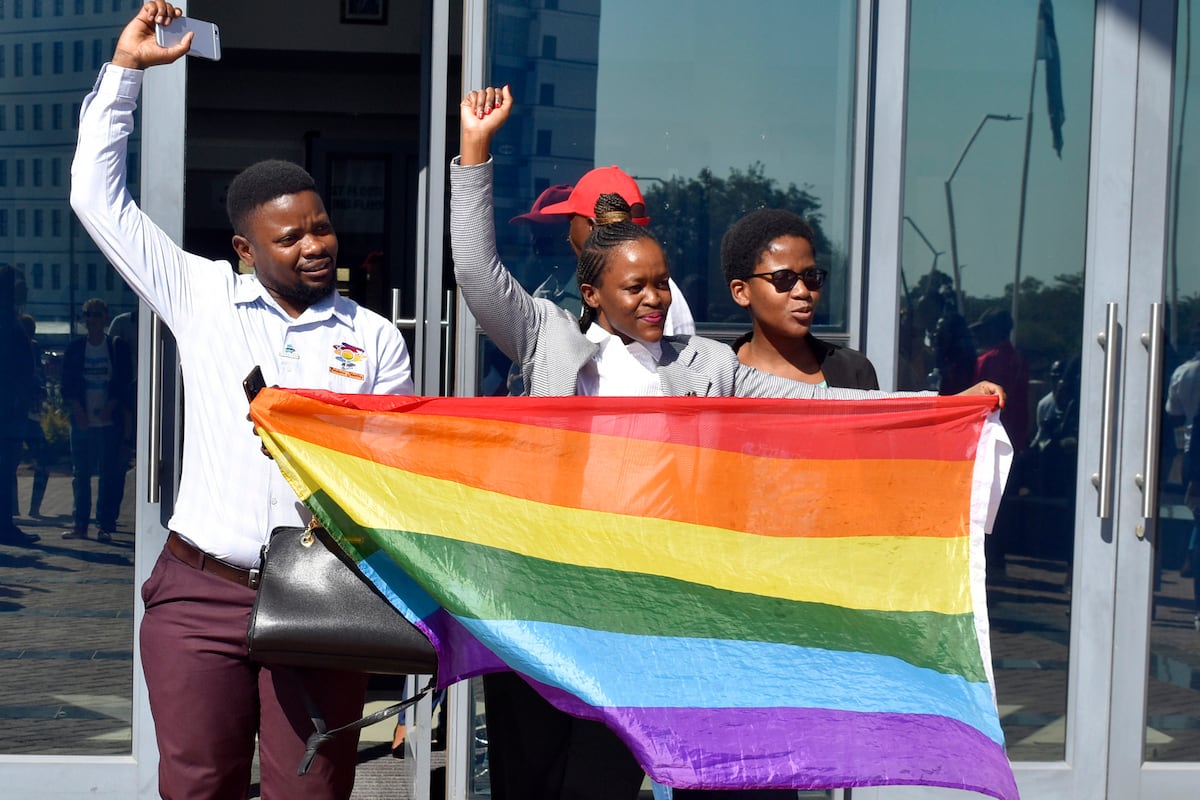 A Black lesbian couple’s legal battle in Botswana marks a milestone for Africa: ‘We love each other, and that is all that matters’
english.elpais.com
A Black lesbian couple’s legal battle in Botswana marks a milestone for Africa: ‘We love each other, and that is all that matters’
english.elpais.com
Botswana’s High Court will hear arguments in mid-July from Bonolo Selelo and Tsholofelo Kumile, a Black lesbian couple seeking legal recognition of their marriage. El País reports that six judges are scheduled to hear the case, which challenges the state’s refusal to register their union after the couple attempted to formalise their relationship following their engagement. If the court sides with them, Botswana would become the second African country after South Africa where same-sex marriage is allowed.
The case is being framed as a marriage dispute, but it is also a test of how far constitutional language reaches when it collides with administrative practice. According to El País, the Gaborone district commissioner and the Ministry of Labour and Home Affairs refused to register the couple’s union on the grounds that Botswana law does not permit marriage between two people of the same gender. The government is resisting the challenge in court, arguing that recognising same-sex marriage is not legally possible and that prohibiting such unions does not breach constitutional rights.
LGBTQ+ organisations told El País they are not aware of any earlier case in Africa in which a Black lesbian couple has challenged marriage laws, and a legal adviser at The PRIDE Center described the litigation as unusually ambitious. Rights claims in African courts have more often focused on narrower questions—such as freedom of expression or striking down colonial-era criminalisation of same-sex intimacy—than on compelling the state to confer the full bundle of marital rights. That difference matters because marriage recognition is an administrative machine: it affects inheritance, next-of-kin decisions, taxation, immigration status for spouses, and access to spousal benefits. It also forces ministries and registries to implement a ruling day-to-day, rather than simply ceasing enforcement of a criminal statute.
The wider regional backdrop is moving in the opposite direction. El País notes that Niger’s military junta recently introduced a new penal code criminalising homosexuality with prison sentences of five to ten years, while Ghana’s parliament has approved a bill that would impose prison terms on people identifying as LGBTQ+. Senegal has also tightened penalties in 2026. South Africa remains the only African country where same-sex marriage can be performed, and El País recalls that its legalisation grew out of a 2005 lawsuit brought by a white female couple—an origin story that still shapes who is seen as the face of such litigation.
Opposition in Botswana is being organised in plain sight. Around 100 protesters gathered outside the High Court during the preliminary hearing in March, holding placards describing same-sex marriage as un-Christian and against traditional culture, according to El País. The Evangelical Fellowship of Botswana has filed an amicus curiae brief opposing the case, with its president quoted warning that same-sex marriages would undermine cultural norms and family values.
Selelo and Kumile will return to court in July asking six judges to order the state to recognise their marriage. The registrar who refused their paperwork still controls the stamp.