
Drone strikes hit El Obeid in Sudan
UN warns of looming atrocities as RSF and army converge, trenches and expanding camps map a city preparing for siege
Images
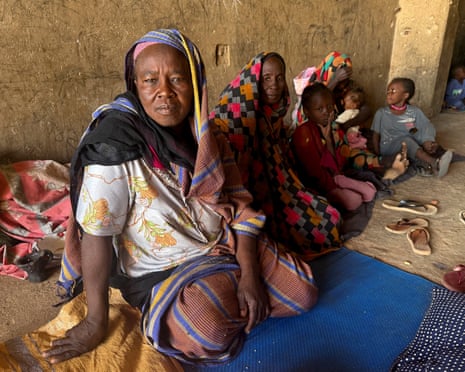 Displaced women and children find a place to rest in El Obeid, which is home to about 100,000 refugees. Photograph: El Tayeb Siddig/Reuters
theguardian.com
Displaced women and children find a place to rest in El Obeid, which is home to about 100,000 refugees. Photograph: El Tayeb Siddig/Reuters
theguardian.com
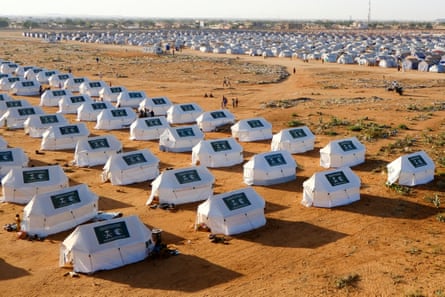 Tents display the logo of the Kingdom of Saudi Arabia at a displaced persons camp in El Obeid. Photograph: El Tayeb Siddig/Reuters
theguardian.com
Tents display the logo of the Kingdom of Saudi Arabia at a displaced persons camp in El Obeid. Photograph: El Tayeb Siddig/Reuters
theguardian.com
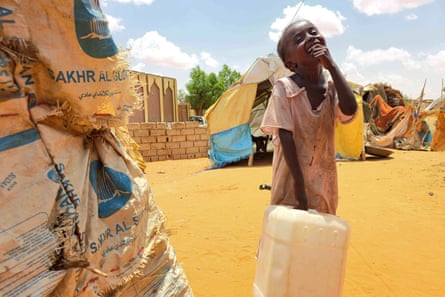 A Sudanese girl carries a plastic container in the Al-Rahmaniyah camp for displaced people near El Obeid. Photograph: AFP/Getty
theguardian.com
A Sudanese girl carries a plastic container in the Al-Rahmaniyah camp for displaced people near El Obeid. Photograph: AFP/Getty
theguardian.com
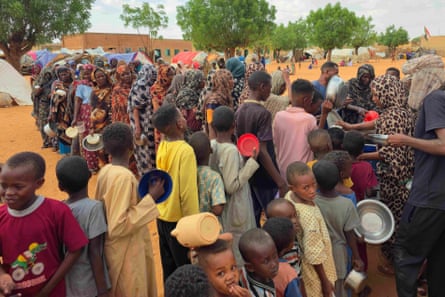 Women and children queue to receive free food at Al-Mohayra, another camp for displaced people near El Obeid. Photograph: AFP/Getty
theguardian.com
Women and children queue to receive free food at Al-Mohayra, another camp for displaced people near El Obeid. Photograph: AFP/Getty
theguardian.com
More than 20 people including students were killed in a weekend of drone strikes on El Obeid, a Sudanese city of roughly half a million people that also shelters about 100,000 refugees. The Guardian reports that the attacks hit civilian sites including schools and fuel stations, after months in which residents and aid workers say drones have become a routine presence overhead. The city sits on the fault line between Sudan’s army and the paramilitary Rapid Support Forces (RSF), with both sides preparing for a fight that would likely be waged through sieges as much as street battles.
El Obeid’s geography is what makes it valuable: it lies between RSF-held areas in western Darfur and army-controlled regions further east, and it hosts an army infantry division and an airbase. UN human rights officials say that from 6 June to 28 June at least 45 people were killed and 41 injured in 15 drone strikes in and around the city, a tempo that turns basic services into targets and repairs into a recurring expense. A report by the Yale Humanitarian Research Lab, cited in the Guardian, found damage to electricity generation, fuel storage facilities and the main market consistent with intentional bombardment of civilian infrastructure—assets that keep a city functioning and that also determine who can tax trade, ration fuel, and control movement.
The UN’s top human rights official Volker Türk told the Human Rights Council in Geneva that signs from El Obeid indicate another catastrophe may be unfolding, after an urgent debate convened at the UK’s request and backed by several European governments. That warning lands in a country where international alarms have been frequent and enforcement scarce: Amnesty International has said the RSF committed ethnic cleansing and crimes against humanity in its campaign to capture El Fasher, while a UN fact-finding mission said the RSF’s seizure of the city showed hallmarks of genocide against non-Arab communities. Aid workers in El Obeid told the Guardian they fear a repeat of El Fasher, where an 18-month siege ended with a rampage after the city fell.
On the ground, preparations are already visible. Experts cited in the Guardian point to significant concentrations of RSF troops around El Obeid and warn of an imminent ground offensive. The Yale lab reported an increase of more than 700 temporary structures at displaced-person camps within a month, consistent with an influx of civilians moving ahead of the fighting. The army has built about 30 miles (50 km) of defensive positions around the city, suggesting it expects a siege and is investing in earthworks rather than rapid maneuver.
El Obeid now has drone damage on its fuel sites and new defensive trenches on its outskirts. The city’s displaced camps are expanding at the same time the routes in and out are being militarised.