
BBC finds Instagram ads promoting child sexual abuse material in India
Paid placements direct users to Telegram channels selling videos for as little as 99 rupees, Meta disables adverts after report but one channel stays up
Images
 bbc.com
 Reuters Meta's logo is displayed against pink, frosted glass. Behind the logo are the silhouettes of people.
bbc.com
Reuters Meta's logo is displayed against pink, frosted glass. Behind the logo are the silhouettes of people.
bbc.com
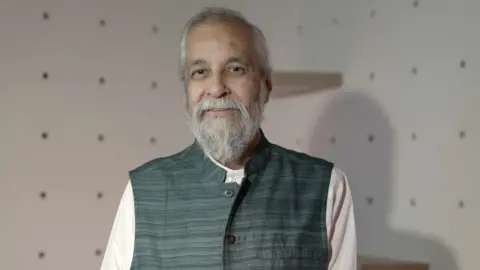 A retired justice of India's Supreme Court, Madan Lokur, said he was concerned that Instagram was "making money by participating in a criminal activity"
bbc.com
A retired justice of India's Supreme Court, Madan Lokur, said he was concerned that Instagram was "making money by participating in a criminal activity"
bbc.com
About 30 distinct Instagram adverts promoting child sexual abuse material appeared in India during a BBC Eye investigation, according to the BBC World Service. The ads used phrases such as “rape video” and “child video” and directed users to Telegram channels where the material could be bought for as little as 99 rupees. Meta told the BBC it had disabled several ads and suspended accounts after being shown the findings.
The BBC’s reporting describes a pipeline that begins with Instagram’s ad system and ends in Telegram storefronts. Instagram ads are supposed to be reviewed before publication, yet the BBC says one reported advert drew a response 24 hours later stating it did not violate community guidelines. The investigation also found that the same test account was served roughly 20 ads featuring adult pornography—illegal in India—before the feed progressed to adverts involving children in sexually suggestive situations. The ads did not rely on fringe search terms or obscure corners of the platform; they were delivered as paid placements inside a mainstream product.
That matters because advertising is where platform governance becomes measurable. A social network can argue that user uploads arrive at scale and slip past imperfect filters; paid ads are different. Somebody is paying to distribute the material, and the platform is being paid to deliver it, which creates a paper trail and a set of controls that are tighter in theory than in practice. In the BBC account, the controls still allowed explicit offers of illegal content to run, and at least one Telegram channel continued operating after the BBC reported it.
Telegram said it had removed more than 274,000 groups and channels related to child sexual abuse material in 2026, a figure that signals both enforcement activity and the size of the problem. Meta told the BBC that “no system is perfect,” pointing to proactive detection on ads once live and to user reporting, and said it reports apparent child exploitation to the US-based National Center for Missing and Exploited Children (NCMEC) as required by law. India, meanwhile, criminalises both child sexual abuse material and adult pornography, yet the BBC says it reported the adverts and channels to Indian authorities rather than describing a rapid domestic takedown mechanism.
The result is a cross-platform market where the riskiest content is advertised on one service and sold on another, with enforcement split across companies and jurisdictions. The BBC’s most concrete data point is also the simplest: ads that should never have been approved were approved, and at least one was explicitly defended by the system after a report.
One of the adverts the BBC describes showed children appearing around early adolescence in a sexual act. It ran as a paid placement in Instagram’s feed.