
Floods kill 59 in Côte d’Ivoire
Torrential rains hit Ghana Nigeria and Benin, urban growth and blocked drainage turn storms into infrastructure failures
Images
 The interior of a house in Attécoubé in Abidjan, Côte d’Ivoire, damaged by floods and landslides. Photograph: Chris Boli/AFP/Getty Images
theguardian.com
The interior of a house in Attécoubé in Abidjan, Côte d’Ivoire, damaged by floods and landslides. Photograph: Chris Boli/AFP/Getty Images
theguardian.com
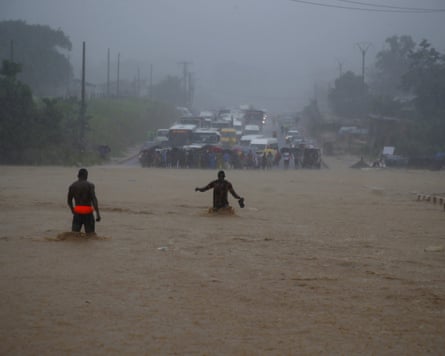 People wade across a flooded road as traffic is halted by torrential rains in Côte d’Ivoire on 25 June. Photograph: Legnan Koula/EPA
theguardian.com
People wade across a flooded road as traffic is halted by torrential rains in Côte d’Ivoire on 25 June. Photograph: Legnan Koula/EPA
theguardian.com
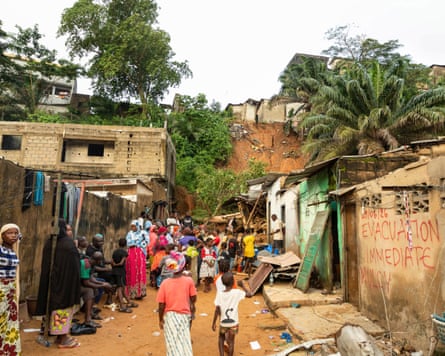 Residents gather among houses damaged by landslides and flooding in Attécoubé. Photograph: Chris Boli/AFP/Getty Images
theguardian.com
Residents gather among houses damaged by landslides and flooding in Attécoubé. Photograph: Chris Boli/AFP/Getty Images
theguardian.com
Fifty-nine people have died in floods in Côte d’Ivoire since May, the country’s communication minister Amadou Coulibaly told a cabinet meeting in Abidjan, according to The Guardian. Rescue teams were still searching for victims as social media footage showed neighbourhoods under water and authorities warned the rains could intensify.
The deaths in Côte d’Ivoire sit inside a wider run of destructive rains along the Gulf of Guinea. The Guardian reports at least 13 deaths in Ghana in late June, with the Ghana fire service rescuing more than 400 people in a single day as water cut off roads and submerged buildings in Accra and the nearby city of Tema. Ghana’s president, John Mahama, said rainfall on one day reached about 140mm, far above the previous single-day record he cited.
The pattern is partly meteorological and partly administrative. The World Meteorological Organisation has warned that Africa is especially exposed to extreme weather despite contributing little to global greenhouse gas emissions, and coastal West Africa’s rainy season concentrates risk into a short window. But the same reports also describe drains and wetlands used as dumping grounds, and fast-growing cities building over natural watercourses that once carried streams to the sea. When water has nowhere to go, it moves through homes and electrical installations instead, with The Guardian noting fires breaking out in Ghana after flooding reached power systems.
The economic effects arrive through basic services. In Lagos, Nigeria, flooding halted operations at a transmission substation and disrupted electricity supply to several neighbourhoods, an illustration of how rain turns into lost work, spoiled food, and stalled commerce when grid infrastructure sits at the edge of its operating limits. Nigeria’s meteorological agency has predicted above-normal rainfall in Abuja and multiple states, including parts of the north that suffered the country’s worst flooding in decades last year, suggesting that the same cycle of damage and repair is becoming an annual budget item.
Governments across the region are left managing two different problems at once: the weather itself, and the accumulation of small everyday decisions—where people build, where waste ends up, which drainage projects get funded—that determine whether heavy rain is an inconvenience or a mass-casualty event. In Côte d’Ivoire, the 59 deaths are now a single figure delivered at a cabinet meeting, while search teams continue working in floodwater.