
Haiti massacre reconstruction shows gangs expanding into rural areas
Guardian investigation documents at least 70 killed in Jean-Denis attack, state collapse in Port-au-Prince spreads along roads and farming communities
Images
 Using dozens of verified videos, photographs, witness testimony and satellite imagery, the Guardian has reconstructed the massacre in Jean-Denis in March. Photograph: The Guardian
theguardian.com
Using dozens of verified videos, photographs, witness testimony and satellite imagery, the Guardian has reconstructed the massacre in Jean-Denis in March. Photograph: The Guardian
theguardian.com
 Gunmen fire wildly in Jean-Denis in video gathered by human rights investigators
theguardian.com
Gunmen fire wildly in Jean-Denis in video gathered by human rights investigators
theguardian.com
 Villagers mourn as coffins are loaded on to a truck in Jean-Denis
theguardian.com
Villagers mourn as coffins are loaded on to a truck in Jean-Denis
theguardian.com
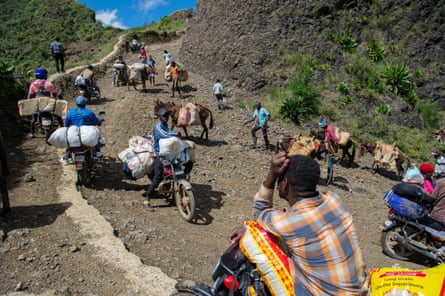 People carry goods on a hill track to avoid gangs that control main roads to Port-au-Prince. Photograph: C Siffroy/AFP/Getty
theguardian.com
People carry goods on a hill track to avoid gangs that control main roads to Port-au-Prince. Photograph: C Siffroy/AFP/Getty
theguardian.com
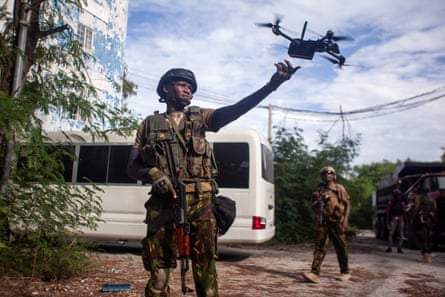 A drone is launched in Port-au-Prince during a Haitian-MSS operation against gangs in 2024. Photograph: P Noel/Rex
theguardian.com
A drone is launched in Port-au-Prince during a Haitian-MSS operation against gangs in 2024. Photograph: P Noel/Rex
theguardian.com
Haiti’s gang violence is no longer confined to the capital. A Guardian investigation reconstructs a March 2024 massacre in the rural village of Jean-Denis in which at least 70 civilians were killed during an overnight attack blamed on the Gran Grif gang.
According to the Guardian, the assault began around 2am with gunfire from multiple directions. Witnesses described dozens of men in civilian clothing and bandanas, armed with rifles, moving through the village, shooting people who tried to flee and killing others at close range after dragging them from their homes. Houses were set on fire, in some cases with residents still inside; by morning, smoke rose from burned buildings and bodies lay scattered along roads.
The paper’s reconstruction draws on verified videos and photographs, witness testimony and satellite imagery. It also supplies the kind of identifying detail that tends to disappear in aggregate casualty counts: an elderly woman shot outside her front door; a father of four killed in his yard; and a family in which multiple relatives died while trying to escape, with others burned alive in their houses.
What makes the episode news now is less the date than the pattern it illustrates. The Guardian frames Jean-Denis as part of a spread of armed control outward from Port-au-Prince, where years of gang warfare have hollowed out state authority. As armed groups push into farming communities, seize key roads and attack rural settlements, the violence stops being a “capital crisis” and becomes a national problem that disrupts food production, internal trade and the basic ability to travel.
The mechanics of rural terror also change the economics of survival. In cities, residents can sometimes pay for passage, negotiate with local commanders, or move between neighbourhoods. In isolated villages, an armed group’s arrival can mean there is nowhere to run, no alternative route, and no institution capable of arriving in time. After the Jean-Denis attack, the Guardian reports, thousands were forced to flee.
The massacre was carried out by men with rifles and accelerants, not heavy weapons or air power. Haiti’s countryside still burned.