
Venezuelan man rescued after eight days under quake rubble
Foreign search teams and improvised lifelines keep one survivor alive, La Guaira families camp beside unstable ruins as rescue turns into recovery
Images
 Rescue workers attend to Hernán Alberto Gil Flores after he was pulled from the rubble. Photograph: Fernando Vergara/AP
theguardian.com
Rescue workers attend to Hernán Alberto Gil Flores after he was pulled from the rubble. Photograph: Fernando Vergara/AP
theguardian.com
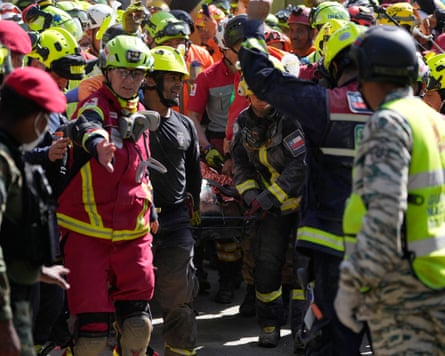 Teams from across the world cheer as rescuers carry Gil Flores on a stretcher through throngs of people into a Red Cross ambulance. Photograph: Fernando Vergara/AP
theguardian.com
Teams from across the world cheer as rescuers carry Gil Flores on a stretcher through throngs of people into a Red Cross ambulance. Photograph: Fernando Vergara/AP
theguardian.com
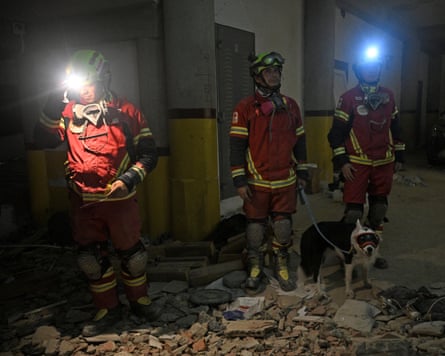 Rescue workers with the dog that helped find Hernán Alberto Gil Flores. Photograph: Federico Parra/AFP/Getty Images
theguardian.com
Rescue workers with the dog that helped find Hernán Alberto Gil Flores. Photograph: Federico Parra/AFP/Getty Images
theguardian.com
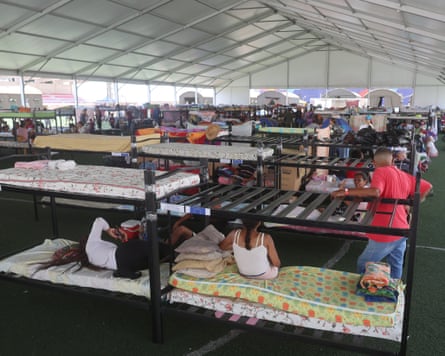 The focus is now shifting to survival for those who escaped the quakes. Many are homeless and food and water are becoming scarce. Photograph: Miguel Gutiérrez/EPA
theguardian.com
The focus is now shifting to survival for those who escaped the quakes. Many are homeless and food and water are becoming scarce. Photograph: Miguel Gutiérrez/EPA
theguardian.com
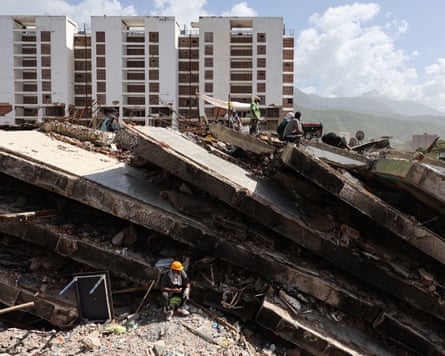 Satellite data suggests that more than 58,000 buildings in Venezuela may have been damaged or destroyed in the quakes. Photograph: Jesús Vargas/Getty Images
theguardian.com
Satellite data suggests that more than 58,000 buildings in Venezuela may have been damaged or destroyed in the quakes. Photograph: Jesús Vargas/Getty Images
theguardian.com
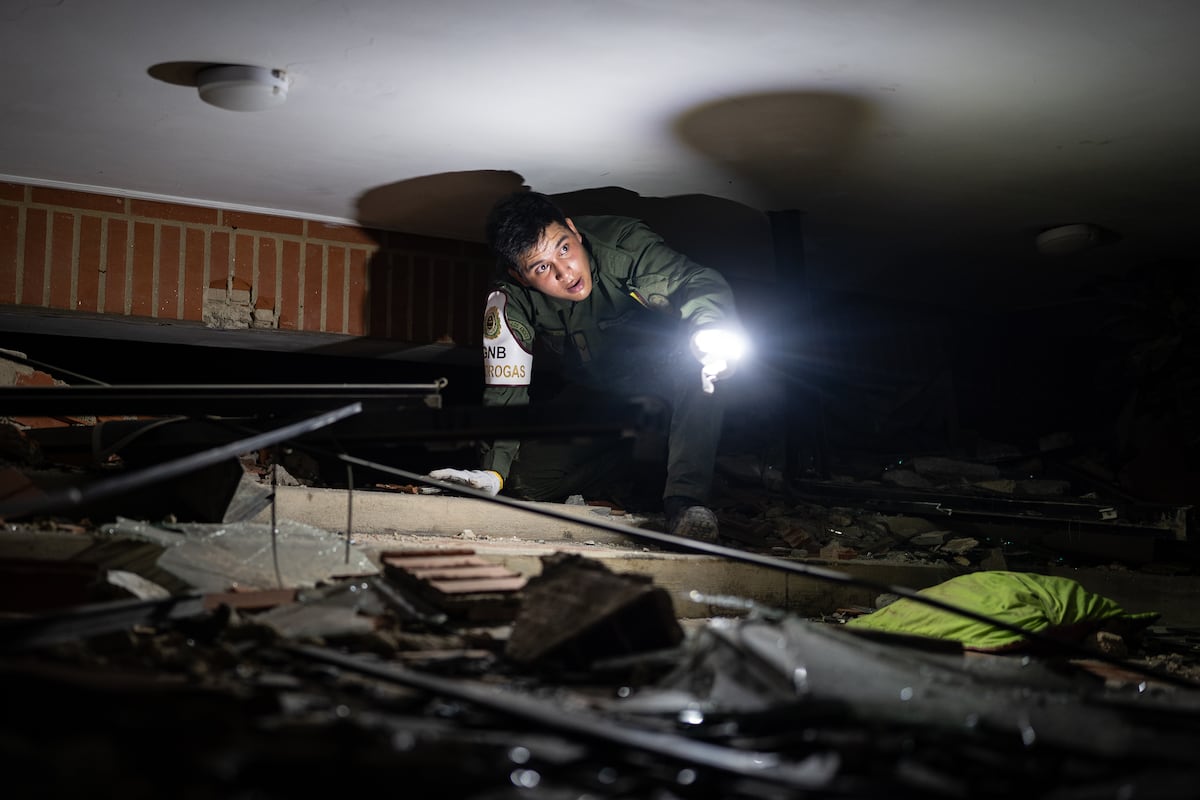 Mourning on hold: Earthquake-stricken Venezuela’s desperate search continues
english.elpais.com
Mourning on hold: Earthquake-stricken Venezuela’s desperate search continues
english.elpais.com
A Venezuelan security guard was pulled alive from the rubble of a collapsed shopping centre in La Guaira after eight days, according to The Guardian. Hernán Alberto Gil Flores had been trapped beneath the Galerías Playa Grande complex since back-to-back earthquakes struck the region, surviving in an air pocket created by his small security cabin.
The rescue, The Guardian reports, was not a single local breakthrough but a multi-country operation: a specialised team from the Costa Rican Red Cross detected signs of life and established contact, while an urban search-and-rescue unit of Chilean firefighters coordinated the extraction. Teams from the US, Portugal and Mexico also took part. Rescuers worked through unstable concrete, torrential rain and continuing aftershocks, using a telescopic camera to maintain contact and passing water and liquid nutrients through a narrow shaft in the final days.
The survival story sits inside a much grimmer arithmetic. El País reports that the official death toll stands at 2,295 with 11,267 injured, while Venezuela’s National Assembly president has floated a far higher figure. A platform run by supporters of opposition leader María Corina Machado says tens of thousands are “out of contact” with relatives. Authorities have reported damage to hundreds of buildings, including many that are fully collapsed.
In La Guaira, El País describes a city suspended between rescue and recovery. Families keep vigils at unstable piles of debris where moving one slab can trigger another collapse. Makeshift camps have sprung up around damaged buildings, with people sleeping close enough to listen for voices or knocks in the early morning quiet, even as the smell of decomposing bodies spreads. One man, Francisco Pérez, told El País he spent days outside a collapsed parking garage believing his boss, Nancy Rojas, was still alive beneath the rubble, interpreting knocks as answers—until the hope of extraction gave way to the narrower request of retrieving a body for burial.
Gil Flores’s rescue depended on specialists, equipment and time—resources that do not scale to thousands of potential voids beneath fractured concrete. As the days pass, the same structural instability that keeps some survivors alive also makes many sites too dangerous to enter, turning the search for life into a logistics problem measured in shoring, weather windows and aftershock risk.
Gil Flores was carried out on a stretcher into a Red Cross ambulance, covered by an orange tarp, The Guardian reports. Around him, El País describes families still camping beside ruins that rescuers increasingly treat as recovery sites rather than rescue sites.