
Vatican excommunicates SSPX after unauthorized bishop ordinations
Pope Leo XIV calls Ecône ceremony schismatic as Rome widens penalty to priests and formal adherents, church unity enforced through jurisdiction not liturgy
Images
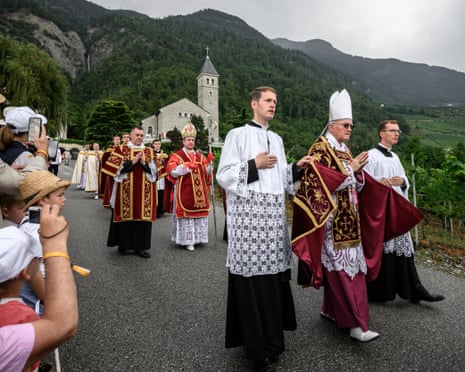 The Society of Saint Pius X has a wide reach, with a significant following in countries such as the US. Photograph: Fabrice Coffrini/AFP/Getty Images
theguardian.com
The Society of Saint Pius X has a wide reach, with a significant following in countries such as the US. Photograph: Fabrice Coffrini/AFP/Getty Images
theguardian.com
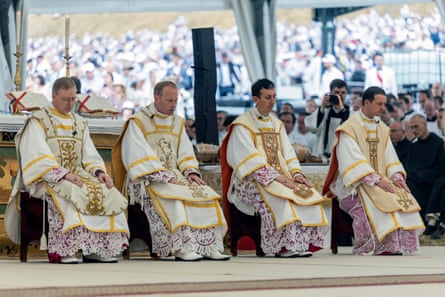 The ritual-filled ceremony on Wednesday was attended by a reported 16,500 people, including far-right Italian politicians. Photograph: Cyril Zingaro/EPA
theguardian.com
The ritual-filled ceremony on Wednesday was attended by a reported 16,500 people, including far-right Italian politicians. Photograph: Cyril Zingaro/EPA
theguardian.com
The Vatican said on Thursday it had excommunicated the Society of Saint Pius X after the group ordained four bishops without papal consent in Ecône, Switzerland. According to The Guardian, the Holy See’s Dicastery for the Doctrine of the Faith called the ordinations an act of schism, triggering automatic excommunication under canon law. The Vatican’s statement said the penalty extends not only to SSPX clergy but also to Catholics who formally adhere to the group.
The decision turns a long-running internal dispute into a clean institutional boundary: membership and formal affiliation now carry a defined ecclesiastical cost. SSPX was founded in 1970 and built its identity around rejecting reforms associated with the Second Vatican Council, including the move from Latin to local languages in Mass, as well as official outreach to other religions. The group says it is defending Catholic tradition; the Vatican is treating the same claim as an unauthorized parallel hierarchy.
The mechanics of the clash are straightforward. Bishops are the system’s reproduction mechanism: without them, a movement cannot ordain priests and cannot reliably persist across generations. The Guardian reports SSPX pursued the ordinations because it had only two aging bishops left, and it delayed the step after Pope Leo XIV’s election in the hope of a softer line, only to find his approach similar to that of his predecessor. By framing the ceremony as a “schismatic act” and “a sin of extreme gravity,” the pope is signalling that unity is not a matter of tone but of jurisdiction.
The Vatican’s move also clarifies incentives for ordinary Catholics who attend SSPX chapels for liturgical reasons rather than for explicit defiance. A vague, half-tolerated status allows people to drift between structures; a formal excommunication forces choices about sacraments, marriages, and community standing. Andrea Vreede, a Vatican correspondent cited by The Guardian, said Rome hopes the severity will prompt some members to repent and return—an approach that treats the breakaway group less as a debating partner and more as a disciplinary problem.
The wider political coloration is difficult to ignore. The Guardian notes that attendees at the Ecône ceremony included members of Forza Nuova and a far-right Italian group, and it reports SSPX believes it can gain traction from a broader resurgence of far-right movements. Even if most followers are not activists, the optics bind a theological dispute to contemporary factional politics, inviting outside actors to use church conflict as a cultural marker.
The ordinations drew a crowd of around 16,500 people in a ritual-heavy ceremony in a Swiss village. Within a day, the Vatican responded by declaring that priests and formal adherents now stand outside the church’s communion.