
IISS report maps drone overflights of European nuclear sites
144 incidents tracked across more than a dozen countries since late 2024, western militaries repeatedly fail to intercept low-cost intrusions
Images
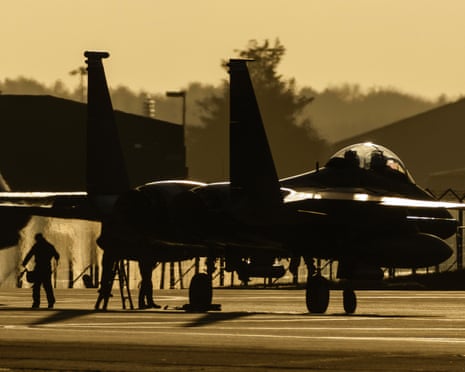 RAF Lakenheath in Suffolk. Drone activity was detected over the base in the months before US nuclear weapons were installed there. Photograph: Dan Kitwood/Getty Images
theguardian.com
RAF Lakenheath in Suffolk. Drone activity was detected over the base in the months before US nuclear weapons were installed there. Photograph: Dan Kitwood/Getty Images
theguardian.com
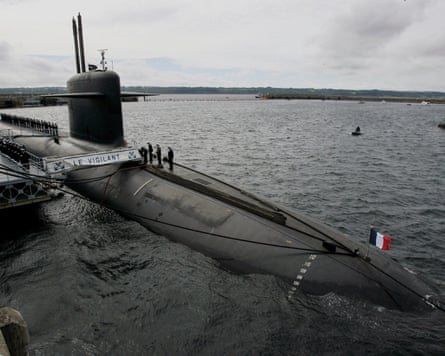 Le Vigilant, a French nuclear-armed submarine at the Île Longue base in Brittany. Photograph: François Mori/AP
theguardian.com
Le Vigilant, a French nuclear-armed submarine at the Île Longue base in Brittany. Photograph: François Mori/AP
theguardian.com
 French soldiers on board the Boracay. Photograph: Stéphane Mahé/Reuters
theguardian.com
French soldiers on board the Boracay. Photograph: Stéphane Mahé/Reuters
theguardian.com
UK and European nuclear sites faced repeated drone overflights, an International Institute for Strategic Studies review counts 144 incidents across more than a dozen countries, and the report alleges some missions were supported from Russia-linked “shadow fleet” vessels offshore.
According to The Guardian, the IISS analysis covers an 18-month period beginning in late 2024 and describes drones appearing over nuclear-related facilities in the UK, France, Belgium and the Netherlands, as well as over airbases and airports. The report’s central claim is not that the drones were technically sophisticated, but that they repeatedly operated without being intercepted: Western authorities were “unprepared and confused”, and NATO and national militaries did not capture or shoot down the aircraft in the incidents reviewed. In the UK, the IISS links unusual low-flying drones in late November 2024 to activity over RAF Lakenheath and RAF Fairford, among other US air force sites in England, with The Guardian noting that Lakenheath was targeted in the months before US nuclear weapons were installed there in July 2025.
The pattern matters because it sits in the seam between policing and defence, where responsibility is easy to diffuse and hard to price. Small drones flying low over domestic territory can be treated as a public-safety nuisance until they appear above a site that is, by definition, a strategic target; by then, the response options narrow to disruptive countermeasures that can themselves create hazards. The Guardian reports that a police helicopter attempted to track drones flying into the UK on one occasion but withdrew for safety reasons, and that an anti-drone laser was discussed but ultimately not deployed. When the response is uncertain, the intrusions become a cheap way to map routines, test detection thresholds, and force defenders to reveal what they can and cannot do.
The report also tries to connect airspace incidents to maritime logistics. The Guardian cites IISS suggestions that drones may have been piloted from vessels in the North Sea, and that “dark sailing” ships—vessels with transponders switched off—could have served as launch platforms, with other ships acting as recovery vessels or signal repeaters. In France, five drones were detected over the Île Longue nuclear submarine base in Brittany in December 2025, with the report noting Russia-linked shadow fleet vessels positioned offshore at the time. Similar drone incursions in November and December 2025 are described over airbases in Belgium and the Netherlands that store US air-launched nuclear weapons, again alongside the presence of Russia-linked vessels in international waters.
European governments, the report says, have been reluctant to publicly accuse Russia. That caution avoids escalatory headlines, but it also leaves a practical problem unresolved: if attribution is politically costly and the incidents are handled as isolated anomalies, the cheapest actor gets to set the tempo. The IISS conclusion, as summarised by The Guardian, is that allied defences were built for conventional threats and have struggled against low-cost, low-flying drones—systems that can be replaced faster than bureaucracies can agree on rules of engagement.
The IISS review counts 144 incidents, and The Guardian reports that governments contacted by the institute welcomed publication of the findings. The drones, in the report’s telling, kept coming anyway.