
Four die in Mexico City crowd surge
Angel of Independence celebration after World Cup win draws vast gathering, stadium-scale emotions spill into streets without stadium controls
Images
 bnonews.com
 bnonews.com
 bnonews.com
 bnonews.com
 bnonews.com
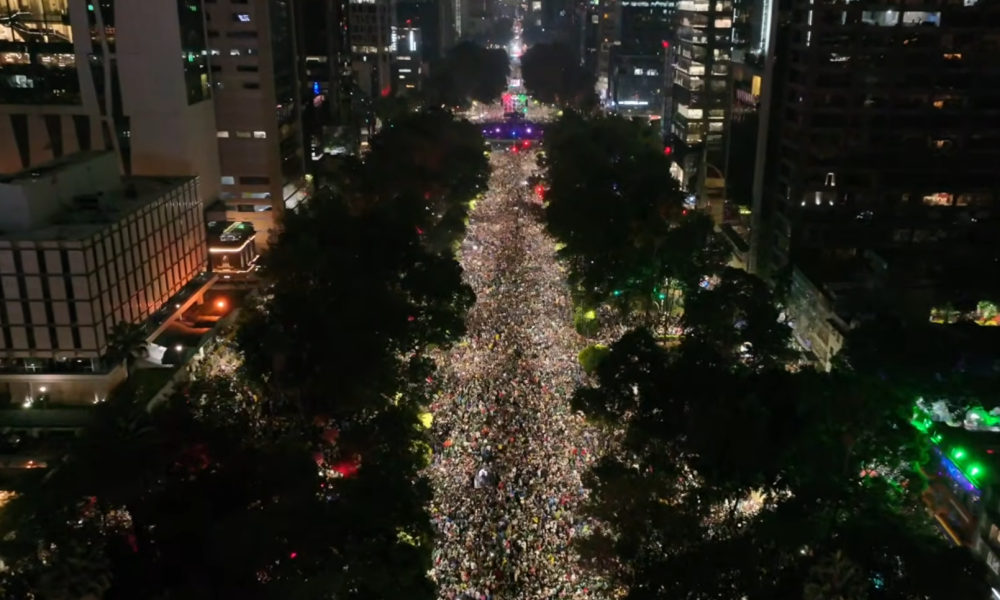
Four people died around Mexico City’s Angel of Independence after crowds surged into the landmark to celebrate Mexico’s World Cup win over Ecuador, according to BNO News. Police said the deaths occurred as huge numbers of people converged on Paseo de la Reforma, a corridor that has become the default outlet for national celebrations. The outlet reported that roughly one million people gathered at the monument after Mexico advanced, turning a familiar rallying point into a compression point.
BNO News reports that three victims died from asphyxia after being pulled from the crowd, with emergency crews attempting resuscitation at the scene and during transport before the victims later died. A fourth person died after arriving at a hospital with symptoms including suspected intoxication, seizures and gastrointestinal bleeding before going into cardiac arrest, the report said. Police said they would assist an investigation into how the victims were caught in the crush—language that tends to follow, rather than prevent, these incidents.
The Angel of Independence is not an improvised venue; it is Mexico City’s best-known gathering site, used repeatedly for football celebrations, protests and civic events. That familiarity can create a dangerous assumption that the city’s routines—traffic closures, crowd control lines, emergency access lanes—will scale automatically when a match result triggers a mass movement. But crowd safety is less about intentions than about geometry: bottlenecks, barriers, and the speed at which people arrive compared with the speed at which they can disperse.
The numbers in the BNO News account point to a split reality typical of major tournaments. The match itself drew a large paying crowd inside a controlled stadium environment, while tens of thousands more watched from public sites and fan events across the capital. When the final whistle redirects that energy toward a single symbolic location, the city inherits a second event without tickets, gates, or a clear organizer who bears the cost of failure.
Mexico’s victory over Ecuador was a sporting milestone, but the aftermath also shows how quickly celebrations become an emergency-management test. Public authorities are left balancing permissive street culture—people expect to gather at the Angel—with the need to impose restrictions that are unpopular until the moment they are absent. The investigation will likely focus on proximate causes, but the underlying question is simpler: how many people a city invites to one place without pricing, capacity limits, or an accountable host.
By the time ambulances were trying to reach victims near the monument, the celebration had already succeeded on its own terms: the crowd was there.