
Niger arrests dozens under new anti-LGBTQ+ penal code
First criminalisation of same-sex relations follows junta constitutional rewrite, HIV services for men shut down as prosecutions expand
Images
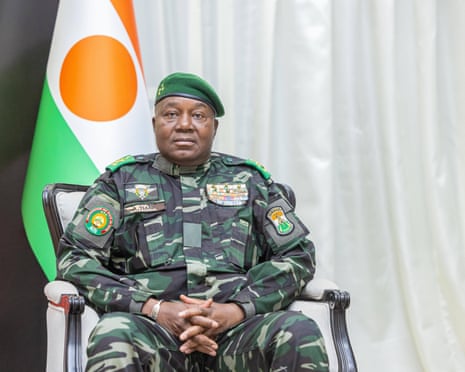 Niger’s military leader, Gen Abdourahamane Tiani, who seized power in 2023. Photograph: AP
theguardian.com
Niger’s military leader, Gen Abdourahamane Tiani, who seized power in 2023. Photograph: AP
theguardian.com
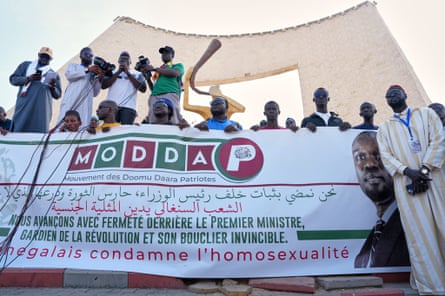 Senegalese men demonstrate in Dakar against LGBTQ+ rights. Photograph: AP
theguardian.com
Senegalese men demonstrate in Dakar against LGBTQ+ rights. Photograph: AP
theguardian.com
Up to 40 people have been arrested across Niger under a new penal code that for the first time criminalises same-sex relations, according to The Guardian. The report says 16 men — including some described as high-ranking military officials — have been imprisoned on homosexuality-related accusations. Niger’s military leader, Gen Abdourahamane Tiani, seized power in a coup in 2023 and has since dissolved political parties and replaced the country’s constitutional framework.
The arrests follow legal changes that began under the previous civilian administration but were completed and enforced under the junta. The Guardian reports that Niger enacted a new penal code in February 2025, creating offences for “indecent or unnatural acts” and “sexual relations with a person of the same sex,” with penalties of up to 10 years in prison and steep fines. Separately, the regime’s Charter of the Refoundation — promulgated in 2025 to replace the 2010 constitution — prohibits LGBTQ+ relations and sets out additional criminal exposure for organised activity: the penal code mandates prison terms of up to 20 years for participating in, witnessing, or organising a gay marriage, and also targets clubs, societies, and organisations linked to LGBTQ+ life.
The immediate effect is not only legal risk but service collapse. Organisations providing HIV services to men who have sex with men have reportedly stopped operating in Niger, leaving people without condoms, HIV testing, or PrEP medication. An anonymous source cited by The Guardian warned that the combination of criminalisation and fear-driven invisibility increases the risk of HIV infections spreading — a public-health cost that is borne by the wider population, while the political benefits of a crackdown accrue to those who control police, courts, and prisons.
The move also fits a regional pattern in the Sahel’s military-led states. The Guardian notes that similar laws have been introduced in Mali and Burkina Faso within the past two years, as juntas consolidate power and narrow the space for independent organisation. Tiani has leaned on anti-imperialist rhetoric, helped form the Alliance of Sahel States with Burkina Faso and Mali, and led Niger out of Ecowas, shifting the country’s external posture while tightening internal controls.
At the United Nations, Niger’s voting record is moving in parallel. The Guardian reports that Niger was among eight countries voting against the UN political declaration on HIV/Aids, which was adopted by a large majority.
In Niger, the new penal code is already doing measurable work: people have gone into hiding, HIV outreach has been interrupted, and dozens are in custody as the state tests how much private life it can police.